The strongest aging-in-place remodeling ideas for Pittsburgh homes center on three moves: converting to a curbless shower, creating a fully livable first floor, and making the entry safe to use in every season. Those three fixes solve the problems our steep lots and stair-heavy houses create. Everything else builds from that foundation.
We’ve walked through a lot of houses in Squirrel Hill, Brookline, and Mt. Lebanon where the homeowner said the same thing: “I’m not moving.” Good. Most people don’t want to. But wanting to stay and being able to stay safely are two different projects, and the second one requires planning.
Why Pittsburgh Houses Make This Harder Than Most
Pittsburgh has some of the oldest housing stock in the country, with a median home age hovering in the mid-60s. That means narrow doorways, tight stairwells, small bathrooms tucked under rooflines, and basements with laundry at the bottom of a steep run of steps. Add the hills. A lot of our homes sit up a flight of concrete stairs from the sidewalk, which is charming in July and treacherous in January.
The region is also one of the oldest by population. Roughly one in five Allegheny County residents is 65 or older, which puts our region years ahead of the national curve. So the demand for smart aging-in-place remodeling here isn’t a trend. It’s a structural reality, and the housing wasn’t built for it.
What Is the Most Common Aging in Place Remodeling Project?
Bathrooms. It isn’t close. The bathroom is where most falls happen, and it’s the room that fails first when mobility changes.
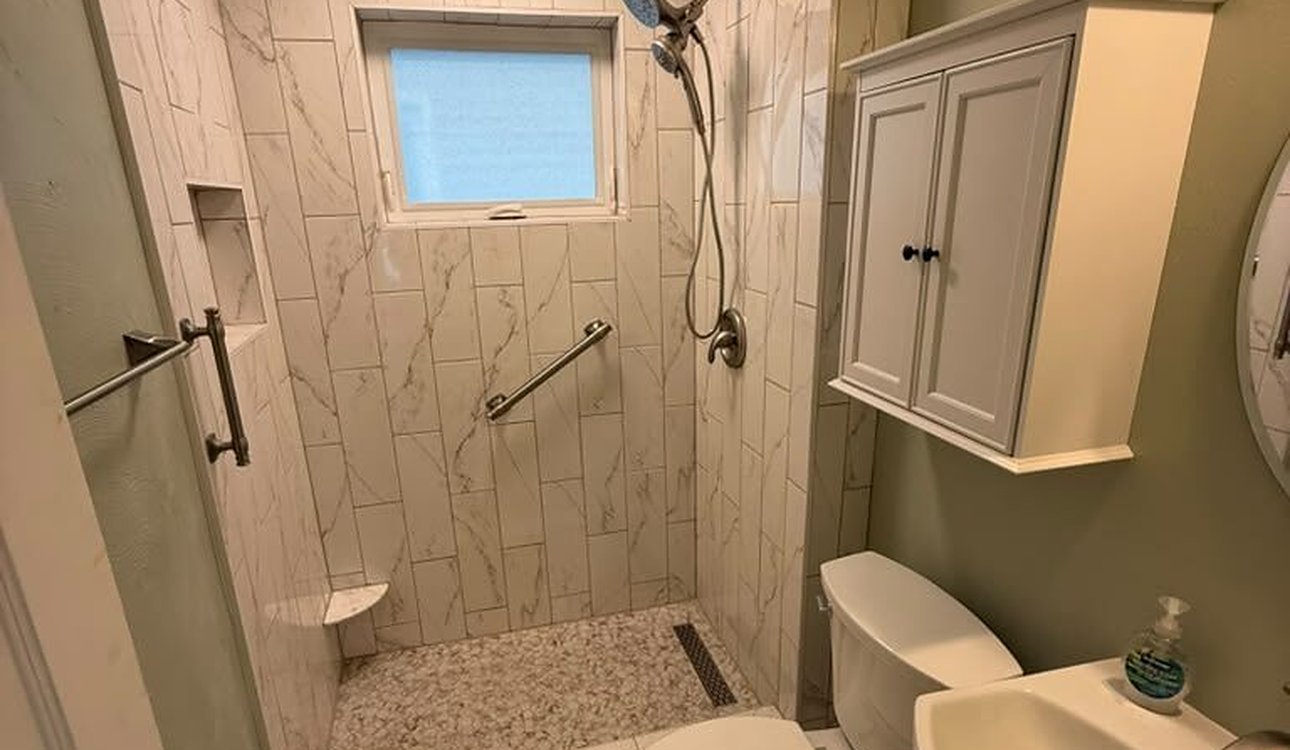
The core upgrade is converting a tub-shower combo into a curbless or low-threshold shower. That means no lip to step over, a linear drain, a sloped floor pitched toward it, and a bench you can actually sit on. Pair it with a handheld sprayer on a slide bar so height stops mattering.
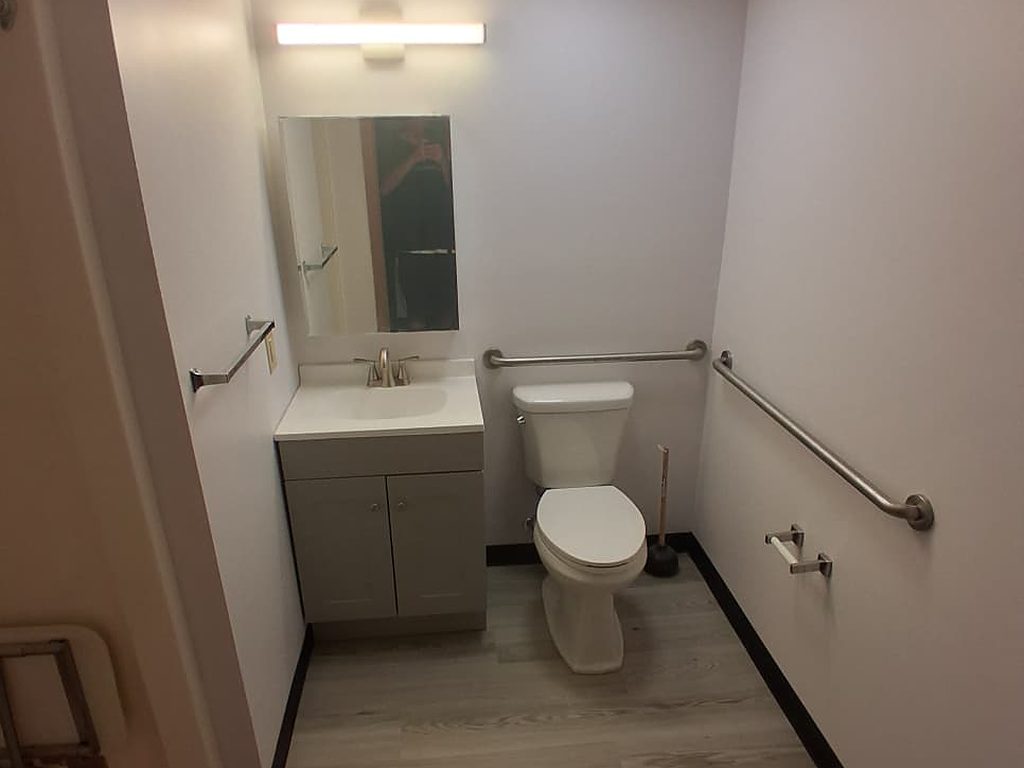
An accessible bathroom with grab bars anchored into blocking, not drywall anchors. The bathroom is where most aging-in-place work starts.
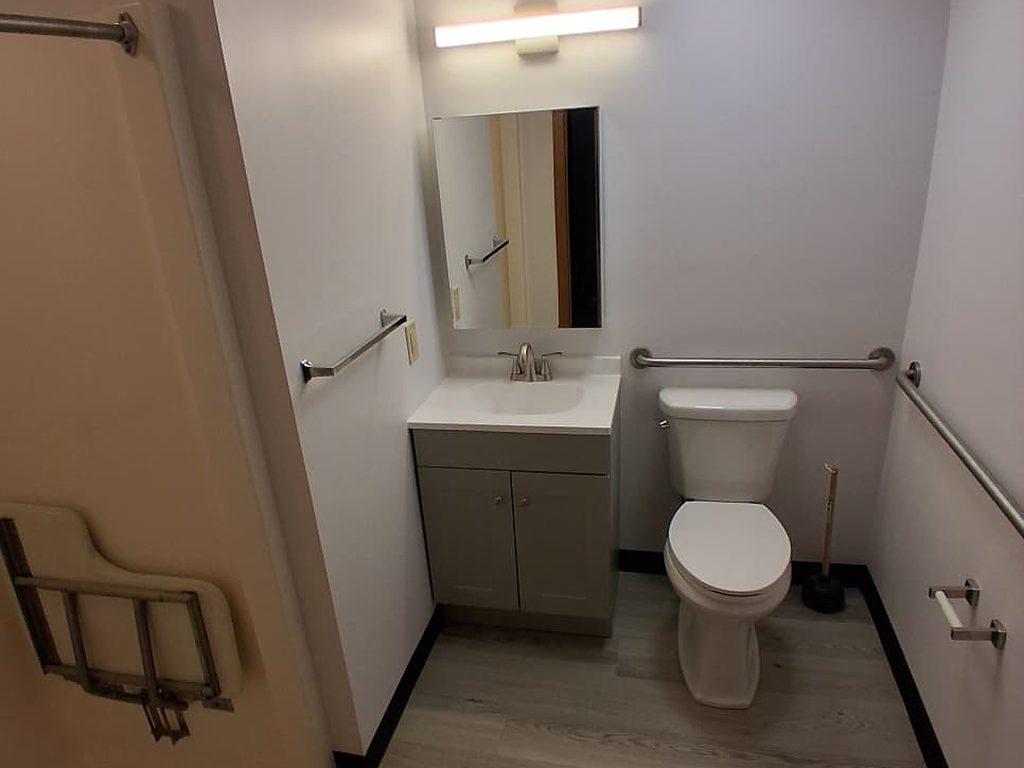
Grab bars deserve a mention here, and we’d ask you to forget the hospital-chrome image. Modern versions come in matte black, brushed brass, and finishes that read as towel bars. The rule is simple: they must anchor into blocking or studs. A bar screwed into drywall anchors is worse than no bar at all, because it gives false confidence right at the moment someone needs real support.
Grab bars beside the vanity and toilet. Modern finishes read as towel bars, not hospital hardware.
What Is the 30% Rule in Remodeling?
The 30% rule says your total remodeling spend shouldn’t exceed roughly 30% of your home’s current market value. That ceiling covers labor, materials, permits, and contingency. It exists to prevent overcapitalization, which is what happens when you sink more into a house than the market will ever return.
Here’s where we’ll push back a little. The rule was built around resale logic, and aging-in-place work isn’t primarily a resale calculation. If a bathroom conversion lets you stay in your home for another twelve years instead of moving into assisted living, the math changes entirely. One year of assisted living in Pennsylvania often exceeds that entire remodel.
Use the 30% figure as a guardrail, not a verdict. Know it, then decide consciously if your situation justifies stepping past it.
Room by Room
The Entry
Most Pittsburgh entries need work. A graded walkway beats a ramp when the lot allows it, because a gentle slope looks like landscaping instead of medical equipment. Where a ramp is unavoidable, build it at a 1:12 slope minimum with handrails on both sides. Add motion-sensor lighting, a covered landing so you’re not fumbling with keys in the rain, and a lever handle instead of a knob.
The Kitchen
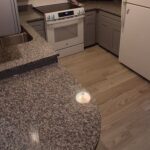
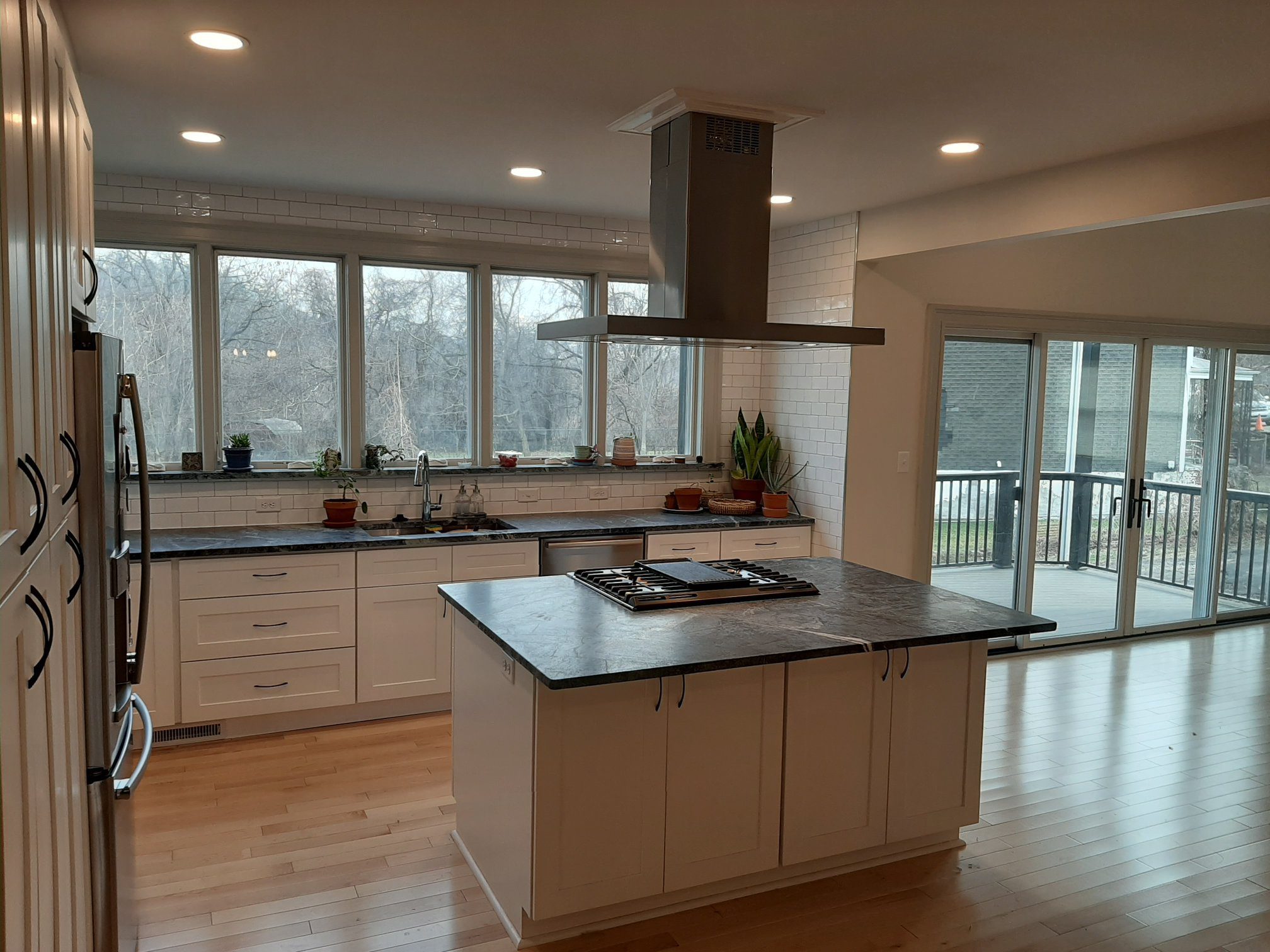
Pull-out drawers instead of deep base cabinets. That single change eliminates the crouch-and-reach that wrecks knees and shoulders. Drop one section of counter to 32 inches so someone seated can prep food comfortably. Move the microwave off the over-range spot, where reaching over a hot burner is a daily hazard, and put it in a drawer or under-counter unit.
Circulation and Light
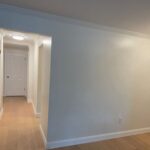
Widen the primary hallway doorways to 36 inches where framing permits. Swing-clear hinges are a cheaper alternative that buys you about two extra inches without touching the studs. Then double your lighting. Vision changes with age, and older Pittsburgh homes were wired for a fraction of the illumination people actually need now.
What Are Some Ideas for Aging in Place Renovations on a Modest Budget?
Not everything requires demolition. A thoughtful accessible home renovation can start small and scale.
Swap every doorknob for a lever. Replace round faucet handles with single-lever or touchless models. Add LED strip lighting under cabinets and along stair treads. Install a comfort-height toilet. Remove throw rugs entirely, which costs nothing and eliminates one of the leading fall hazards in any home. Put a second handrail on the basement stairs.
We’ve seen homeowners knock out that entire list for less than the cost of a new appliance. It’s the most underrated afternoon of work in this whole category.
| Project | Effort Level | Why It Matters |
|---|---|---|
| Curbless shower conversion | Major | Removes the highest-risk step in the home |
| Main-floor bathroom addition | Major | Eliminates stair dependency |
| Straight stairlift | Moderate | Fastest fix for a multi-level house |
| Graded walkway or ramp | Moderate | Handles Pittsburgh ice and slope |
| Doorway widening | Moderate | Enables walker and wheelchair access |
| Lever hardware and lighting | Minor | High impact, low disruption |
Effort levels reflect typical scope and disruption. Site conditions in older Pittsburgh homes can shift any of these significantly.
What Are Some Good House Designs for Aging in Place?
Single-story ranch homes win on paper, and the South Hills and North Hills have plenty of them. But most of us aren’t starting from a ranch, so the practical goal is creating a functional single-level zone inside a multi-level house.
That means a first-floor bedroom, a full bathroom on the same level, laundry off the basement, and a clear path between all three. Many Pittsburgh homes have a dining room or den that converts beautifully into a main-floor bedroom. If there’s a powder room nearby, expanding it into a full bath is often more affordable than people expect, because the plumbing stack is already there.
The underlying principle is universal design: build for everyone, not for a diagnosis. Wide doors help someone with a walker and someone carrying a laundry basket. Good design shouldn’t announce itself.
Preserving Character While You Modernize
This is the objection we hear most. Nobody wants their 1920s foursquare to feel like a clinic.
You don’t have to choose. Curbless showers can be tiled in period-appropriate hex or subway. Grab bars come in unlacquered brass that patinas alongside original hardware. Wider casings can be milled to match existing trim profiles. If you’re weighing this tension, it’s worth reading Living in an Older Pittsburgh Home? Here’s How to Modernize It Without Losing Its Character, which digs into that balance in depth.
Choosing the Right Professional and Sequencing the Work
Ask whether your contractor holds the CAPS credential, short for Certified Aging-in-Place Specialist. It signals training in barrier-free design, not just general remodeling. An experienced Pittsburgh remodeling contractor will also know how our older framing, knob-and-tube remnants, and settled foundations affect scope before demo begins.
Sequence matters. Do the bathroom first, the entry second, and the first-floor bedroom conversion third. If you’re planning a whole-home project anyway, fold accessibility into it now rather than paying twice to open the same walls. For a room-by-room checklist to work through before you call anyone, the free AARP HomeFit Guide is a useful starting point.
Start before you need it. That’s the whole strategy.