A mudroom addition is a small new room built onto the entry your family actually uses, usually the back or side door, to give coats, shoes, bags and gear a place to land before they spread through the house. If your floor plan has no room to carve out a mudroom inside, adding one on is often the cleanest way to get one.
Plenty of Pittsburgh homes were built without a mudroom. The front door opens into the living room, the back door opens into the kitchen, and boots end up wherever they come off. This guide covers what goes in a mudroom, how to find space inside first, and when a mudroom addition is the better answer. You can see more of what we build on our home additions in Pittsburgh page.
What a Mudroom Needs to Do
A mudroom is a transition zone. It catches what comes in from outside and keeps it there. Whatever its size, a good one handles a few jobs:
Drop zone
Hooks, cubbies or lockers give each person a spot for a coat, a bag and the things they grab on the way out.
Somewhere to sit
A bench makes it easy to take off boots and put on shoes, and storage underneath holds footwear.
Tough floors
Wet boots, salt and grit call for a durable floor that is easy to clean, such as tile or luxury vinyl.
Closed storage
Doors or baskets hide seasonal gear, sports equipment and pet supplies so the room does not look cluttered.
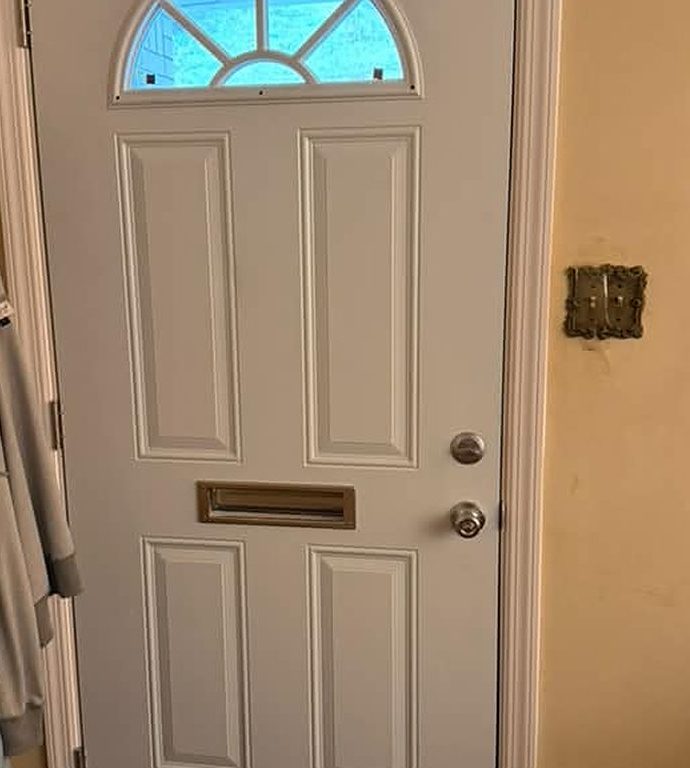
Every mudroom starts with the door your family uses most. For many households that is not the front door.
Look at where people really come and go, then plan the mudroom around that entry.
An entry door with a fan light window, seen from inside the house.
Finding Mudroom Space Inside the House First
Before adding on, look for space you already have near the busiest entry. Many families find a workable mudroom without new construction:
- A hall closet near the door can be opened up into a built in bench and hooks.
- A wide hallway or landing can take a shallow wall of cubbies.
- A laundry room by the back door can share space with a drop zone.
- The garage entry can sometimes give up a few feet for a bench and storage.
These options work when the space is close to the door and wide enough to sit down without blocking traffic. When none of them fit, a mudroom addition makes sense.
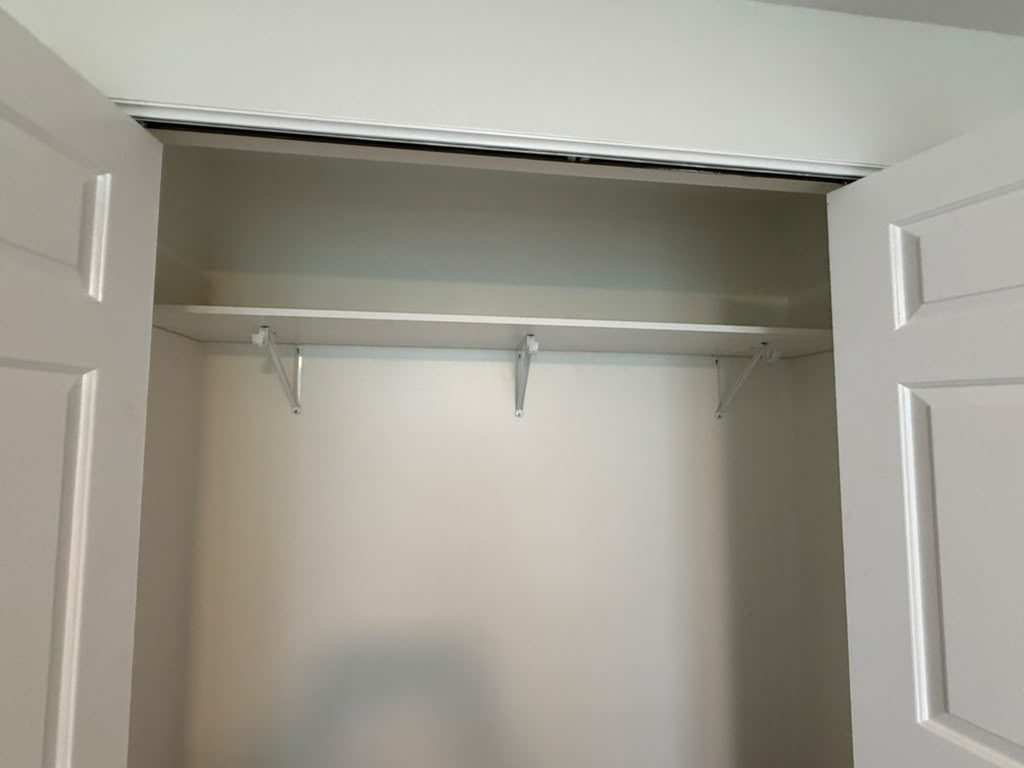
A standard closet near an entry is a common starting point. Removing the doors and adding a bench, hooks and cubbies can turn it into a compact drop zone.
If the closet is too small or in the wrong place, that is a sign the house may need a mudroom addition instead.
A bifold door closet with a shelf and a hanging rod.
When a Mudroom Addition Is the Better Answer
A mudroom addition is worth considering when:
There is no space inside
The entry opens straight into the kitchen or living room, and nothing nearby can be given up.
The family is busy
Kids, sports gear, pets and work bags all need a home. A dedicated room handles the volume.
The entry needs rework anyway
A worn back porch or stoop is a natural spot for a small addition that replaces it.
You want more than a mudroom
A mudroom addition can include a laundry area, a half bath or a pantry, so the new space does more than one job.
Planning a Mudroom Addition
A mudroom addition is small, but it is still an addition. It needs a foundation, walls, a roof, a door to the outside and a connection to the house. The planning steps are similar to any addition, which we cover in our guide to planning a home addition.
- Location. Build it at the entry your family uses, usually the back or side door near the driveway.
- Size and layout. Plan for enough width to sit on a bench while someone else walks past.
- Roof and exterior. The roof line, siding and windows should match the house so the addition looks like it belongs.
- Heat and light. A mudroom that stays warm and has good lighting is a room people actually use.
- Local rules. Setbacks and permit requirements vary by municipality, and we check with the local office for each job.
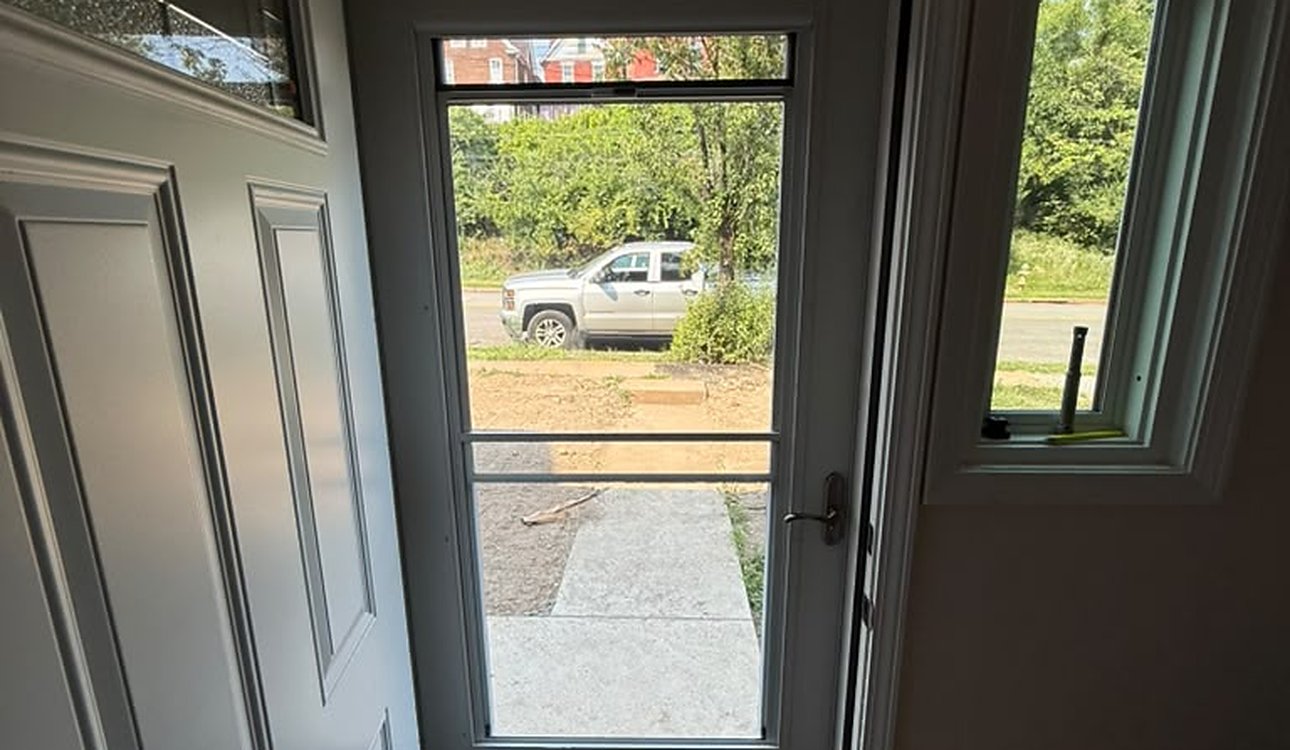
A storm door and a solid entry door help keep weather out of the mudroom. In Pittsburgh, that matters every time snow or rain gets tracked in.
Doors, windows and finishes should be chosen with heavy daily use in mind.
A new entry door and storm door seen from inside the house.
Mudroom Features Families Ask For
Lockers or cubbies
One spot per person keeps things sorted and makes it obvious where everything belongs.
Bench with storage
A sturdy bench with shoe storage below gets used every single day.
Pet station
A spot for a leash, food or a washing area for muddy paws.
Laundry or sink
A washer, dryer or utility sink nearby means dirty clothes and gear do not travel through the house.
Charging and mail spot
A small shelf for keys, mail and phones keeps the kitchen counter clear.
Durable finishes
Washable paint, tile or vinyl floors and hard wearing trim hold up to daily traffic.
Matching the Mudroom to How Your Family Lives
Two families can need very different mudrooms. Before design starts, think about a normal weekday and a snowy Saturday. Who comes in through this door? What do they carry? Where does it go now?
A family with young kids may want low hooks and cubbies children can reach on their own. A household with dogs may care most about a washable floor and a spot to towel off paws. Someone who works from home may want a package shelf and a place for deliveries. Writing these habits down gives the design a clear job, and it keeps the room from becoming a nicer looking version of the same clutter.
Mistakes to Avoid
- Putting the mudroom at a door the family does not use
- Making it too narrow to sit and pass at the same time
- Choosing flooring that cannot handle water and salt
- Skipping closed storage, so the room looks cluttered
- Forgetting light and heat, which turns the room into a cold hallway
If a mudroom is one of several things your home is missing, read our guide on home addition vs moving to think through the bigger picture. Families planning room for a parent may also find our multigenerational home addition ideas useful.
Why Homeowners Choose JL Home Builders
JL Home Builders is a family owned company that has been building additions and remodeling homes in Pittsburgh since 2010. We design with homeowners in our showroom and build with our own crew. Every project starts with a free in home consultation, where we look at your entries and how your family moves through the house.
Frequently Asked Questions
What is a mudroom addition?
It is a small room added onto a home’s busiest entry to hold coats, shoes, bags and gear. It often includes a bench, hooks, cubbies and closed storage.
Can you create a mudroom without an addition?
Often, yes. A closet, hallway, laundry room or garage entry near the door can sometimes be reworked into a mudroom. An addition makes sense when none of those fit.
Where should a mudroom go?
At the door your family actually uses, which is often the back or side door, not the front door.
What flooring is best for a mudroom?
Durable, water resistant flooring that is easy to clean, such as tile or luxury vinyl, handles snow, salt and grit best.
Do you need a permit for a mudroom addition?
Requirements vary by municipality. We check with the local building office for each job before work begins.
Related reading
Tired of shoes and coats piling up by the door? Schedule a free in home consultation and we will help you find the right spot for a mudroom, inside or as an addition.