A budget bathroom remodel that holds up comes down to two rules: keep the plumbing where it is, and spend on the parts that protect the room, like waterproofing and a solid floor, before the parts you only look at. Get those right and you can save on finishes without the room wearing out early.
Cheap fixes that fail are not savings. Peeling paint, lifting flooring and a shower that leaks behind the tile cost more to fix than they saved. Below are the budget bathroom remodel tips we give homeowners when they ask how to stretch their budget without cutting the wrong corners. They come from the planning we do in our showroom for every project in our bathroom remodeling in Pittsburgh.
Where a Budget Bathroom Remodel Should Spend and Save
Before you pick tile, it helps to know what drives the cost. Labor and the work behind the walls usually matter more than the finish materials themselves. We cover this in detail in the most expensive part of a bathroom remodel, but the short version looks like this.
Spend here
Waterproofing in the shower, a sound subfloor, proper ventilation, good valves and a properly set toilet. These are the parts that fail quietly and cause damage when they are done cheaply.
Save here
Tile style, vanity style, mirror, lighting fixtures, hardware and paint color. You can choose simpler versions now and upgrade them later without opening a wall.
Keep the Layout Where It Is
The single biggest budget decision in any bathroom is whether the fixtures move. Moving a toilet, shower drain or vanity means opening floors and walls, rerouting pipes and often rebuilding parts of the subfloor. Keeping the toilet, tub or shower and sink in their current spots lets the money go into what you actually see and use.
A layout that stays put can still feel completely new. A different vanity, new tile, a new tub or shower and better lighting change the room far more than moving the toilet a few feet ever would.
The same thinking applies to the window, the door and the heat source. Leaving them where they are keeps framing and trim work small, and it lets the design focus on the pieces you choose in the showroom: tile, vanity, lighting and fixtures.
Budget Bathroom Remodel Tips That Actually Hold Up
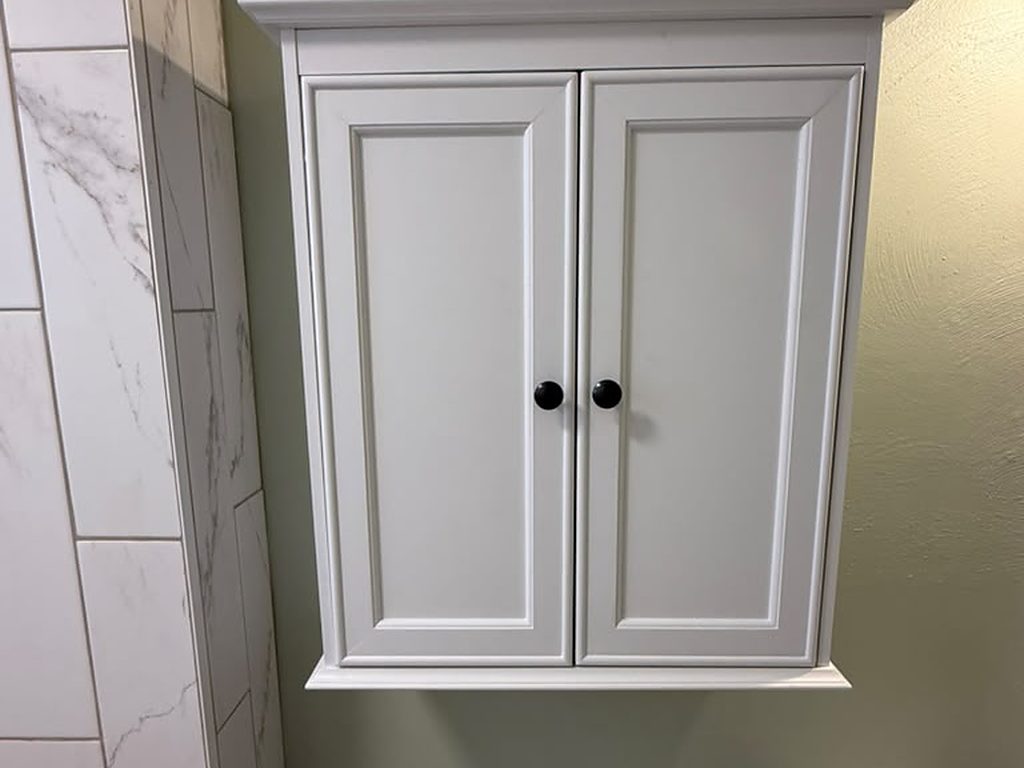
Add storage without a bigger vanity. A wall cabinet over the toilet uses space that is usually empty and gives you room for towels and supplies. It costs far less than enlarging the vanity or building in shelving.
Choose a standard size vanity. Stock sizes come with matching tops and sinks, so there’s no custom cutting. Pick one with solid construction and good drawer hardware, since a vanity gets opened every day.
A white two door wall cabinet with black knobs mounted beside a tiled wall.
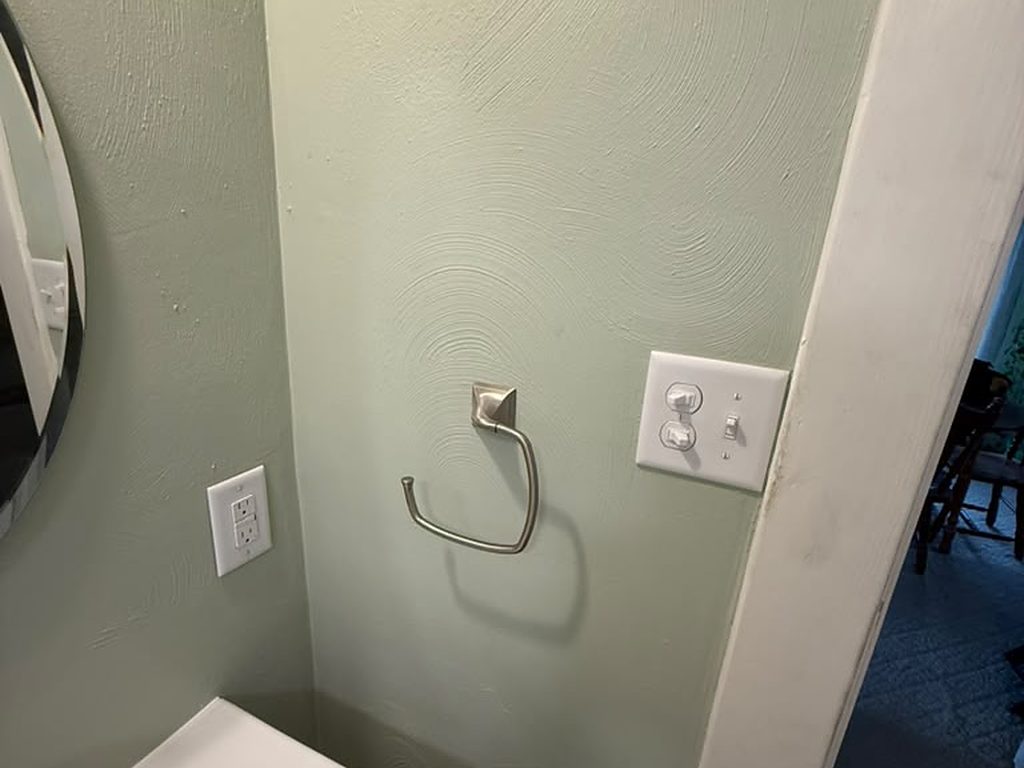
Coordinate the small hardware. Towel rings, towel bars, toilet paper holders and cabinet knobs in one finish make the room read as one design, even when the pieces themselves are simple.
That same restraint is the heart of a spa feel, and our post on zen bathroom ideas shows how to carry it through color, tile and storage.
Update outlets and switches while you’re in there. New covers and devices are a small part of the job but make the room look finished. If the walls are open anyway, it’s the right time to fix wiring that is out of date.
A brushed nickel towel ring beside a bathroom sink, with a new outlet and a light switch on the wall.
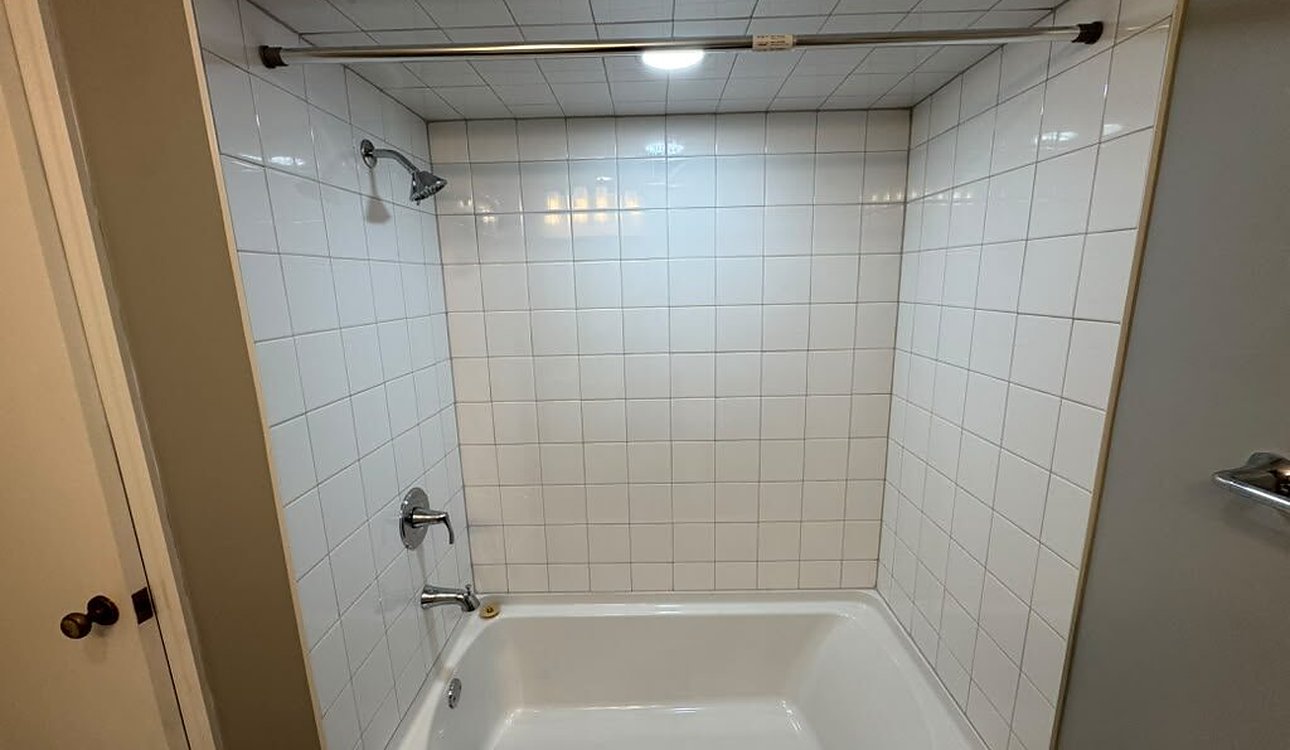
Pick a simple tile and install it well. A plain white tile in a standard size costs less, is simpler to install and stays in style. What makes it last is what’s behind it: a flat wall, proper backer board and a waterproofing layer.
Keep the tub if it’s sound. A tub that is in good shape can stay while the surround, valve and showerhead are replaced. If you are thinking about switching to a shower, our walk-in shower vs. tub guide covers how to decide.
A white tiled tub surround with a chrome showerhead, valve and a straight shower rod.
How to Renovate a Bathroom on a Budget, Step by Step
If you are trying to figure out how to renovate a bathroom on a budget, the order of your decisions matters as much as the materials. These are the steps we walk through with homeowners who want the room to last without paying for things they do not need.
- Decide what is actually wrong. Separate the problems, like a soft floor, a leaking valve or poor ventilation, from the things you simply do not like the look of.
- Keep the plumbing where it is. Leaving the toilet, tub or shower and sink in their current spots lets more of the budget go to what you see and use.
- Fix what is behind the walls first. Waterproofing, the subfloor and the vent fan come before any finish, because they decide how long the finishes last.
- Pick one place to splurge. A good shower valve, a sturdy vanity or a tile you love will carry the room. Keep the rest simple and durable.
- Choose classic, available finishes. Standard tile sizes, stock vanity widths and widely sold fixtures are easier to source and easier to replace later.
- Leave room for surprises. Older Pittsburgh bathrooms often hide water damage or old supply lines, so plan for a contingency before you choose upgrades.
Following that order keeps a budget bathroom from becoming a bathroom you redo again, which is the most expensive outcome of all.
Corners Not to Cut
Some savings come back as bigger bills. These are the places we never recommend going cheap, even on the tightest bathroom budget.
Waterproofing
Tile and grout are not waterproof on their own. A proper membrane behind the shower tile is what keeps water out of the framing.
Ventilation
A fan that actually moves air out of the room protects paint, drywall and grout from moisture. A weak or missing fan shortens the life of everything else.
The subfloor
New flooring over a soft or damaged subfloor will crack or lift. If the subfloor needs repair, it has to happen before the finish floor goes down.
Valves and supply lines
These sit behind the wall where you cannot reach them easily. A good valve installed correctly is cheaper than opening a finished wall later.
Plan the Remodel Around What You Will Change Later
A smart budget plan leaves room for upgrades. If you want a nicer light fixture or mirror in the future, place the electrical box where it will work for both. If you might add a grab bar or a heavier shelf, add blocking in the wall now, while it’s open. Small decisions like these cost little during the remodel and save you from opening walls again.
A good rule of thumb: anything behind the wall or under the floor should be done right the first time. Anything on the surface can be upgraded later.
What Adds Value Without Adding Much Cost
Clean, bright and easy to keep up is what most people want from a bathroom. Good lighting at the mirror, enough storage, a quiet fan and a shower that’s easy to clean make a bigger difference to daily life than expensive finishes. For more on which upgrades matter most, see what adds the most value to a bathroom.
If you are deciding how much of the work to take on yourself, our guide on DIY vs hiring a pro for a bathroom remodel walks through which tasks are reasonable for homeowners and which ones are worth leaving to a crew.
How We Help Homeowners Stay on Budget
Staying on budget starts with clear choices made early. We design every bathroom with homeowners in our showroom, so the fixtures, tile and vanity are chosen before work starts. Then our own crew builds it, which keeps the scope from drifting between trades. Every project is different, and we’ll tell you honestly where your money will do the most good in your room.
Frequently Asked Questions
What is the cheapest way to remodel a bathroom?
Keep the layout as it is and replace the surfaces and fixtures you see every day. Avoid moving plumbing, and put your money into the parts that protect the room, like waterproofing and a sound floor.
Is it worth keeping the existing tub?
If the tub is in good condition and you like its size and shape, keeping it can free up budget for tile, the vanity or lighting. If it’s damaged or you want a shower, replacing it makes more sense.
What should you never skimp on in a bathroom remodel?
Waterproofing, ventilation, the subfloor and the shower valve. These are hidden once the room is finished and are the most expensive things to fix later.
Can you remodel a bathroom without changing the layout?
Yes. Most budget remodels keep the toilet, sink and tub or shower in place. New tile, a new vanity, new fixtures and better lighting can make the room feel completely different.
Does a budget bathroom remodel still need a contractor?
If the work involves plumbing, electrical, waterproofing or tile, a crew that handles all of it in the right order protects your budget from rework.
Related reading
Want help deciding where your bathroom budget should go? Schedule a free in home consultation and we’ll walk through the options for your room.