
Should you remodel one room at a time or renovate the whole house? If three or more rooms need work, or your wiring, plumbing, or layout is outdated, renovating the whole house usually saves money and time. If only one or two spaces need attention and cash flow is tight, going room by room is often the smarter choice.
That’s the short answer. The real answer depends on your house, your budget, and how much disruption your family can handle. We walk through older homes around Pittsburgh every week, and the right call is rarely the same twice. Here’s how we help homeowners think it through.
Should You Remodel One Room at a Time or Renovate the Whole House? Weighing the Trade-Offs
You’re not alone in weighing this. Harvard’s Joint Center for Housing Studies projects that U.S. homeowners will spend about $518 billion on improvements and repairs by the end of 2026. Many people are staying put and upgrading instead of moving. Both approaches can work well, but they solve different problems.
The Case for a Phased Renovation
A phased renovation spreads the cost out over months or years. You can usually live in the house while work happens in one area. You also get to see what you love, and what you don’t, before moving on to the next room. For many families, it’s the only way the budget works.
The downside is repeated setup. Every phase brings new permits, new dust barriers, and crews starting over. Sometimes you pay twice. We’ve opened a freshly finished ceiling to run plumbing for an upstairs bathroom that could have been roughed in during the first project.
The Case for Doing It All at Once
When homeowners come to us for whole home remodeling Pittsburgh projects, the biggest advantage is coordination. The electrician opens the walls once. The plumber runs new lines once. The design flows from room to room instead of looking like five different decades.
It’s intense, though. Many families move out for part of the project. That’s the trade-off: a harder few months in exchange for a finished home.
| Factor | One Room at a Time | Whole House |
|---|---|---|
| Upfront cost | Lower per phase | Higher |
| Total cost | Often higher from repeated setup | Usually lower overall |
| Disruption | Mild, but lasts for years | Heavy, but shorter |
| Design consistency | Harder to maintain | Easier to plan |
| Best fit | Tight budgets, mostly sound homes | Dated systems, layout changes |
Why Pittsburgh’s Older Homes Change the Math
Pittsburgh has some of the oldest housing stock in the country. About half of the homes within city limits were built before 1940. Census Bureau survey data shows the metro area’s median home dates to 1955, nearly twenty years older than the national median. Age matters because old houses hide things.
Knob-and-tube wiring. Galvanized pipes. Plaster that crumbles as soon as you cut into it. We regularly see a “simple” bathroom refresh turn into a wiring upgrade once the wall comes down. If you know your home’s systems are original, a whole-house plan is usually the more honest budget.
Lead paint is another factor. Any home built before 1978 may contain it, and the EPA requires paid contractors who disturb painted surfaces in those homes to be lead-safe certified. That applies whether you’re redoing one room or ten. With a phased approach, you’ll go through containment and cleanup again with every phase.

What Is the Hardest Room to Remodel in a House?
The kitchen, almost every time. It brings more trades into one room than any other space: plumbing, electrical, gas, ventilation, cabinetry, countertops, tile, and appliances. Cabinets and counters also have long lead times, so one delay can hold up the whole schedule.
It also shuts down daily life. You can skip the guest room for a month. You can’t easily skip dinner. Bathrooms come in a close second because waterproofing has to be done perfectly in a tight space.
If you’re phasing, schedule the kitchen for a time when a temporary setup in the dining room or basement is realistic. A microwave, a coffee maker, and a folding table go a long way.
In What Order Should You Remodel a Room?
Work from the top down and from the inside out. Planning and permits come first, then demolition. After that comes any structural repair, followed by rough-in plumbing, electrical, and HVAC. Once those pass inspection, crews add insulation and drywall.
Next come ceilings and walls, then cabinets and built-ins. Flooring usually goes in near the end so it doesn’t get scratched or stained. Trim, final paint, and fixtures finish the job.
The same logic applies to the whole house. Fix the structure and the envelope first, meaning the roof, foundation, and water issues. Then update the systems. Kitchens and baths come next, with cosmetic rooms last. Skipping ahead is how people end up with beautiful floors sitting under a leaking roof.
What Is the 30% Rule for Renovations?
The 30% rule is a common rule of thumb: don’t spend more than about 30% of your home’s current market value on renovations. On a $250,000 house, that means keeping the project around $75,000. The idea is to avoid over-improving for your neighborhood, where you’d spend more than a future buyer will pay back.
It’s a guideline, not a law. If you plan to stay for fifteen years, resale value may matter less than how the house works for your family. Still, it’s a useful gut check. If your wish list goes well past 30%, splitting the work into phases or cutting back the scope can keep things grounded.
When Not to Renovate a House?
Sometimes the best advice we can give is to wait. Hold off if:
- You’re selling within a year or two. Small repairs and fresh paint usually pay off better than major remodels.
- Your budget has no cushion. We recommend setting aside 10 to 20% for surprises, especially in older homes.
- There are unresolved foundation or water problems. Cosmetic upgrades won’t hold up over a wet basement or a shifting wall.
- The renovation cost is close to the cost of moving. At that point, compare the two options side by side.
Timing matters too. A new baby, a job change, or a stretched budget can turn a good project into a stressful one. Renovations go best when the household has room to absorb a few surprises.
Should You Remodel Your Basement Before Finishing Other Rooms?
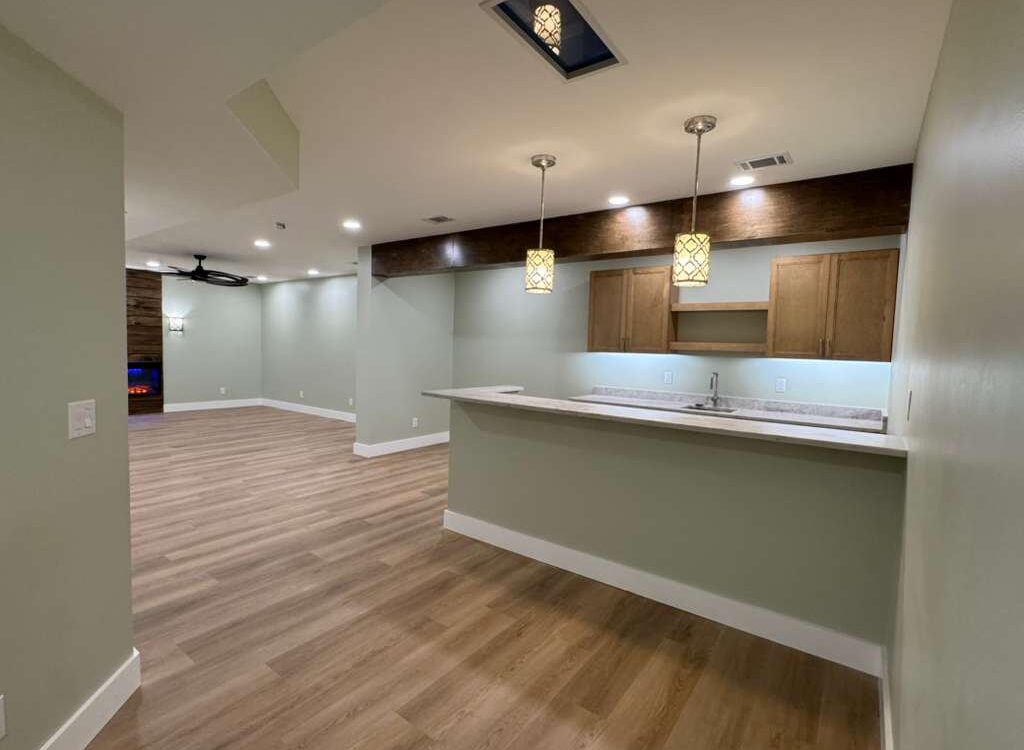
In Pittsburgh, the basement is often a smart first phase. Our hillside lots and wet springs mean moisture problems are common, and fixing water issues early protects everything built above. A finished basement can also serve as a living area while other rooms are under construction.
The one firm rule is to never finish a basement before the water is under control. Drywall and carpet over a damp foundation will fail. Waterproof first, then finish.
Making the Call for Your Home
So, should you remodel one room at a time or renovate the whole house? If your home’s bones and systems are solid and only a few spaces feel dated, phasing is a practical and flexible choice. If the wiring, plumbing, or layout is holding the whole house back, doing it all at once usually costs less in the end. Either way, start with a thorough walkthrough before committing to a plan.
That’s where an experienced Pittsburgh remodeling contractor can help. We’ll look behind the surface, tell you honestly what the house needs, and help you build a plan that fits your budget and your life. Sometimes that’s one room. Sometimes it’s the whole house. Our job is to help you figure out which.