Kitchen designer vs contractor: a designer plans the layout, storage and finishes, while a general contractor builds it, managing demolition, trades, materials and the schedule. Most homeowners don’t need to hire two separate companies. A design build remodeler that does both under one roof is usually the simplest path, and a separate designer mainly makes sense for very complex or highly custom projects.
This is one of the first questions Pittsburgh homeowners run into when they start planning, and the answer shapes how smoothly the whole project goes. Below we break down what each role does, when you might want both, and which order to hire in.
For context, we’re a design build company. We design every kitchen in our showroom and build it with our own crew, so we’ve seen how both approaches work in practice. If you’re exploring kitchen remodeling in Pittsburgh, here’s how to decide.
Understanding the Two Roles Before You Hire
What a kitchen designer does
Measures the room, plans the layout and work zones, chooses cabinet sizes and interior storage, and helps you pick finishes that work together. The result is a set of drawings and selections.
What a general contractor does
Turns that plan into a finished room: demolition, framing, plumbing, electrical, drywall, flooring, cabinet and countertop installation, and the final punch list. The contractor also manages materials and the order of work.
The overlap is where homeowners get confused. Some designers offer light project oversight. Many contractors have design help in house. The question isn’t which title someone has. It’s who is responsible for getting the plan right and who is responsible for building it to that plan.
Do You Need Both for a Standard Remodel?
For most kitchens, no. If you’re replacing cabinets, counters, backsplash and appliances, and maybe adjusting the layout, one company that handles design and construction can cover the entire scope. Communication is simpler, and there’s one team accountable for the result.
That’s true even for bigger changes, as long as the company has real design capability and not just a quick sketch. Ask to see how they plan storage, lighting and appliance clearances. Our guide to the big decisions to make before demo day lists what a good plan should cover.
When the same team designs and builds a kitchen, details like pendant placement, island size and backsplash layout are decided by the people who will install them.
That shortens the loop between a question on site and an answer, because nobody is waiting on an outside office to revise drawings.
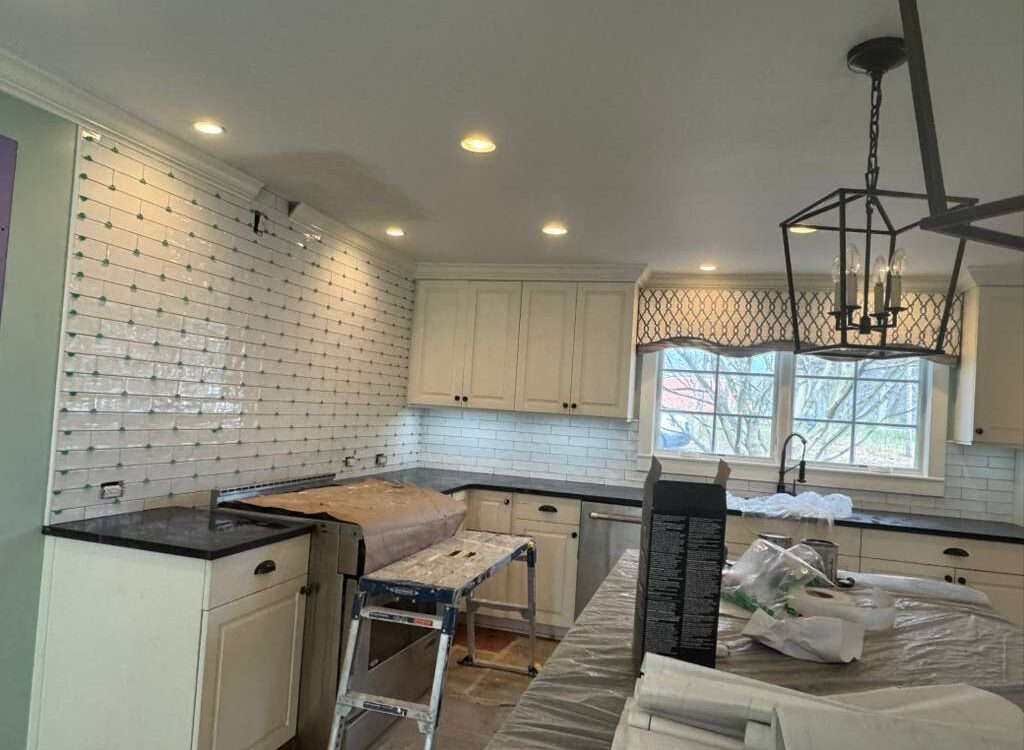
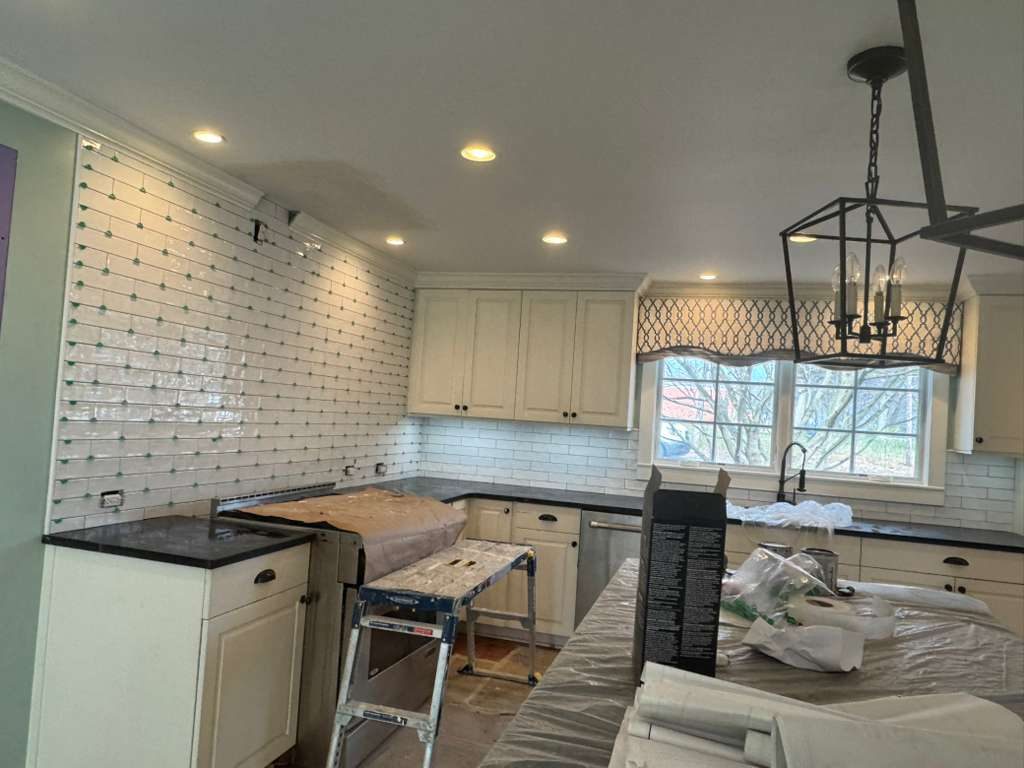
A white shaker kitchen near the end of a remodel, with the backsplash and pendant in and the island still being finished.
When Older Pittsburgh Homes Change the Equation
Pittsburgh has a lot of older housing, and older kitchens come with plaster walls, aging wiring, uneven floors and framing that isn’t always where you expect it. When a remodel involves moving a wall, relocating plumbing or changing the footprint of the room, the plan has to account for what the building can actually support. Our post on remodeling a kitchen in an older home covers what tends to turn up.
This is where having design and construction close together really helps. Once walls are open, the plan may need to adjust. If the designer and builder are the same team, that adjustment happens quickly. If they’re separate, every change goes back and forth between two companies.
Do You Need a Contractor to Remodel Your Kitchen?
For anything beyond paint and hardware, almost always. A kitchen involves plumbing, electrical, ventilation, cabinetry, countertops and tile, and those trades have to be scheduled in the right order. Permit requirements vary by municipality, and we check with the local office for each job, but whatever the paperwork, the coordination is the hard part.
Some homeowners take on demolition or painting themselves. If you’re considering that, talk it through with your contractor first so it fits the sequence.
Do You Hire a Designer or Contractor First?
It depends on how you want to work.
- Independent designer first. Useful if you want a very custom result and plan to collect bids from several builders on the same drawings. Expect more coordination on your end.
- Design build company. One call, one plan, one team. You make selections, the same company builds it, and questions get answered by the people doing the work.
- Contractor only. Fits like for like replacements where the layout stays the same and the main job is installation.
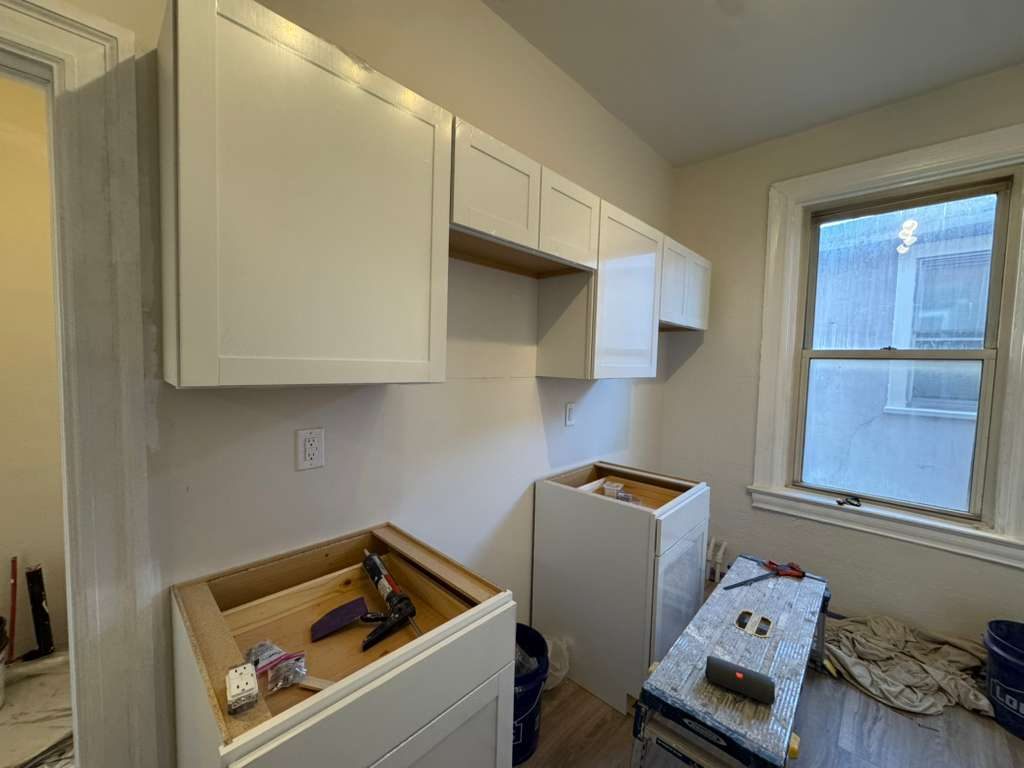
Cabinet installation is where design and construction meet. Box sizes, fillers and appliance openings on the drawing have to match the real walls.
When the installer can talk directly to whoever designed the run, small adjustments get solved on the spot.
White shaker wall and base cabinets being installed beside a window.
Kitchen Designer vs Contractor: Quick Comparison
Designer plus separate contractor
Best for highly custom or complex projects. Advantage: detailed drawings you can bid out. Tradeoff: two companies to coordinate.
Design build company
Best for most full kitchen remodels. Advantage: a single point of accountability from first sketch to final walkthrough.
Contractor only
Best for simple replacements. Advantage: straightforward installation. Tradeoff: little help with layout and storage planning.
Pick the option that matches your actual project, not the one you wish your project was.
Avoiding the Most Common Mistakes
Before you sign anything, get clear on what’s included and what isn’t. A vague scope is a common source of misunderstandings later. Make every selection before demolition starts, because choices made under pressure are the ones people regret. For more, read our post on kitchen remodel mistakes to avoid.
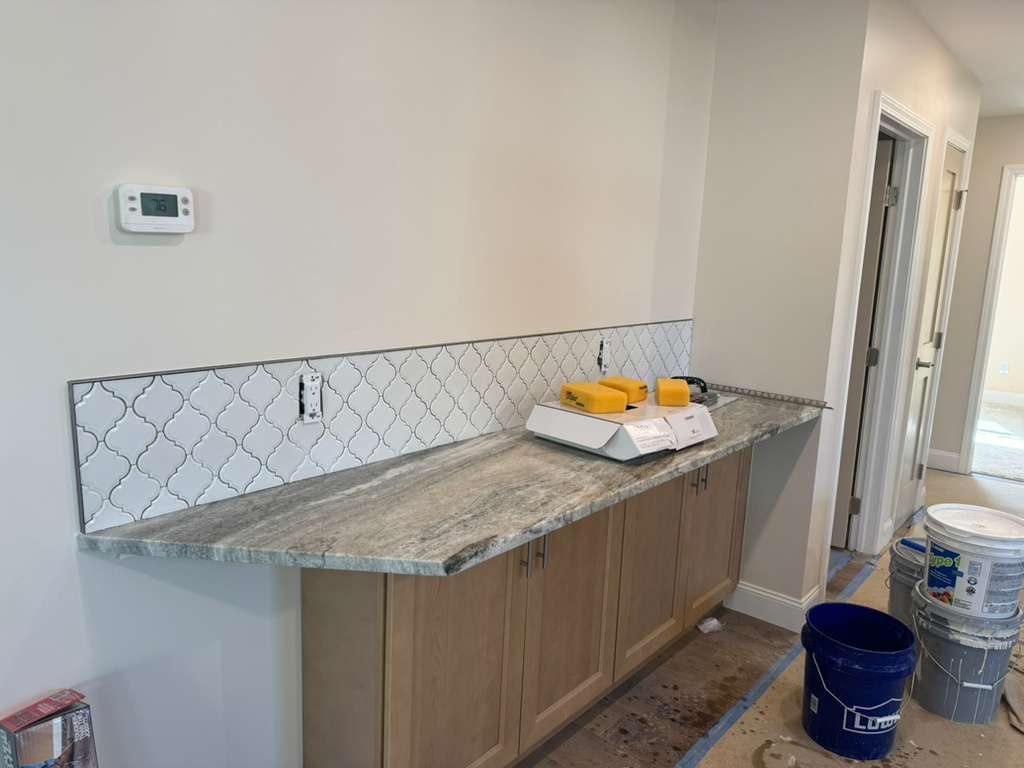
Finish choices like counter color and backsplash pattern look simple on a sample board. In the room, they have to line up with outlets, windows and cabinet ends.
Having those choices made, and checked by the people installing them, keeps the last stage of a kitchen clean and on track.
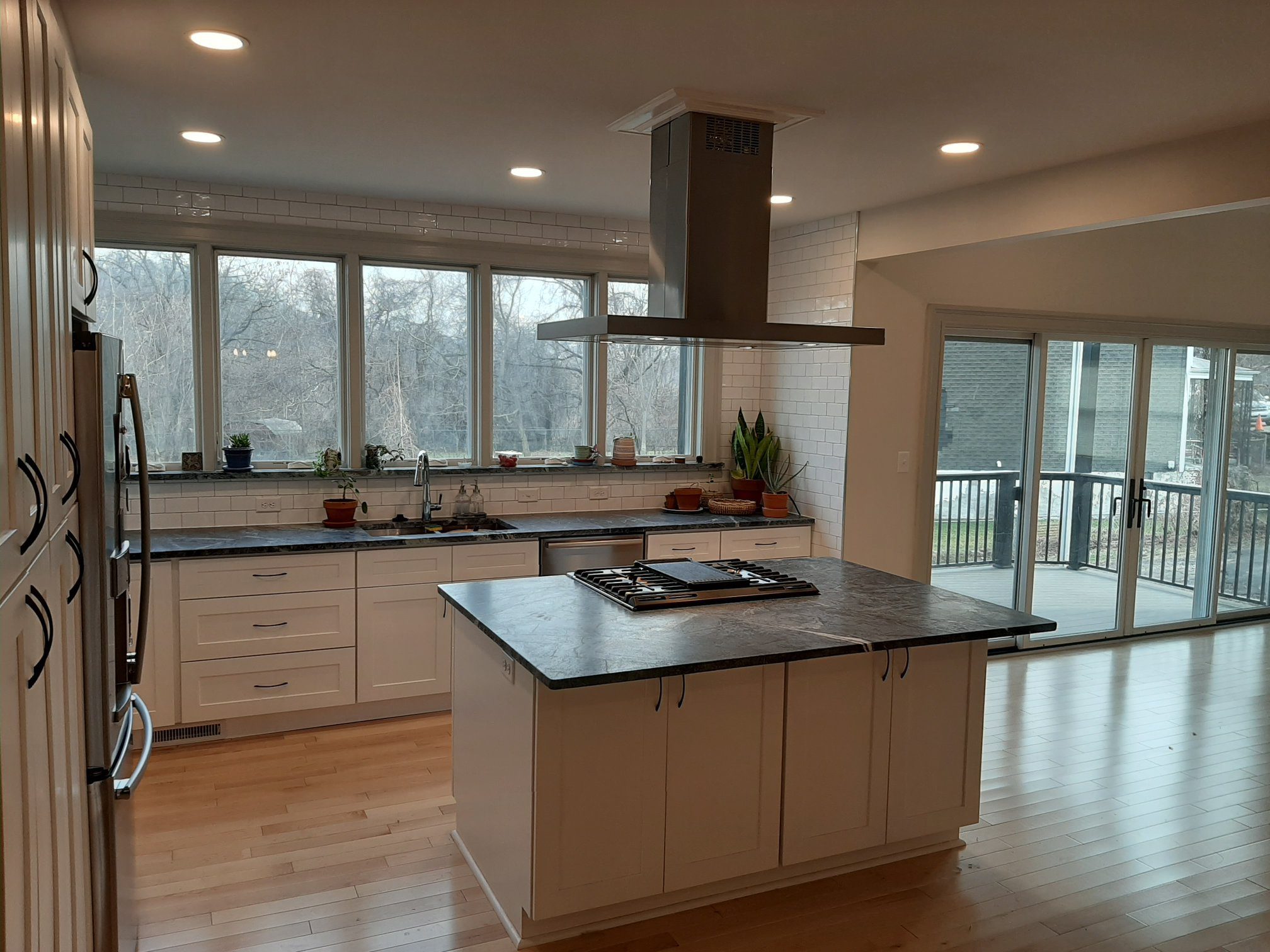
Light wood cabinets with a gray and tan granite counter and a white arabesque tile backsplash.
Our Recommendation
For most Pittsburgh homeowners, a design build company wins on coordination and accountability. You get design and construction from the same team, working toward the same finish line, with fewer handoffs when something needs adjusting mid project. That’s how we work: designed in our showroom, built by our own crew.
If your project is unusually complex and you want competing bids on one set of drawings, an independent designer plus a separate builder can still make sense. Either way, ask each company exactly who will design your kitchen and who will be in your house building it.
If you’re still comparing options, our guide on how to choose a custom kitchen designer lists what to bring to the first meeting.
Frequently Asked Questions
What is the difference between a kitchen designer and a contractor?
A designer plans the layout, storage and finishes. A contractor builds it, coordinating demolition, trades, materials and the order of work. A design build company does both.
Do you need a kitchen designer if your contractor offers design?
Usually not. If the contractor has real design capability, covering layout, storage, lighting and appliance planning, one company can handle the whole project.
Should you hire a designer or contractor first?
If you want competing bids on custom drawings, hire the designer first. If you want one team responsible for everything, start with a design build company.
Is design build more expensive?
Every project is different. Design build often saves effort on coordination, and the real cost driver is the scope of the kitchen itself, not the hiring model.
Can a contractor change the design during construction?
Sometimes it’s necessary when walls reveal something unexpected. Adjustments are simplest when the people who designed the kitchen are the same people building it.
Related reading
Want to see how design and construction work together? Visit our showroom and talk with the team that will build your kitchen. Schedule a free consultation.