
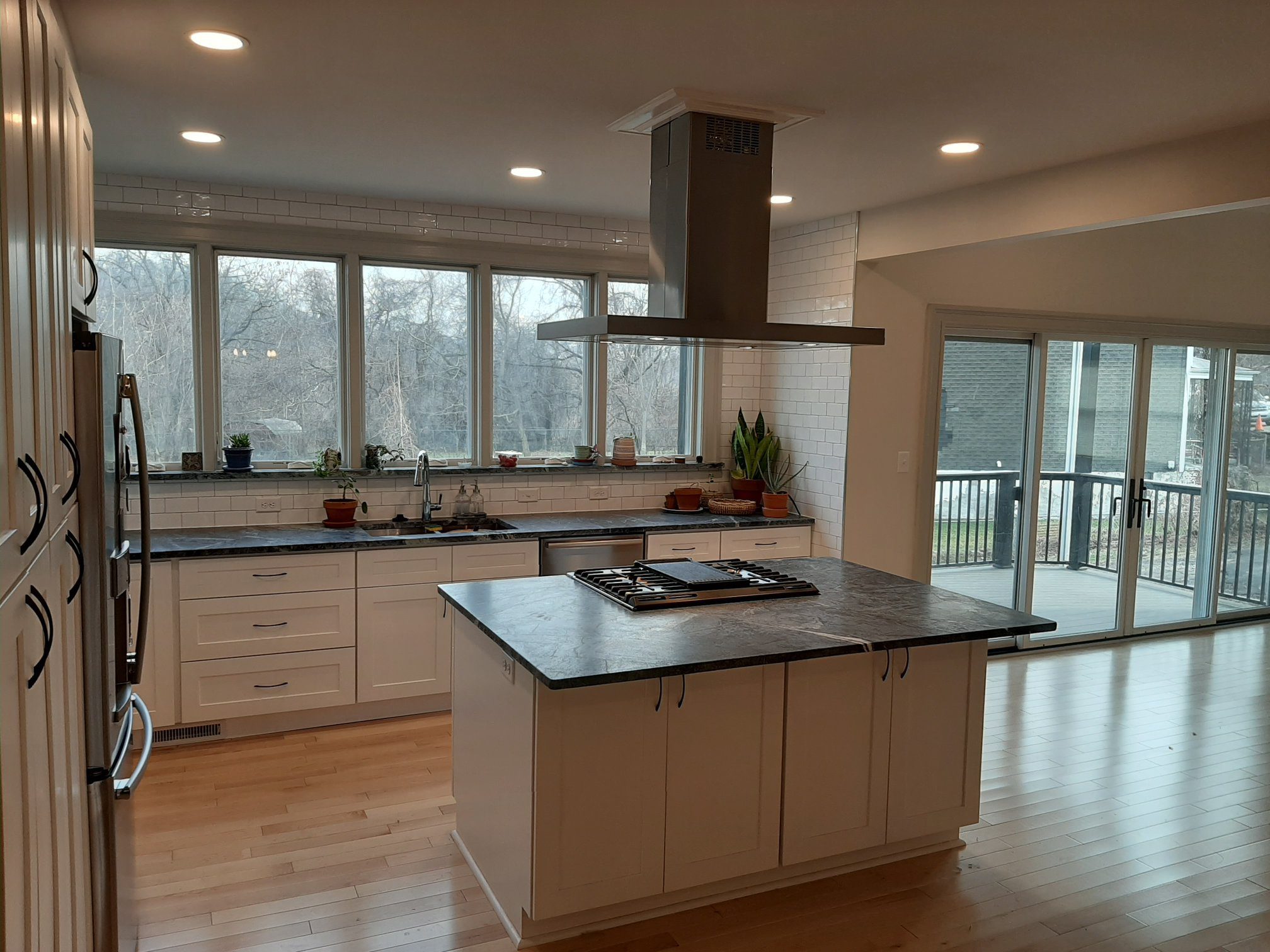
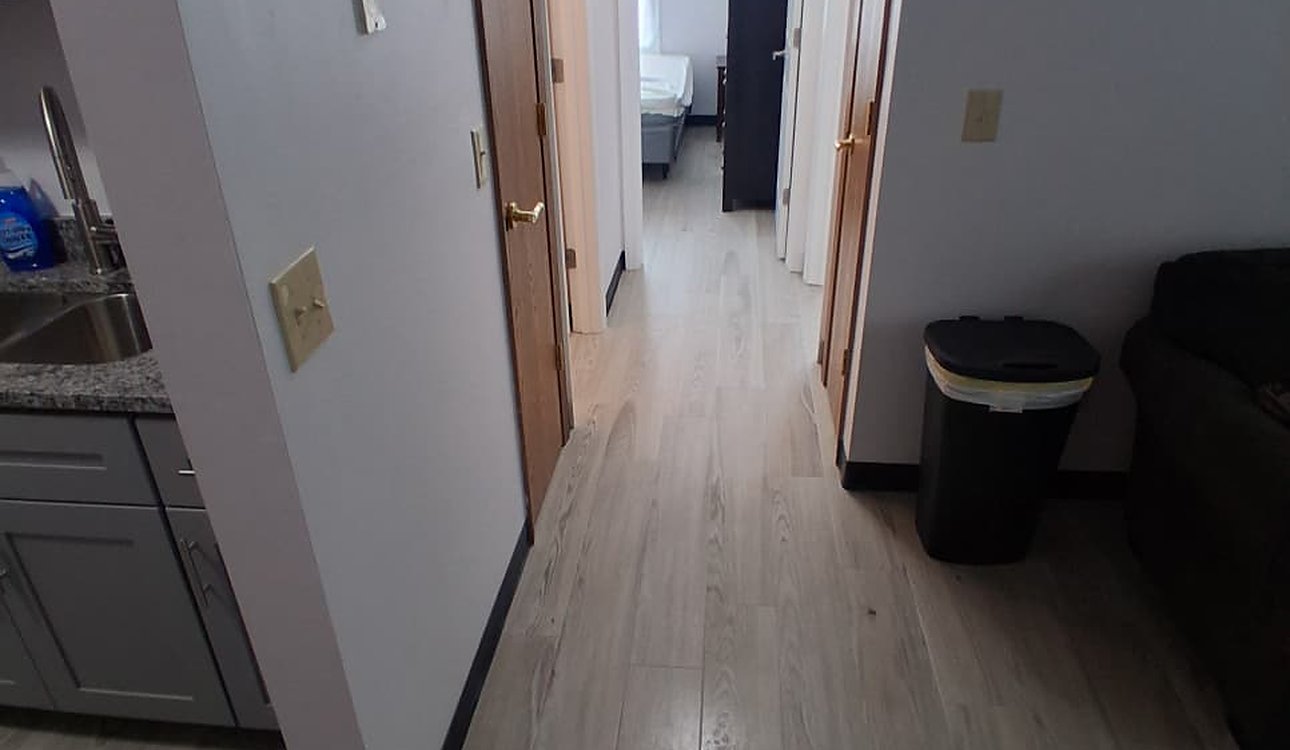
Yes, you can live in your home during a major renovation, if you plan for it. Seal off the work zone, set up a temporary kitchen, protect your air quality, and lock in a daily schedule with your contractor before demolition starts. Most families do fine with structure. Without it, the project grinds them down.
We’ve watched homeowners walk into this two ways. Some treat it like a camping trip with a deadline. Others assume life will continue as normal, and by week three they’re eating cereal on an overturned bucket, wondering what went wrong. The difference almost never comes down to budget. It comes down to preparation.
Can You Live in Your House While It’s Being Renovated?
Usually, yes. The real question is which rooms are being touched and for how long. A kitchen gut, a primary bath overhaul, or a second-story addition are all survivable if the rest of the house stays functional. Whole-home projects that shut off water, heat, or the only working bathroom are a different story.
Ask your contractor one blunt question early: how many days will we be without water, power, or a usable bathroom? That number decides everything. If the answer is two days, book a hotel. If it’s three weeks, you need a real relocation plan, not optimism.
Here’s a rough guide to what most homeowners can tolerate:
| Project Type | Typical Timeline | Livable While Working? |
|---|---|---|
| Single bathroom remodel | 3 to 5 weeks | Yes, if you have a second bath |
| Kitchen renovation | 6 to 12 weeks | Yes, with a temporary kitchen |
| Basement finishing | 4 to 8 weeks | Almost always yes |
| Whole-home remodel | 4 to 9 months | Often no, plan to relocate |
| Roof or window replacement | 1 to 2 weeks | Yes, expect noise |
What Is the 30% Rule for Renovations?
The 30% rule is a budgeting guardrail, not a law. It suggests you cap your total renovation spending at roughly 30% of your home’s current market value. That ceiling includes labor, materials, permits, and a contingency fund.
Why does a budgeting rule belong in an article about living on-site? Because money and stress are linked. Homeowners who blow past their budget start cutting corners on the things that make daily life bearable: dust barriers, temporary appliances, a hotel week during demo. Those line items feel optional right up until you’re living without them.
Build 10 to 20% contingency into your number from day one. Surprises behind the walls are not rare; they’re standard. Knob-and-tube wiring, rotted subfloor, a chimney nobody knew was failing. If you’re planning a large project, Pittsburgh remodeling teams can usually flag the likely surprises in a home your age before a single wall opens.
How to Live in Your House While Renovating?
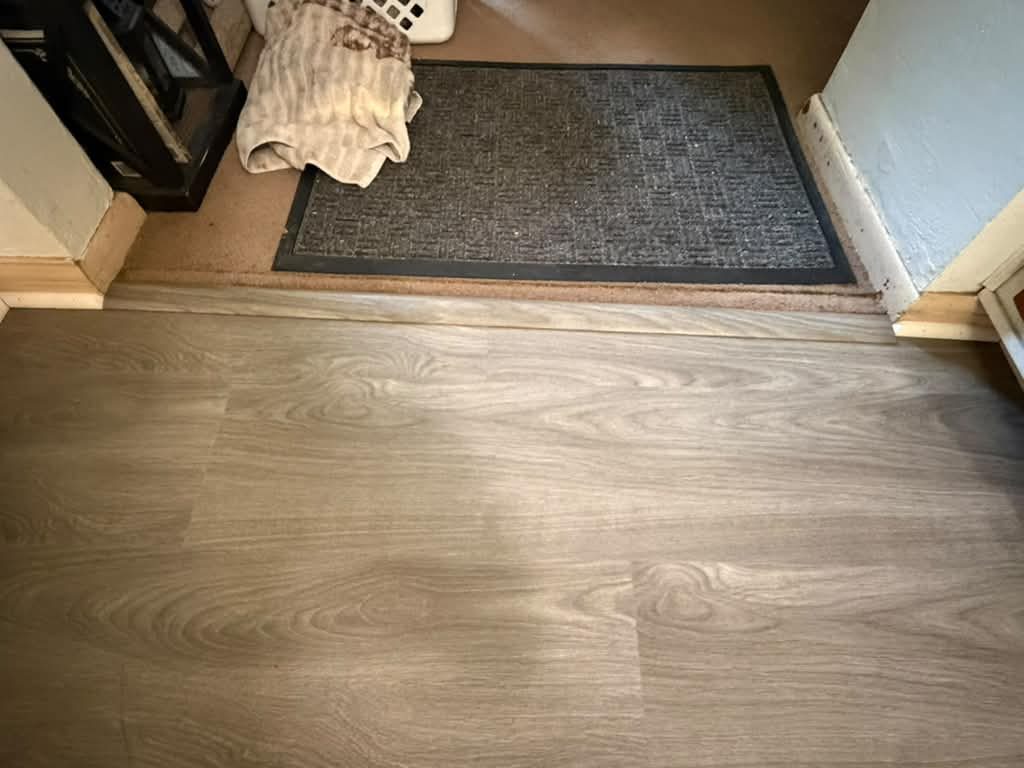
Start by drawing a hard line between the construction zone and the living zone. Not a mental line, a physical one. Zippered plastic barriers, taped seams, and a dedicated entrance for the crew. Your contractor should be doing this by default, but confirm it in writing.
A finished threshold at an entry. A dedicated crew entrance with a mat and sealed barriers keeps dust out of the living side of the house.
Then move everything you actually use out of the work area before demolition. Not the day before. A week before. Clothes, medications, chargers, the coffee maker, your kid’s favorite blanket. Anything left behind will be buried under drywall dust within an hour, and you will not get it back until the project ends.
Pick One Room as Your Refuge
Every family needs one space that stays clean, quiet, and off-limits to the project. A bedroom works. So does a finished basement. Keep it sealed, run an air purifier, and don’t let it become overflow storage.
That room is where you’ll reset when the tile saw has been running since 7:15 a.m. Protect it like it matters, because it does.
Keeping a Routine While the Work Goes On
Routine is the whole game. Agree on work hours with your contractor and hold everyone to them, including yourself. Know when the crew arrives, when they break, and when they leave. Predictability turns chaos into something closer to a commute.
Communication matters just as much. Set a standing 10-minute check-in, same time each week, and bring your questions to that meeting instead of interrupting the crew mid-cut. We’ve seen this one habit save projects. Homeowners who hover slow the work down and raise their own blood pressure. Homeowners who batch their questions get better answers.
One more thing: take pictures. Photograph the open walls before they close, and keep a running folder. You’ll want that record later, and it makes the slow weeks feel like progress. Solid home renovation tips usually start with documentation for exactly this reason.
Set Up a Temporary Kitchen That Actually Works
A microwave on a folding table is not a kitchen. It’s a way to eat sad food for three months. Build something better, because a kitchen remodel is where most families break.
Claim a corner of the dining room, basement, or garage and give it four things: a heat source, a cold source, running water access, and counter space. That means an induction burner or air fryer, your fridge relocated on a dolly, the nearest utility sink or bathroom tap, and a folding table with a cutting board. Add a coffee station and a bin for dirty dishes.
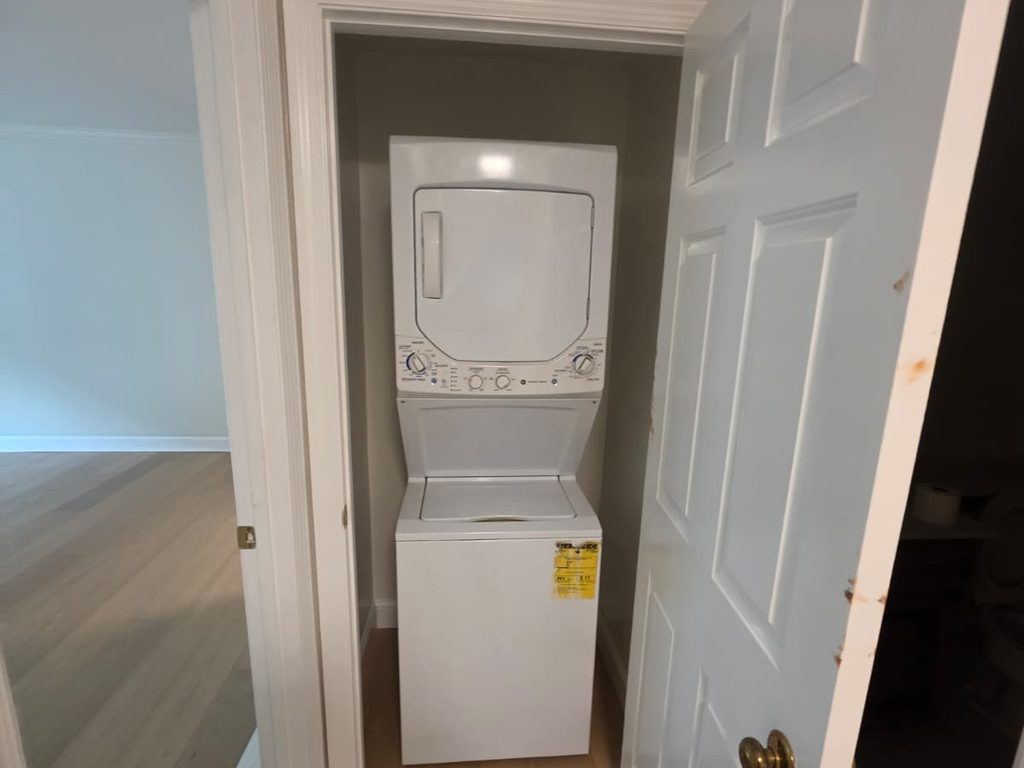
A laundry closet finished as part of a larger remodel. Keeping laundry and one bathroom working is what makes staying in the house realistic.
Paper plates get a bad reputation, but during a remodel they’re mercy. So is a slow cooker. Plan simple meals, build a rotation, and budget for takeout twice a week. That’s a real cost, not a failure of willpower.
Dust, Air Quality, and the Risks Worth Taking Seriously
Construction dust travels through HVAC systems, under doors, and into every fabric surface you own. Change your furnace filter more often than feels reasonable. Run HEPA air purifiers in bedrooms. Ask your contractor to use negative air pressure and HEPA vacuums, not just plastic sheeting.
If your home was built before 1978, this gets more serious. Lead paint is still present in millions of American homes, and sanding, cutting, or window removal can release lead dust that lingers long after the crew leaves. Federal rules require contractors working on pre-1978 homes to be lead-safe certified. Read the EPA’s guidance for homeowners at the Renovation, Repair and Painting Program before demolition begins.
Pregnant women and young children should not stay in a home during lead-disturbing work. That’s not excess caution. It’s the standing recommendation. Relocate for those phases.
Keeping Kids, Pets, and Work Intact
Pets don’t understand any of this. A nail gun sounds like a threat, and open doors are an escape route. Board them during demolition days, or set them up in the sealed refuge room with white noise and a note on the door.
Kids handle renovation better than most parents expect, provided you tell them what’s happening. Show them the plans. Give them a job. Let them pick a paint color for one wall. The mystery is what unsettles them, not the mess.
If you work from home, scout backups now: a library, a coffee shop, a friend’s spare desk. Schedule calls around the loud phases and tell your contractor which hours matter most.
What Are the Most Common Renovation Regrets?
The ones we hear again and again are remarkably consistent. Not budgeting a contingency. Choosing a contractor on price alone. Skipping the storage plan and losing half a house worth of belongings to dust.
Underestimating the timeline sits near the top too. Almost every project runs longer than the estimate, and homeowners who mentally committed to “eight weeks” fall apart in week eleven. Add 25% to whatever number you’re given and plan your life around that instead.
The last one is quieter: not living in the space long enough before deciding the layout. If you can, spend a season in the house first. Living through a remodel teaches you things about your own home that no floor plan will.
Knowing When to Pack Up and Go
Sometimes the right answer is to leave. If your only bathroom is coming out, if the heat is off in February, or if a family member has asthma and demo is starting, book the rental. A few weeks of housing costs is cheaper than a hospital visit or months of resentment.
Set your breaking point in advance and write it down. “If we lose hot water for more than three days, we go.” Decisions made calmly beforehand are far better than the ones made at 11 p.m. in a dusty hallway.
Before any of this begins, get your prep work right. How to Prepare Your Pittsburgh Home for a Major Renovation covers the groundwork that makes staying put possible.