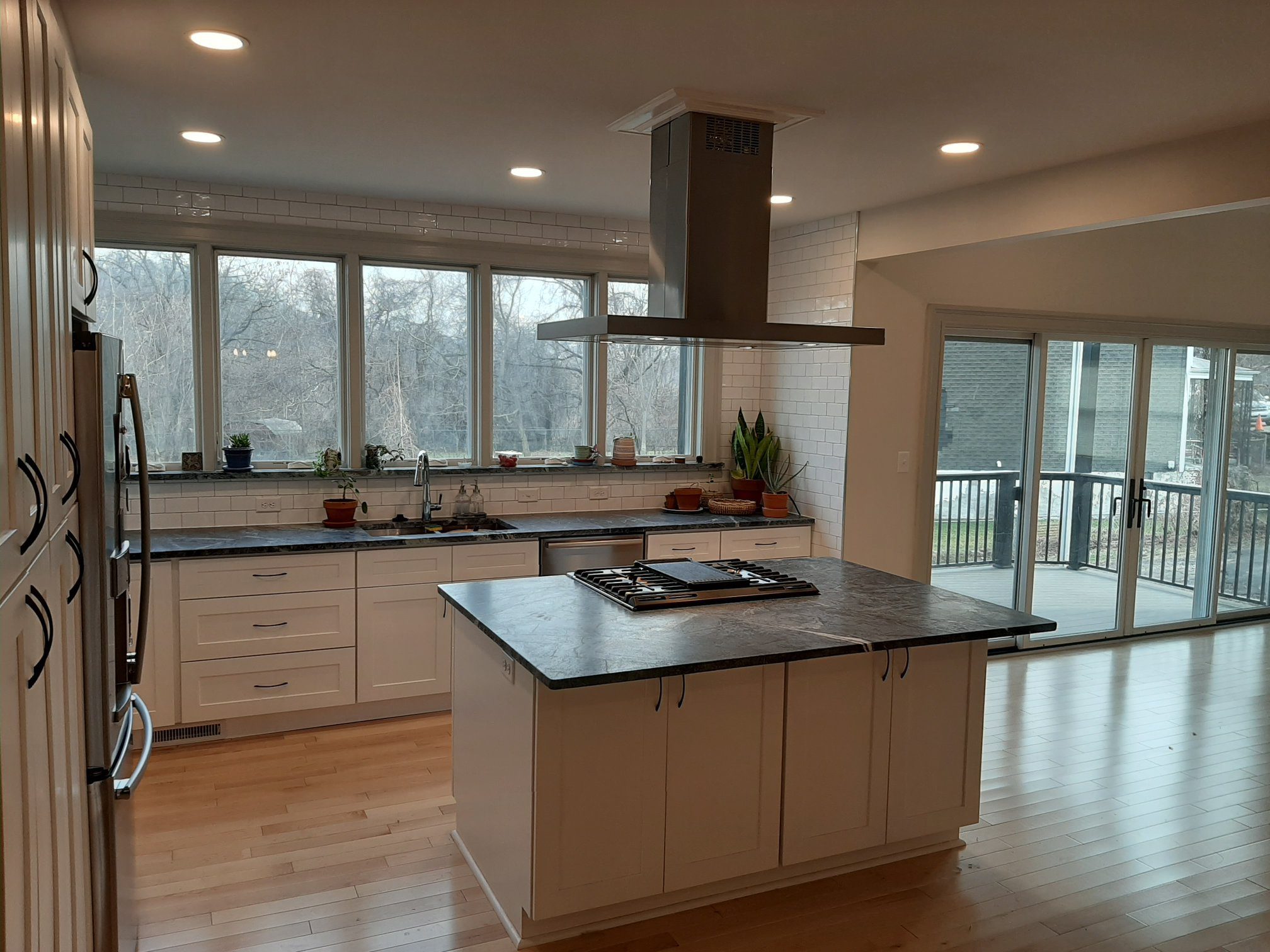
Finishing a basement in winter works well, because almost all of the work happens indoors and the cold season is when many families are thinking about more room inside. The main things to plan for are moisture checks done before winter sets in, materials that are stored and acclimated in a heated space, and any outside work, like an egress window well, scheduled around the weather.
Many homeowners assume remodeling is a spring and summer activity. For a basement, the season matters less than the condition of the space and the plan. If you are weighing basement remodeling in Pittsburgh, here is how winter really affects the job, what to do before the cold arrives and what to watch for once it does.
Is Finishing a Basement in Winter a Good Idea?
For most dry basements, yes. Framing, insulation, electrical, drywall, flooring and trim all happen inside the house. The weather outside does not stop that work. Winter also gives you a clear view of how the basement behaves when the heat is running and the air is dry, which is useful information for the design.
Indoor work
Nearly every step of a basement finish happens inside, so snow and cold have little effect on the core of the job.
Real use
Families feel the need for more space when everyone is indoors. A finished basement is ready when it is most useful.
Dry air
Heated winter air is usually drier, which helps with drywall finishing and paint once the space is warm.
Planning time
Winter can be a good time to make design decisions without rushing.
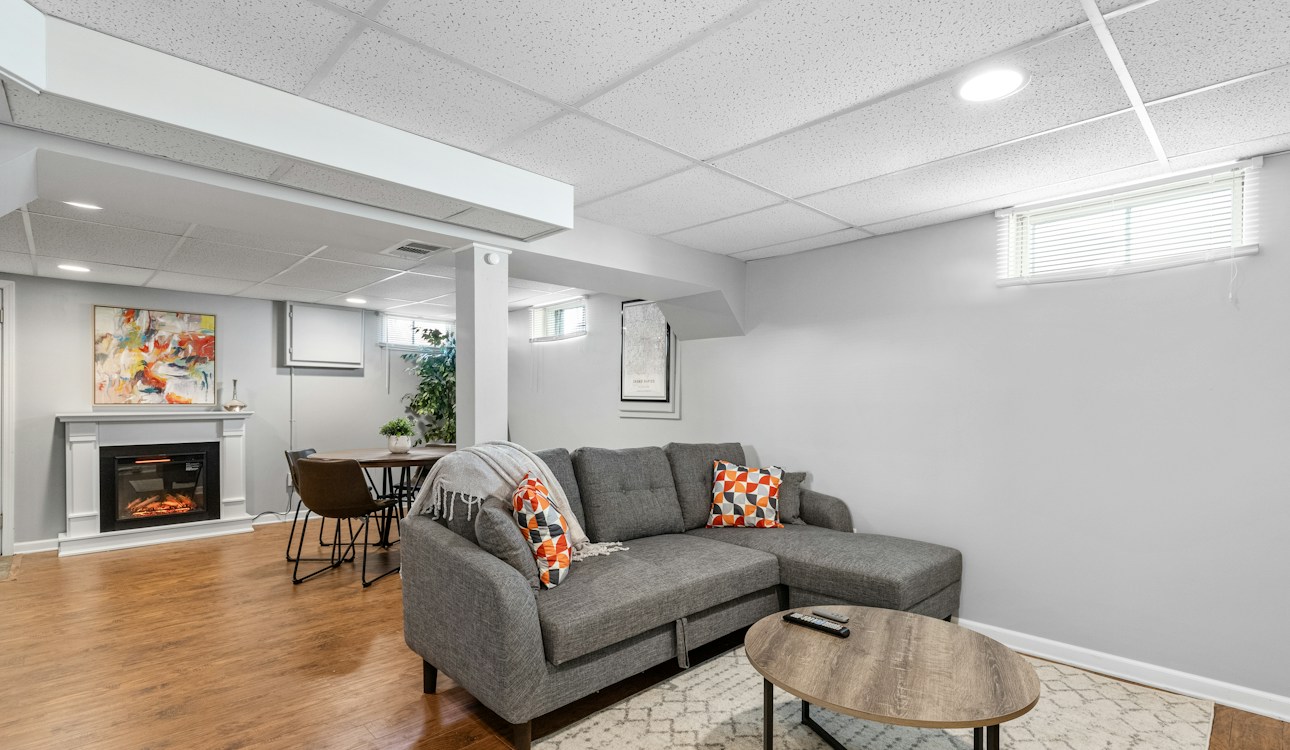
A basement like this gets the most use in the colder part of the year. It is a warm place to watch a game, play or have guests.
Planning the finish in fall or early winter means the room is ready when the family wants it most.
A finished basement living room with a fireplace, a sofa and soft lighting.
What to Do Before Winter Sets In
The best time to judge basement moisture is before the ground freezes, ideally after a few heavy fall rains. That is when you will see whether water comes in or whether the space just has some humidity. Our guide to basement waterproofing before you finish covers what to look for.
- Walk the basement after a heavy rain and look at the base of every wall
- Clean gutters and confirm downspouts carry water away from the house
- Check the ground slope around the foundation
- Look at window wells and openings for signs of water
- Note any outside work the plan may need, such as an egress window well
If outside excavation is part of the job, it is easier before frozen ground. That is one reason to start the planning conversation in the fall.
How Cold Weather Affects Basement Finishing Work
Inside work goes ahead in winter, but a few details matter more in the cold:
Heat in the basement
Drywall compound, paint, adhesives and some flooring need a warm space to set and cure properly. The basement has to stay heated during the work.
Material acclimation
Flooring and trim should sit in the heated basement before they are installed, so they adjust to the room.
Condensation
Warm air meeting cold foundation walls can cause condensation. The wall assembly and insulation are planned to keep humid air off the concrete.
Access and protection
Crews come and go with snow and salt on the ground, so entries, stairs and floors are protected along the way.
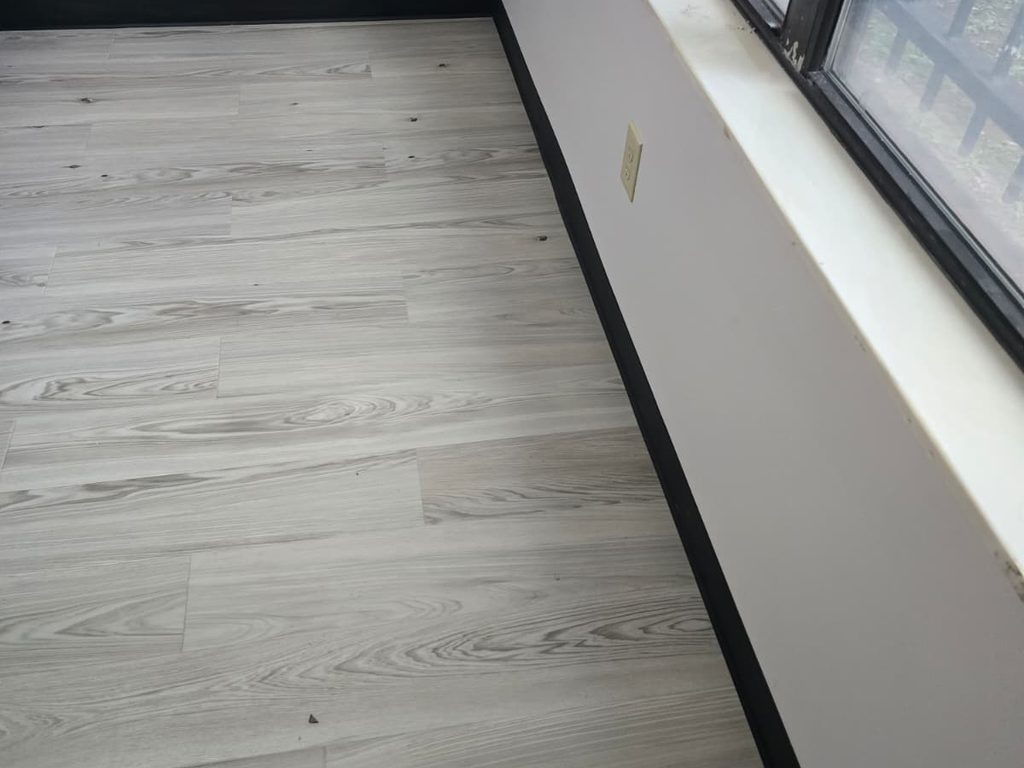
Flooring choices are a good example. Luxury vinyl plank handles moisture well, which makes it a common choice below grade.
Like most flooring, it should be brought into the heated basement before it goes down, so it is at room temperature when installed.
Gray luxury vinyl plank flooring meeting a black cove base along a basement wall.
Outdoor Work and Finishing a Basement in Winter
Some basement plans include work outside the house. The most common is an egress window for a basement bedroom, which needs excavation for a window well and a cut in the foundation. Frozen ground and snow can make that harder, so we talk about timing up front. Our article on adding a basement egress window explains how it fits into the plan.
Other outdoor items, like regrading or extending downspouts, are also easier before the ground freezes. Getting them done in the fall means the inside work can move ahead in winter with fewer open questions.
Every project is different. The weather affects some steps more than others, so we plan the order of work around your basement and the season instead of a fixed formula.
Common Mistakes When Finishing a Basement in Winter
Skipping the moisture check
Winter hides some water problems. If you did not see the basement through a wet fall, ask more questions before covering the walls.
Turning the heat down
A cold basement slows drying and curing and can affect how finishes turn out. Keep it heated.
Rushing material installs
Flooring and trim that have not adjusted to the room can move after installation.
Ignoring humidity
A basement can feel dry in winter and damp in summer. Plan for the whole year, not just the season you are in.
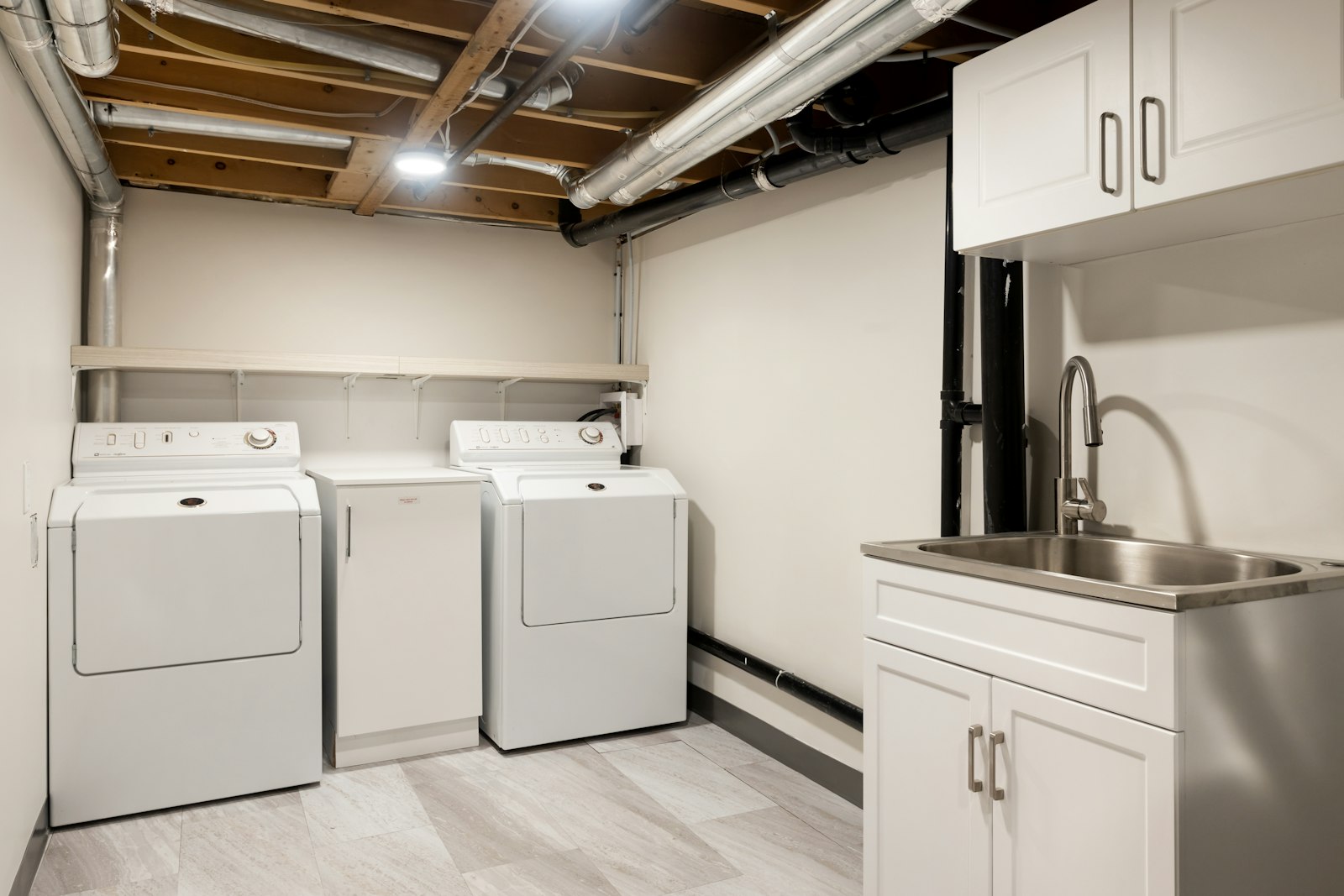
Not every part of a basement finish is a family room. Laundry, storage and utility areas benefit from a finish too.
Planning these spaces at the same time keeps the furnace, water heater and shutoffs easy to reach after the work is done.
A finished basement laundry and utility area with a washer, a dryer and a utility sink.
Finished Basement Ideas for Pittsburgh Homes
Winter is a good time to plan, so it helps to have a clear idea of how the space will be used. These finished basement ideas are the ones homeowners ask us about most, and each one shapes the layout, the lighting and the mechanical work before framing starts.
Family room
A comfortable family room is the most common use. Plan the TV wall, seating and lighting together so the room feels like part of the house, not an afterthought.
Guest suite
A bedroom with a nearby bathroom gives visitors privacy. If the suite includes a bedroom, we plan where an egress window can go early, because it shapes the layout.
Home office
A quiet office works well below grade. Good lighting, extra outlets and a door that closes matter more than square footage.
Playroom
A playroom with durable flooring and plenty of built in storage keeps toys off the main floor and gives kids a space of their own.
Basement bathroom
Adding a bathroom makes the whole level more usable. Where the drain lines can run will guide where it goes.
Wet bar or kitchenette
A small sink, under counter refrigerator and cabinets make a basement easy for entertaining without trips upstairs.
Many of the best finished basement ideas combine two or three of these, such as a family room with a wet bar or a guest suite next to an office. Whatever you choose, the basement has to be dry first, and the layout has to work around ceiling height, ductwork and the stairs that are already there. See more on our page about basement remodeling in Pittsburgh.
Design Choices That Make a Basement Comfortable in Cold Weather
A basement that feels good in January is planned that way. These are the details we talk through when a family wants the space to be warm and inviting all winter:
- Insulated walls. The right wall assembly keeps the room warmer and helps prevent condensation on cold concrete.
- Heating that reaches the space. The basement should be part of the home’s heating plan, not an afterthought.
- Warm underfoot. Flooring and any subfloor choices affect how the room feels on a cold morning.
- Layered lighting. Winter days are short. Good general light plus lamps and accent lights keep a below grade room from feeling dim.
- A cozy focal point. Many families like a fireplace or media wall as the center of the room.
Planning the Whole House Around the Basement
Winter is also a good time to think about how the basement fits with other projects. If a kitchen or bathroom upstairs is on the list, its plumbing may run through the basement ceiling. Our article on whether you should remodel your basement first walks through how to choose the order.
Why Pittsburgh Homeowners Choose JL Home Builders
JL Home Builders is a family owned company that has been remodeling homes in Pittsburgh since 2010. We design basements with homeowners in our showroom and build them with our own crew. A free in home consultation is the first step any time of year.
Frequently Asked Questions
Can you finish a basement in winter?
Yes. Nearly all of the work happens indoors. The basement needs to stay heated and dry, and any outside work, like a window well, needs to be planned around the weather.
Is winter a bad time to finish a basement?
Not for a dry basement. Winter can be a good time, because the work is indoors and the finished space is ready when the family is spending more time inside.
What should be done before winter if you plan to finish a basement?
Check for moisture after fall rains, clean gutters, make sure downspouts carry water away and plan any outdoor excavation before the ground freezes.
Does cold weather affect drywall and paint?
Cold slows drying and curing. Keeping the basement heated during the work helps these finishes set properly.
What is the best time of year to finish a basement?
There is no single best time. Fall is a good time to plan and check for moisture, and winter is a workable time for the indoor work.
Related reading
Thinking about finishing your basement this winter? Schedule a free in home consultation and we will walk through the space with you and plan the work around the season.