A DIY bathroom remodel works best when you keep to the dry, cosmetic jobs: painting, swapping hardware and accessories, replacing a mirror or light on an existing box, and careful prep and cleanup. Anything involving water lines, drains, shower waterproofing, electrical circuits or the structure of the house belongs with experienced trades, because mistakes there hide behind the walls and cost far more to fix later.
That split is the heart of every smart DIY plan. The question is not really whether you are handy. It is how much risk sits behind the wall you are about to open.
Below we walk through what homeowners can reasonably tackle, what to leave to the pros, and how to think about the gray areas. If you decide you would rather hand off the whole project, our bathroom remodeling team in Pittsburgh designs and builds complete bathrooms from start to finish.
The Real Question Behind Every DIY Decision
Most people frame the choice as skill versus money. A clearer way to think about it is forgiving versus unforgiving work. Anything dry, decorative or on the surface is forgiving. If the paint line is a little off, you repaint it. Anything involving water, drains or live electrical is unforgiving, and the problems often show up long after the job looks done.
A wobbly towel bar is annoying. A slow leak inside a wall can soak framing and subfloor before anyone notices a stain on the ceiling below. That imbalance should drive your DIY bathroom remodel plan, not just whether something looks easy in a video.
DIY Bathroom Remodel Jobs Most Homeowners Can Handle
These are the tasks where patience and care matter more than specialized training.
Painting
Use a moisture resistant paint made for bathrooms, and let the room dry out fully before you start. Good prep, patching and caulking make more difference than the brand of paint.
Hardware and Accessories
Towel bars, robe hooks, toilet paper holders and cabinet pulls are quick visual upgrades. Find the studs or use proper anchors so nothing pulls out of the drywall.
Mirrors and Simple Swaps
Hanging a new mirror or replacing a medicine cabinet in the same opening is manageable for most people. Replacing a light fixture on an existing box is common, but if anything about the wiring looks wrong, stop.
Prep, Protection and Cleanup
Clearing the room, protecting floors and hallways, and cleaning up at the end are real work. Doing them yourself is a simple way to be involved without taking on risk.
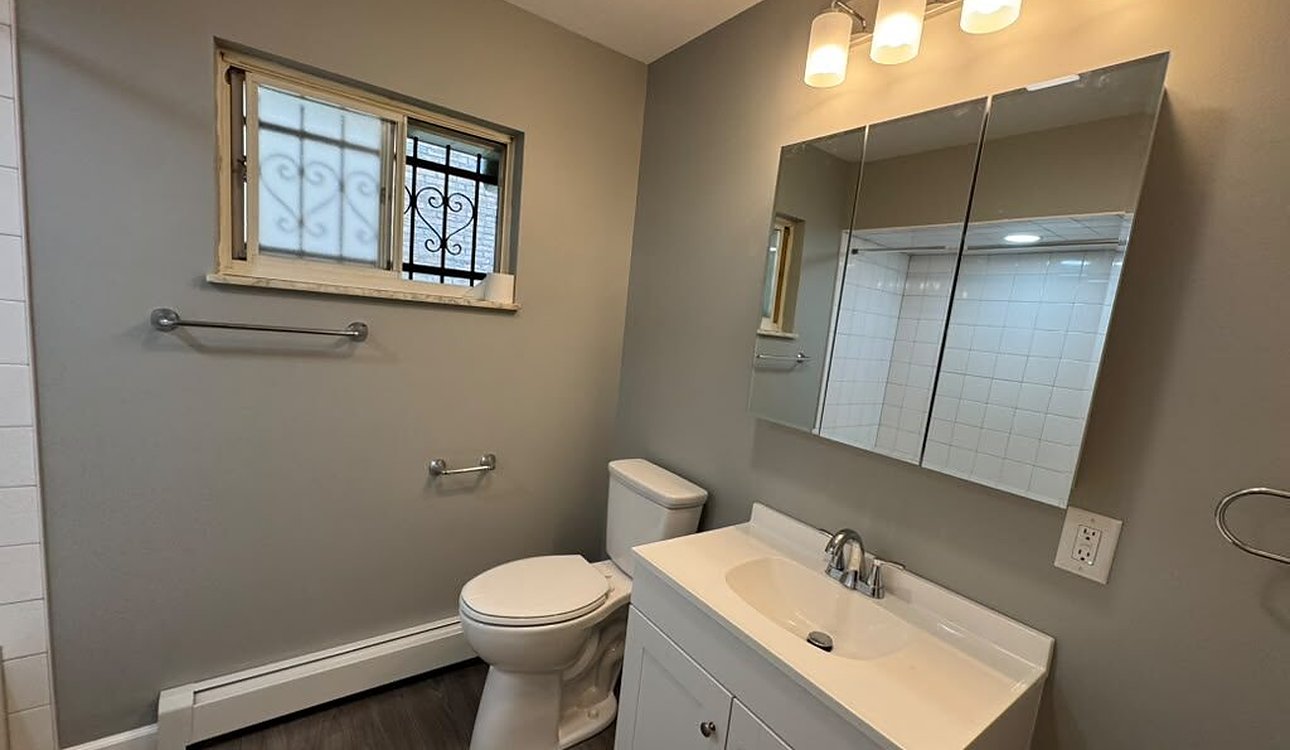
A new vanity, a mirrored medicine cabinet and fresh paint can change how a small bathroom feels. The paint and accessories are the parts most homeowners can do themselves.
Once the work moves to setting a vanity on new plumbing, connecting a toilet or running power for new lights, the risk goes up and so does the value of an experienced crew.
A finished bathroom with a white vanity, a mirrored medicine cabinet above it and a new toilet.
The Gray Areas
Some jobs sit in the middle. They are possible for a careful homeowner, but they are also where many DIY projects go sideways.
- Demolition: pulling out a vanity or old floor sounds simple, but you need the water and power safely shut off, and old tile can hide damaged subfloor, old wiring or pipes right where you are prying. Older homes can also have materials that should be tested before they are disturbed.
- Floor tile: a simple pattern on a small floor is doable for some people, but only on a flat, solid, properly prepared base. Many bad tile jobs fail because of what is underneath.
- Setting a vanity on the existing plumbing: if the new vanity lines up with the old drain and supply lines, it is mostly a leveling and anchoring job. The moment a drain or supply has to move, it is a plumbing job.
What to Leave to the Pros
These are the parts of a bathroom where experience matters most and where mistakes are hardest to see until they become expensive.
Plumbing
Moving or adding drains, vents and supply lines, and connecting a new shower valve. Drain slope and venting have to be right or the bathroom will have problems for as long as it stands.
Shower Waterproofing
Tile and grout are not waterproof. A shower needs a continuous waterproof layer on the floor and walls behind the tile, tied correctly into the drain.
Electrical
New circuits, outlets near water, lighting changes and exhaust fan wiring. Electrical work in a wet room is a safety issue, not just a finish detail.
Walls and Structure
Moving or removing a wall, cutting into joists for a drain, or setting a heavy tub on an older floor all need someone who understands the framing.
Depending on your municipality, plumbing and electrical work may also need a permit. Requirements vary, so check with your local office before you start anything beyond cosmetic work.
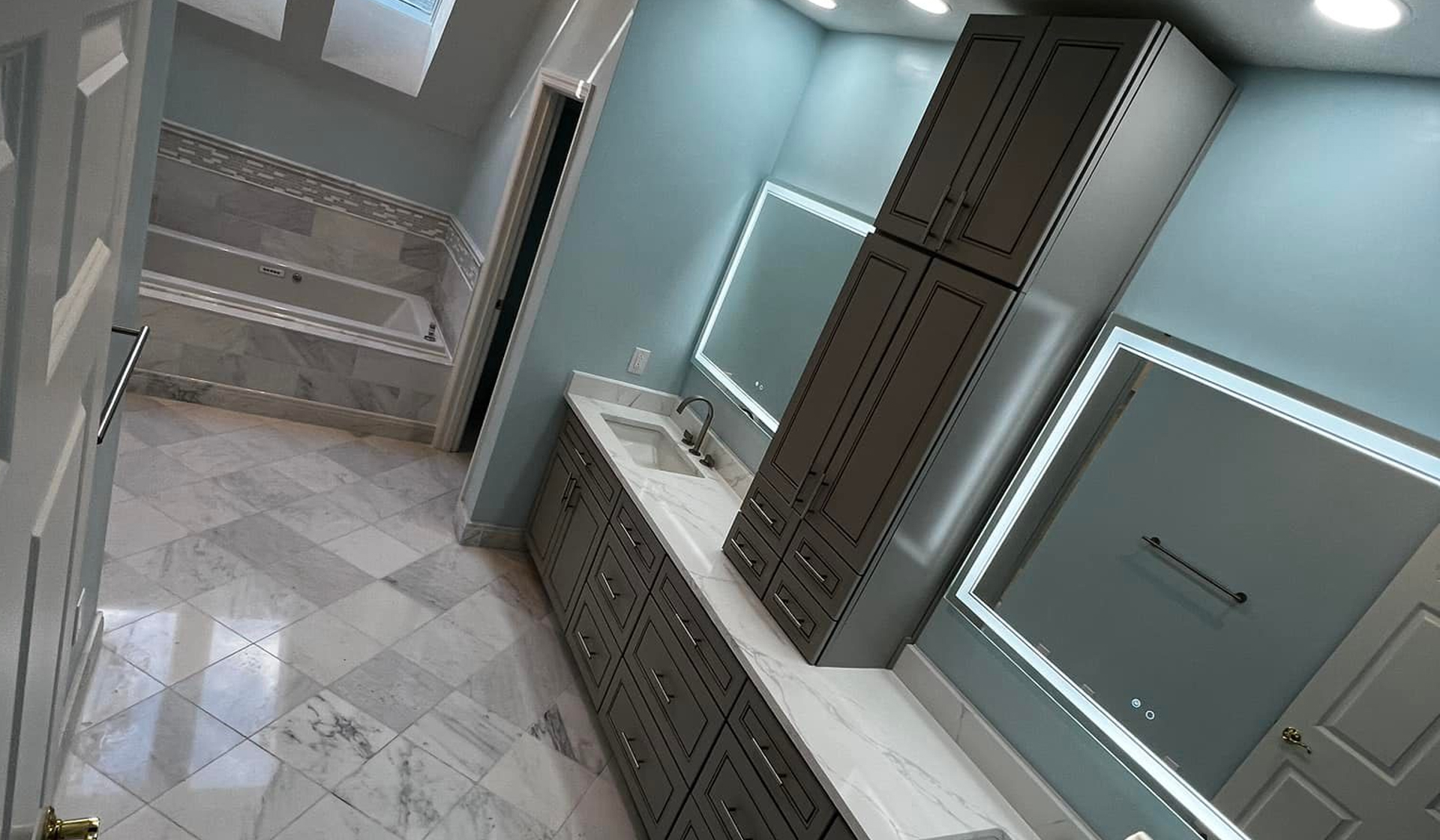
A bathroom like this shows why the technical work matters. The long vanity needs plumbing set in exactly the right spots, the lighted mirrors need power planned inside the walls, and the tub deck and walls need to be waterproofed before the tile goes on.
When those pieces are done well, nobody notices them. That is the goal: the work behind the walls should simply never come up again.
A finished bathroom with a long gray vanity, a tall linen cabinet, lighted mirrors and a marble tiled tub deck.
Common DIY Mistakes to Avoid
The most common mistake is starting demolition without a finished plan. Order your vanity, fixtures and tile before the old bathroom comes out, so you are not living without a working room while you shop.
- Skipping waterproofing details in the shower, or assuming tile alone keeps water out
- Ignoring ventilation, or running a fan into the attic instead of outside
- Tiling over a floor that flexes or is not flat
- Using the wrong grout or caulk in wet areas
- Pulling out the toilet in the only bathroom in the house without a plan for where everyone will go in the meantime
The order of the work matters too. Our post on the order to renovate a bathroom explains how the steps fit together on a typical job.
Is a Hybrid Approach Worth It?
Some homeowners like to do the painting and finishing touches themselves and leave everything else to a contractor. It can work, as long as everyone agrees up front on who does what. The catch is coordination. If you hire separate plumbers, electricians and tile setters yourself, you become the project manager, scheduling each trade and making sure each step is ready for the next. Our post on hiring one contractor or multiple subs for a bathroom remodel goes through the pros and cons of each path.
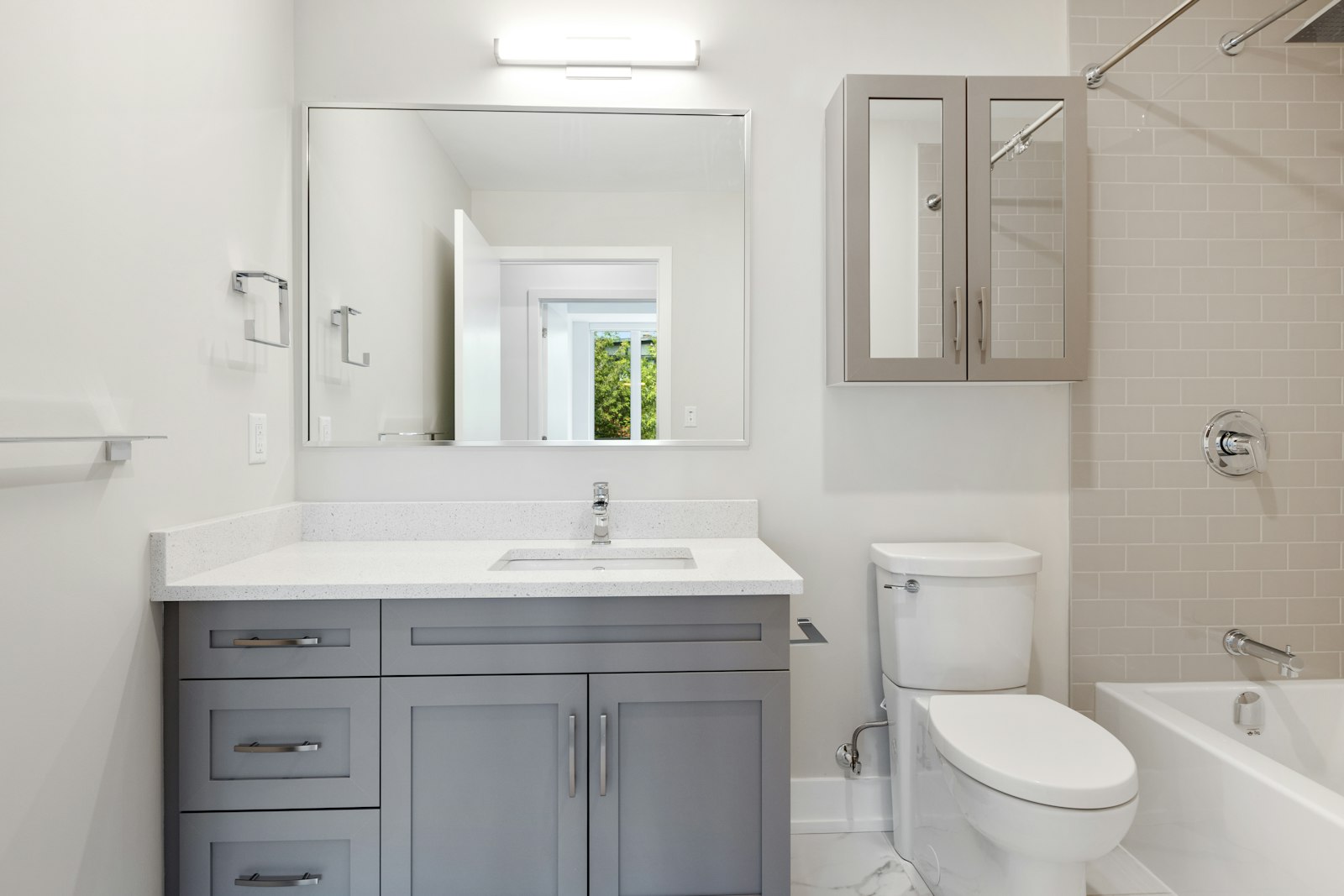
In a bathroom like this one, with a gray vanity, a toilet and a tiled tub surround, most of what makes the room work, from the plumbing to the tub waterproofing, happened before the paint and accessories went on.
That is the part worth handing off. The finishing touches are where a homeowner can add a personal stamp.
A bathroom with a gray vanity, a toilet, a wide mirror, a wall cabinet and a tiled tub surround.
How DIY Choices Affect Resale
A bathroom that looks homemade can work against you when you sell. Crooked tile lines, uneven grout, gaps in caulk and a vanity set at the wrong height are easy for buyers and inspectors to spot. Clean, professional work is what makes a bathroom read as a plus instead of a project. If resale is on your mind, read what adds the most value to a bathroom before you start.
JL Home Builders is a family owned remodeler that has served the Pittsburgh area since 2010. We design bathrooms with homeowners in our showroom, and our own crew builds them, so the plumbing, waterproofing, electrical and tile are handled by one team.
Frequently Asked Questions
Can you remodel a bathroom yourself?
You can do parts of it, such as painting, hardware, accessories and careful prep. Plumbing, shower waterproofing, electrical work and anything structural should be handled by experienced trades, because mistakes are hidden behind the walls.
What is the hardest part of a DIY bathroom remodel?
The shower is usually the hardest part. It needs a properly sloped base, a continuous waterproof layer and careful tile work. Errors may not show for a long time, and then they are costly to repair.
Is it cheaper to remodel a bathroom yourself?
Doing some cosmetic work yourself can lower the labor you pay for. Taking on technical work you are not experienced with can cost more in the end if it has to be torn out and redone.
Do you need a permit to remodel a bathroom?
It depends on the work and on your municipality. Cosmetic work often does not, while plumbing and electrical changes may. Requirements vary, so check with your local municipal office.
Should demolition be a DIY job?
It can be, but it is not risk free. Shutting off water and power safely, protecting the rest of the house and knowing what might be hidden in old walls and floors all matter. Many homeowners find it simpler to leave demolition to the crew doing the rest of the job.
Related reading
Ready to talk about your bathroom? Schedule a free in home consultation with JL Home Builders. We serve Pittsburgh, the South Hills and the North Hills.