For most homeowners, one bathroom remodel contractor who runs the whole job is the better choice than hiring separate plumbers, electricians and tile setters yourself. One company owns the schedule, the sequence and the result, and that matters more in a bathroom than in almost any other room.
Hiring your own subs can work if you have managed construction before and have the time to be on site. Most people don’t, and a bathroom punishes small coordination mistakes. Below we walk through how each approach really works, what you take on when you play general contractor, and how to vet the company you hire. It’s the same conversation we have during every free in home consultation for bathroom remodeling in Pittsburgh.
What a Bathroom Remodel Contractor Actually Does
A bathroom packs a lot of trades into a small room. Demolition, framing, plumbing, electrical, ventilation, waterproofing, tile, drywall, paint, cabinetry and trim all happen within a few feet of each other, and each one depends on the work before it being done right.
A general contractor’s real job is the handoffs. The plumber has to set the drain where the vanity will actually sit. The electrician needs to know the mirror size before placing the light box. The tile setter needs a flat, properly waterproofed wall to work on. When one company runs all of it, those decisions get made once, by people who talk to each other every day.
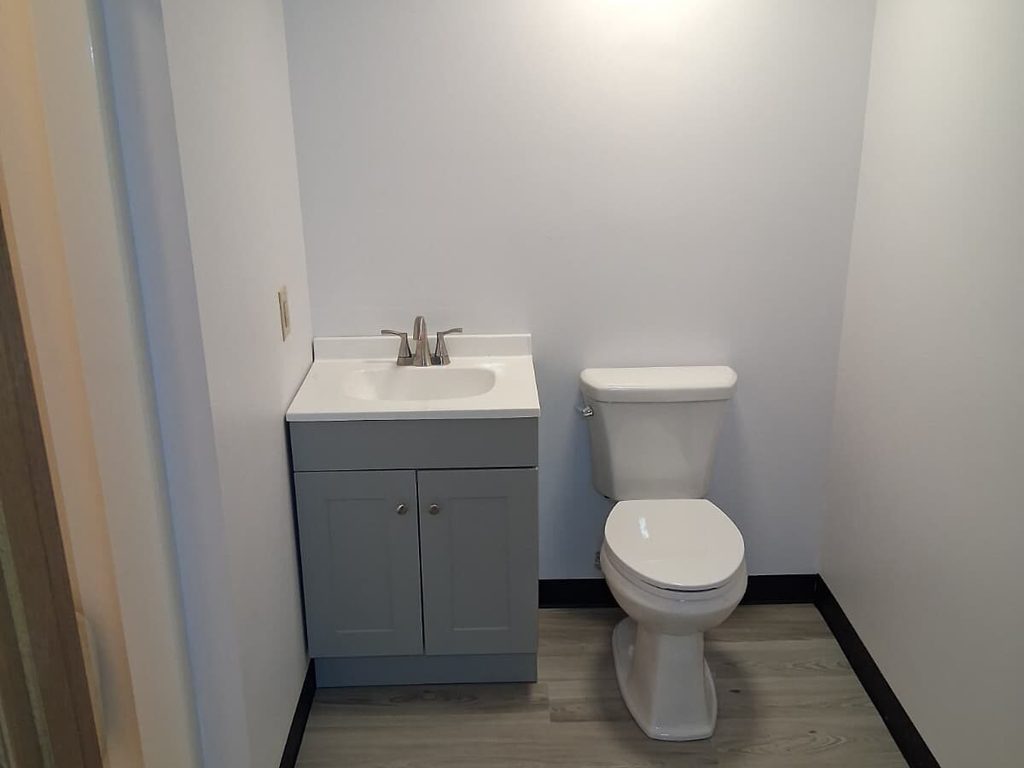
A finished bathroom with a gray vanity, white sink top and a new toilet on plank flooring.
That is why we design every bathroom in our showroom first and then build it with our own crew. The people who planned the room are the people who build it, so there is no gap between what was promised and what gets installed.
That holds even for the smallest room in the house, and we cover what to ask before you hire in our guide to choosing half bathroom contractors.
The Case for Hiring Separate Subcontractors
There are real reasons people go this route, and it’s fair to lay them out.
You pick every trade
If you already know a plumber, an electrician and a tile setter you trust, you can hire them directly and choose who does each part of the work.
You control the details
You talk to each trade yourself, so nothing gets lost between you and the person holding the tools.
It suits experienced owners
People who have managed a remodel before, or who work in the trades, are comfortable reading drawings and catching problems early.
You set the pace
If you are in no rush and can be home during the work, you can line trades up around your own schedule.
The trade off is that you become the project manager, the scheduler and the quality inspector all at once. You also become the person who settles disputes when two trades disagree about whose work caused a problem.
What You Take On When You Manage the Subs
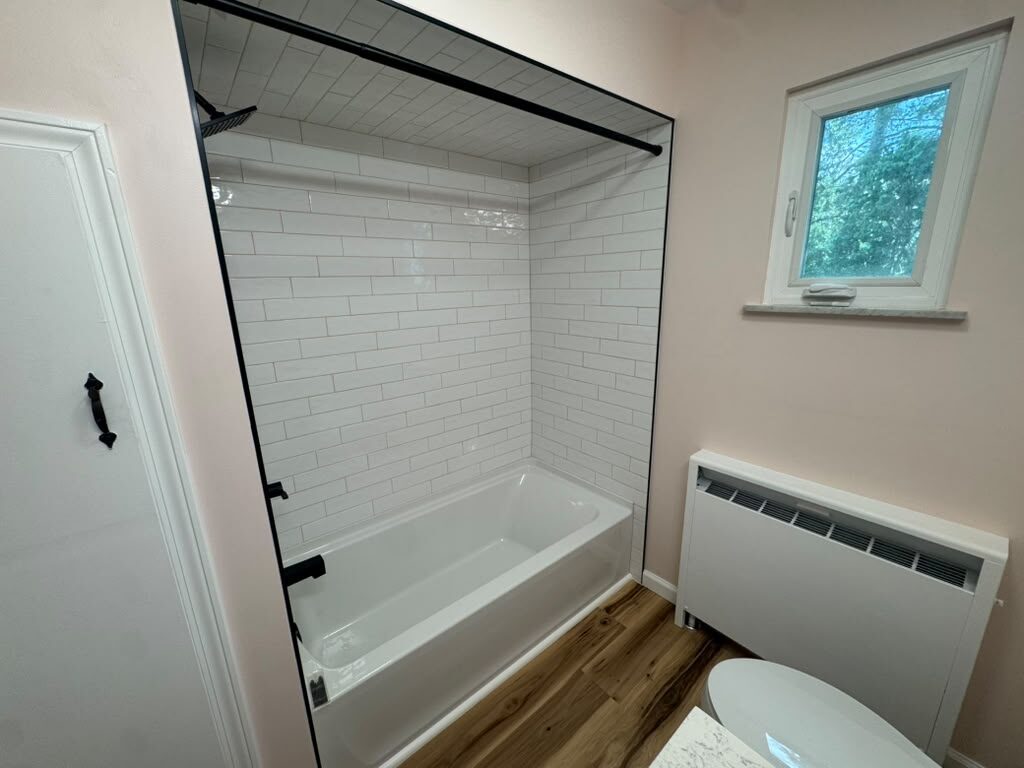
Most of the trouble with a self managed bathroom shows up at the handoffs. A tub gets set before anyone confirms the valve height. Backer board goes up before the plumbing is tested. The tile setter arrives and finds a wall that isn’t flat, and now someone has to decide who fixes it and who pays for the delay.
None of these trades did bad work on their own. The problem is that nobody owned the sequence. In a bathroom, the sequence is the job, which is why we wrote a full guide to the bathroom remodel order that we follow on every project.
A white subway tile tub surround with black trim, a window and wood look flooring.
Here is what usually lands on your plate when you act as your own general contractor:
- Scheduling each trade and rescheduling when one runs late
- Ordering materials and checking deliveries for damage or missing parts
- Making sure each trade’s work is ready for the next one
- Answering questions on site, often during your work day
- Checking with your municipality about what the job needs and arranging any inspections
- Sorting out responsibility when something goes wrong behind a finished wall
One Contractor vs. Multiple Subs at a Glance
One contractor
One point of contact, one schedule, one company responsible for the finished room. You make the design decisions and the contractor handles the coordination.
Multiple subs
Several contacts, several schedules and several companies who are each responsible only for their own piece. You handle the coordination yourself.
If you want a closer look at which pieces homeowners can reasonably handle on their own, our guide on what parts of a bathroom remodel you can do yourself goes task by task.
How to Vet a Bathroom Remodel Contractor
If you decide to hire one company, choosing the right one matters more than anything else. These are the questions we would ask if we were the homeowner.
Who will actually do the work?
Ask whether the company uses its own crew or hands the job to a different subcontractor for each trade. Our own crew builds every job, so the people on site answer to us.
Can you see the design first?
A good contractor shows you the layout, the materials and the finishes before any demolition. We design every bathroom with homeowners in our showroom.
How long have they been around?
A track record tells you a company has handled the surprises older Pittsburgh homes hide. JL Home Builders is family owned and has been in business since 2010.
What exactly is in the estimate?
Ask for a written scope that names fixtures, tile, waterproofing and trim. Two bids can look similar until you see what each one leaves out.
Who do you call with a question?
You should know exactly who your contact is from the first visit to the final walkthrough.
Also confirm that the contractor carries insurance and checks with your local municipality about the requirements for your job. Requirements vary by municipality, so a good contractor checks with the local office for each project rather than guessing.
A simple test: ask the contractor to explain, in order, what happens in your bathroom from demolition to the final caulk line. A company that runs its own jobs can walk you through it without notes.
Mistakes That Sink a Bathroom Remodel
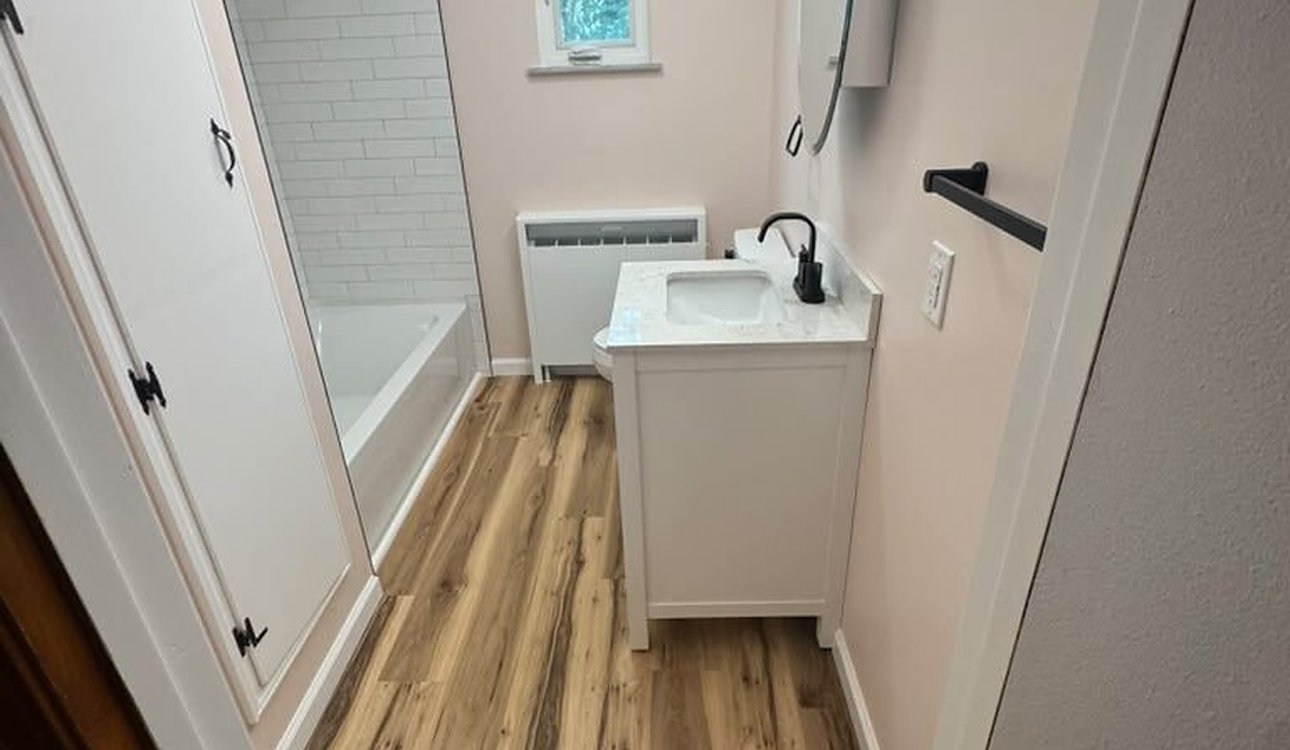
Most bathroom problems come from a few places: unclear scope, poor communication and rushed decisions. A bathroom like this one works when the vanity, the tub, the flooring and the trim are all planned together before the walls come down.
Spend your energy up front. Pick your fixtures and tile before work starts, ask about anything you don’t understand, and expect your contractor to tell you right away when the walls reveal something unexpected. Older homes often hide old plumbing or water damage, and the right time to deal with it is while everything is open.
A view from the doorway of a finished bathroom with a white vanity, tub, wall radiator and wood look floor.
If you are weighing where your budget will go, read our breakdown of the most expensive part of a bathroom remodel. It explains what drives the cost so you can make choices before the estimate, not after.
So, One Contractor or Multiple Subs?
If you have run construction projects before, have reliable trades and can be on site, managing subs yourself is possible. For everyone else, one bathroom remodel contractor is the safer path. You get one plan, one crew and one company responsible for the result, and you spend your time choosing tile instead of chasing schedules.
Our approach is simple. We design the room with you in our showroom, our own crew builds it, and you have one team to call from start to finish. We’ve worked that way for over 15 years.
Frequently Asked Questions
Is it cheaper to hire subcontractors directly?
It can look that way on paper, but the coordination still has to happen, and you are the one doing it. Delays, rework and gaps between trades can erase what you hoped to save. A single contractor builds that coordination into the job.
Do you need a general contractor for a small bathroom remodel?
Even a small bathroom usually involves plumbing, electrical, waterproofing and tile. If more than one trade is involved, one contractor running the job keeps the work in the right order.
What should a bathroom remodel estimate include?
A clear written scope: demolition, any plumbing or electrical changes, waterproofing, tile, fixtures, vanity, paint and trim. If something isn’t named, ask about it before you sign.
Who handles permits on a bathroom remodel?
Requirements vary by municipality. When we take on a bathroom, we check with the local office for that job and handle what it needs.
How can you tell if a contractor uses their own crew?
Ask directly who will be in your home each day. At JL Home Builders, the answer is our own crew, from demolition to the final trim.
Related reading
Ready to talk through your bathroom with one team from design to the last tile? Schedule your free in home consultation and we’ll show you how we’d plan and build it.