The best zen bathroom ideas come down to a few choices that make a room feel calm: a quiet color palette, natural textures like wood and stone, soft layered light, hidden storage and a layout with nothing in the way. A spa feel is less about buying one fancy fixture and more about taking things out of the room until what’s left feels simple and restful.
Below we walk through the design choices that create that feeling, from tile and color to lighting, storage and fixtures, and which ones are worth planning before any work starts. These are the same conversations we have in our showroom with homeowners planning bathroom remodeling in Pittsburgh, the South Hills and the North Hills.
What Makes a Bathroom Feel Zen?
Zen design borrows from Japanese and Scandinavian ideas: fewer objects, natural materials, soft contrast and a connection to light and nature. In a bathroom, that translates into a room where your eye rests instead of jumping from item to item. Counters are clear. Colors repeat instead of competing. Surfaces feel good to touch.
It also has a lot to do with how the room works. A bathroom can’t feel calm if the towel bar is out of reach, the fan rattles, or the door hits the vanity. A spa bathroom is a well planned bathroom first and a pretty one second.
Calm color
Soft greens, warm whites, sand, stone gray and muted blues. Pick one main color and let everything else support it.
Natural texture
Wood tones, stone look tile, matte finishes and handmade looking tile bring warmth without clutter.
Soft light
Daylight where you can get it, plus layered fixtures on dimmers so the room can be bright in the morning and gentle at night.
Nothing out
Closed storage, recessed niches and a clear counter. The fewer things you see, the calmer the room feels.
Zen Bathroom Design Starts With Color and Tile
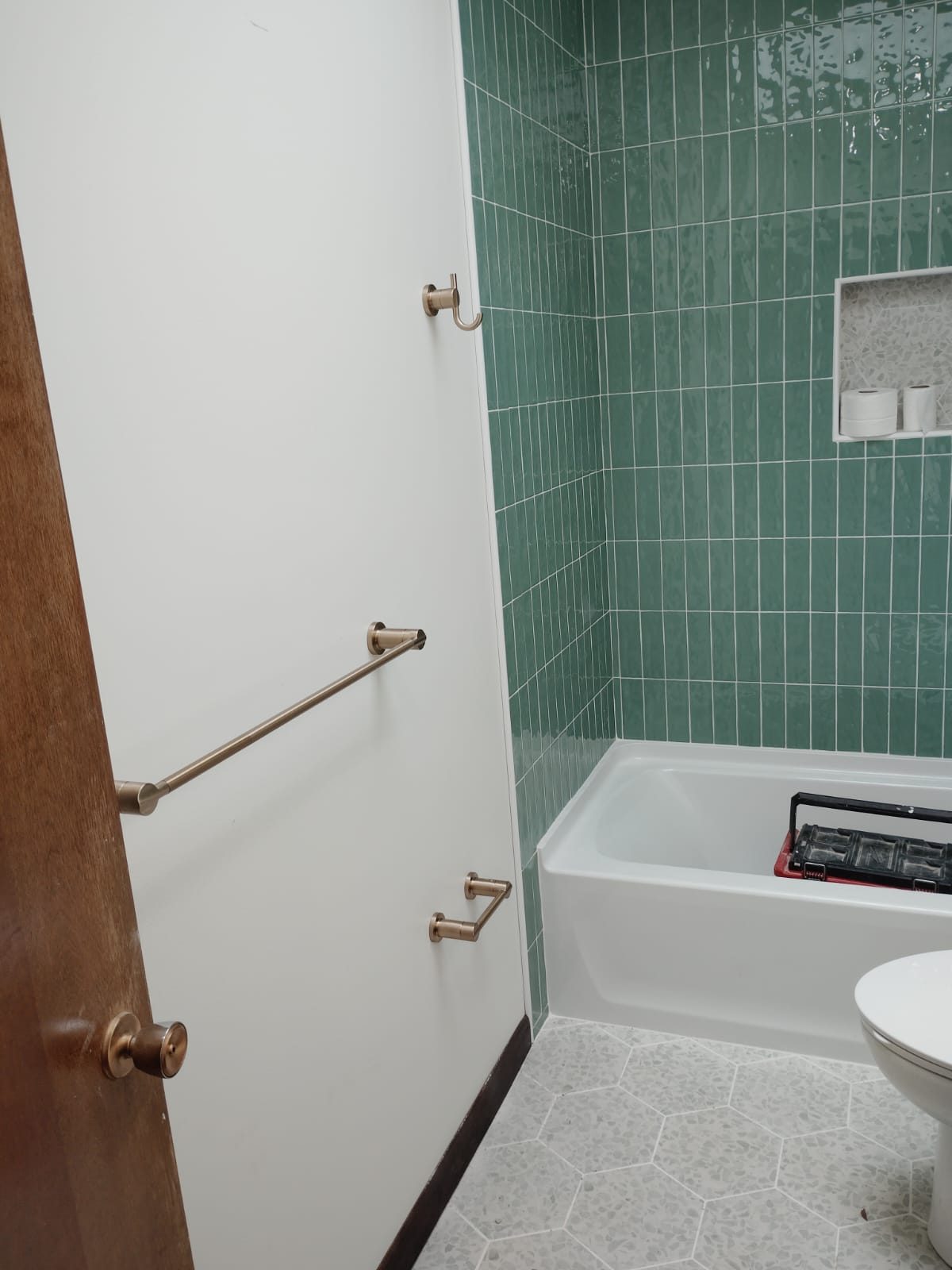
Green is one of the easiest ways to bring a natural, spa like mood into a bathroom. A muted green tile like this one reads as calm rather than loud, especially when it’s paired with white walls and a white tub so the color has room to breathe.
Laying tile vertically draws the eye up and makes a tub or shower wall feel taller. The slight variation in a glazed tile adds depth without adding pattern, which keeps the wall interesting but quiet.
Green vertical tile wraps a white tub, with a tiled niche in the wall and brass towel bars on the white wall beside it.
If green isn’t your color, the same rule applies to any palette: choose one feature color for the wet area and keep the rest soft and neutral. Busy patterned floors, three different tile colors and a bold accent wall all pull against a zen bathroom design. Save pattern for one small spot, if you use it at all.
A few tile choices help keep a wall or floor quiet:
- Large format tile. Bigger tiles mean fewer grout lines, and fewer lines make a wall look smooth and calm.
- Stone and wood looks. Porcelain tile that looks like stone or wood brings natural texture into a wet room without the upkeep of the real thing.
- Matching or close grout. Grout close to the tile color blends in. High contrast grout outlines every tile and adds visual noise.
- Matte or soft sheen finishes. They feel softer than high gloss and hide water spots better on floors.
Spa Bathroom Ideas for the Shower
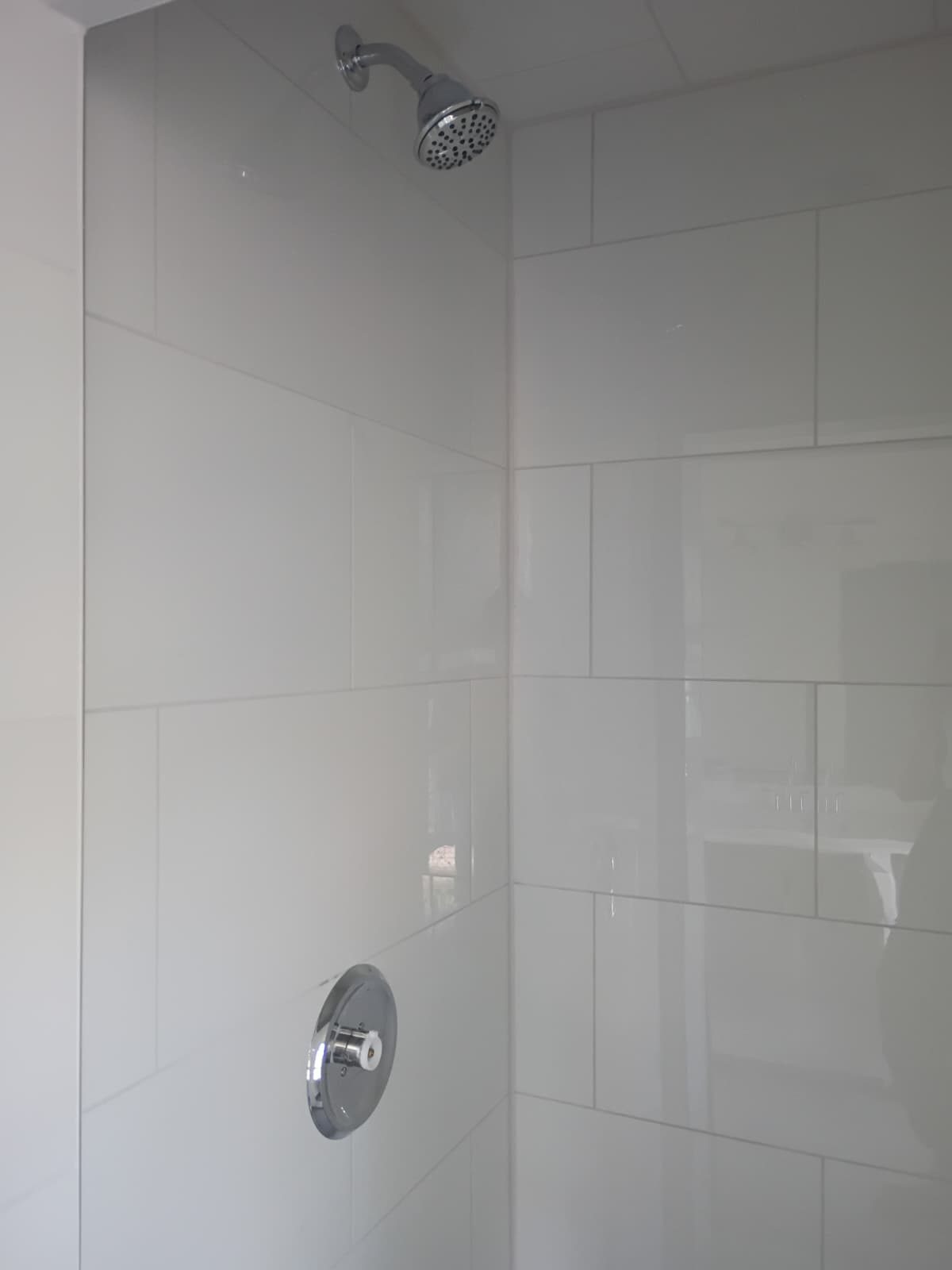
The shower is usually the largest surface in a spa bathroom, so it sets the tone for the whole room. Large white rectangular tile like this keeps the walls clean and bright. With so few grout lines, the shower reads as one smooth surface, and it’s easier to keep clean too.
A single, simple trim style for the shower head and valve finishes the look. Pick one metal finish and carry it through the room so nothing feels out of place.
Large white rectangular tile on the shower walls with a chrome shower head and round valve trim.
Many homeowners planning a zen bathroom ask whether to keep the tub at all. A walk in shower with clear glass opens the room and supports that open, uncluttered feeling, while a deep soaking tub is part of the spa experience for others. Our guide on choosing between a walk in shower and a tub lays out who each option suits best.
Recessed niche
A niche built into the wall holds bottles so there’s no caddy hanging from the shower head. Line it up with the tile layout so it looks planned.
Clear glass
Clear glass lets the tile run uninterrupted from one side of the room to the other. Frosted glass and shower curtains break the room into pieces.
A bench
A built in bench or a simple teak stool makes the shower feel more like a spa and gives you a place to sit or rest a foot.
A better shower head
A rain style head or a handheld on a slide bar changes how a shower feels every day, and a handheld makes cleaning easier.
Natural Materials and a Clear Counter
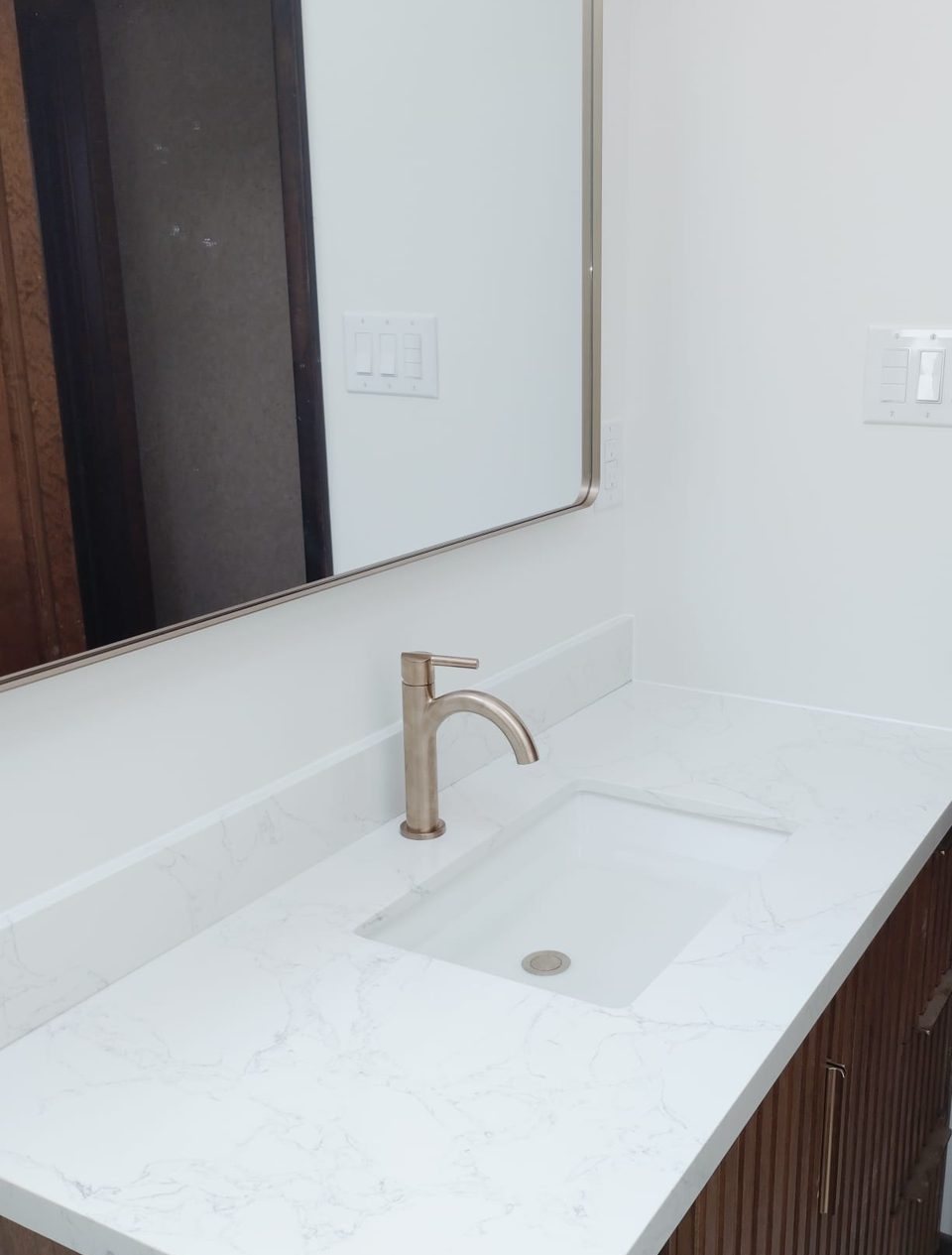
Wood brings warmth that tile alone can’t. A wood tone vanity under a white quartz top is a simple pairing that feels natural and calm. The undermount sink keeps the counter one smooth surface, with no rim to catch grime.
A large framed mirror bounces light around the room. A single lever faucet in a warm metal like brass ties the wood and white together without drawing too much attention.
A wood vanity with a white quartz top, an undermount sink, a brass faucet and a large framed mirror above it.
Quartz is a popular vanity surface because it’s non porous and low maintenance, which matters in a room where you want the counter clear and easy to wipe. If you’re also thinking about which materials earn their keep long term, our post on what adds the most value to a bathroom covers the finishes buyers and homeowners tend to appreciate.
Other natural touches that fit the look:
- A wood look tile or luxury vinyl plank floor for warmth underfoot.
- Linen or cotton towels in one or two colors instead of a mix.
- A plant or two that tolerates humidity, if the room gets some daylight.
- Simple stone or wood accessories, kept to a minimum.
Storage That Keeps the Room Clutter Free
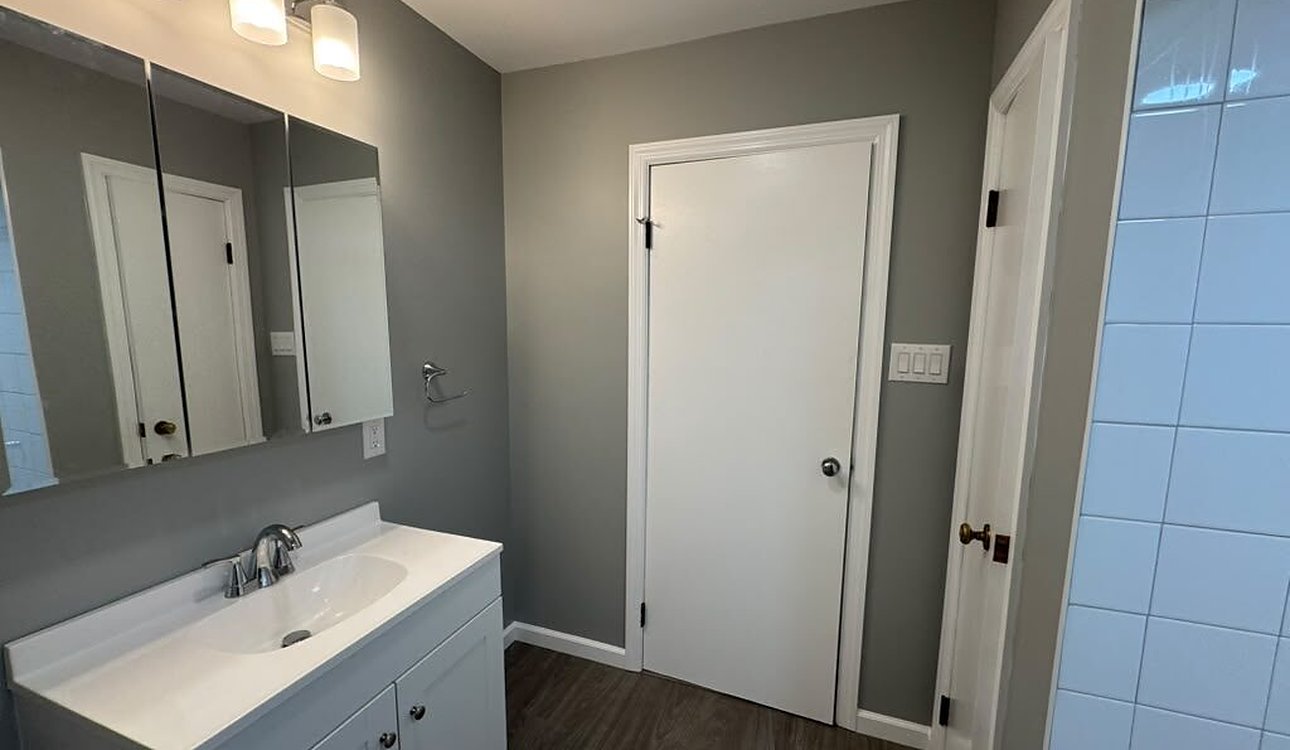
Clutter is the fastest way to lose a calm feeling. The answer is storage you can close. A mirrored medicine cabinet above the vanity holds daily items at eye level and keeps them off the counter, while drawers and doors below hide the rest.
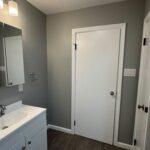
Soft gray walls, a white vanity and white trim keep this room calm and simple. Nothing competes for attention, so the space feels open even though it isn’t large.
A gray bathroom with a white vanity and white top, a mirrored medicine cabinet above it and a white door.
Plan storage around what you actually keep in the bathroom. Count the bottles, hair tools and towels before the design is set, then give each one a place. That’s what keeps the counter clear long after the remodel is done.
- Drawers instead of doors. Drawers in a vanity hold more and are easier to keep organized.
- Recessed cabinets. A medicine cabinet set into the wall saves space and looks cleaner than one hung on the surface.
- Outlets inside cabinets. A plug inside a vanity drawer or medicine cabinet keeps chargers and hair tools out of sight.
- Hooks and a towel warmer. Fewer towel bars, better placed, keep the walls simple.
Lighting for a Calm, Spa Like Mood
Lighting may matter more than any other choice in a zen bathroom. One bright ceiling fixture flattens a room and casts shadows across your face. Layers of light let you set the mood.
Task light at the mirror
Fixtures on either side of the mirror, or a lighted mirror, light the face evenly for shaving and makeup.
Soft ambient light
Recessed lights or a ceiling fixture on a dimmer give general light without glare.
Accent light
A light in a shower niche or under a floating vanity makes a gentle glow at night.
Warm color temperature
Warm white bulbs feel more relaxing than cool, blue white light. Use the same color across every fixture.
Daylight helps too. If your bathroom has a window, keep the treatment simple so light comes through while privacy holds. Frosted film, a top down shade or a privacy glass window let in daylight without a heavy curtain.
Ventilation and Quiet Comfort
A spa bathroom should feel fresh, not damp. A quiet exhaust fan vented to the outside clears steam after a shower and protects paint, grout and trim. Look for a fan with a low sound rating so it doesn’t break the calm, and consider a humidity sensor or timer so it runs long enough without anyone remembering to turn it off.
Comfort details round out the experience. Heated floors take the chill off tile on a cold Pittsburgh morning. A comfort height toilet, a soft close seat and a door that closes quietly all add to how the room feels day to day.
Zen Bathroom on a Budget
A calm bathroom doesn’t have to mean the most expensive materials. Most of the feeling comes from restraint: fewer finishes, fewer colors and fewer things on display. Our budget friendly bathroom remodeling tips explain where to spend and where simpler choices hold up just as well.
Ways to get a spa feel without overspending: keep the toilet, sink and shower where they are, choose one simple tile for walls and floors, put the budget into a good vanity and lighting, repaint in a soft color, and swap mixed hardware for one matching finish.
Planning Your Zen Bathroom
The order of decisions matters. Settle the layout and the shower or tub first, since those set the plumbing and waterproofing. Then choose tile and the vanity, then lighting, then the finishing touches. Picking a faucet before the layout is set is how rooms end up with pieces that don’t work together.
Seeing materials side by side helps more than any photo. In our McNeilly Road showroom you can hold tile next to vanity finishes and countertop samples under real light, which makes it much easier to build a calm palette that holds together. Every project is designed in our showroom and built by our own crew.
Frequently Asked Questions
What colors work best for a zen bathroom?
Soft, natural colors work best: warm whites, sand, stone gray, muted greens and soft blues. Pick one main color and keep the rest neutral so the room feels restful.
How do you make a small bathroom feel like a spa?
Keep the counter clear with closed storage, use large tile with matching grout, choose clear glass for the shower and add layered, dimmable light. In a small room, fewer finishes make the biggest difference.
Is a tub needed for a spa bathroom?
No. Many spa bathrooms center on a walk in shower with a bench and a good shower head. A soaking tub is a good choice if you’ll actually use it.
What flooring fits a zen bathroom design?
Porcelain tile with a stone or wood look and luxury vinyl plank are both good fits. They bring natural texture, handle water well and are easy to keep clean.
Can you create a zen bathroom without a full remodel?
Some of it, yes. Paint, lighting, a new vanity, matching hardware and better storage can change how a room feels. Tile, shower and layout changes usually call for a remodel.
Related reading
Ready to plan a calmer bathroom? Schedule a free in home consultation with JL Home Builders. We’re a family owned company that has been remodeling homes since 2010, and we’ll help you turn these ideas into a plan for your space.