If you have ever started pricing out a kitchen renovation, you already know the numbers climb fast. What catches most homeowners off guard is not the total cost itself. It is discovering where the bulk of that money actually lands.
I have watched homeowners pour weeks into choosing backsplash tile while underestimating the line item that will consume a third of their entire budget. Understanding the most expensive part of a kitchen remodel is the single best thing you can do before signing a contract.
Why Cabinets Are the Most Expensive Part of a Kitchen Remodel
Cabinetry consistently accounts for 29% to 40% of a total kitchen remodel budget. That means nearly a third of every dollar you spend goes toward this single category. The reason is straightforward: cabinets require quality materials, precision engineering, and skilled installation.
Stock cabinets from a big-box retailer sit at the low end, while semi-custom options cost significantly more. Fully custom cabinetry commands a premium that depends on wood species, finish, and internal hardware. This is also the area where quality matters most for daily use, so cutting corners here tends to create regret fast.
A Full Cost Breakdown of the Most Expensive Part of a Kitchen Remodel
Knowing that cabinets lead the pack is helpful, but it only tells part of the story. Here is how a typical mid-range kitchen remodel budget breaks down.
| Category | % of Total Budget |
|---|---|
| Cabinetry | 29% – 40% |
| Labor & Installation | 20% – 35% |
| Countertops | 10% – 15% |
| Appliances | 10% – 15% |
| Flooring | 5% – 10% |
| Lighting & Electrical | 3% – 5% |
| Plumbing | 3% – 5% |
| Backsplash & Paint | 2% – 5% |
These ranges shift depending on material selections and whether structural changes are involved.
What Is a Realistic Budget for a Kitchen Remodel?
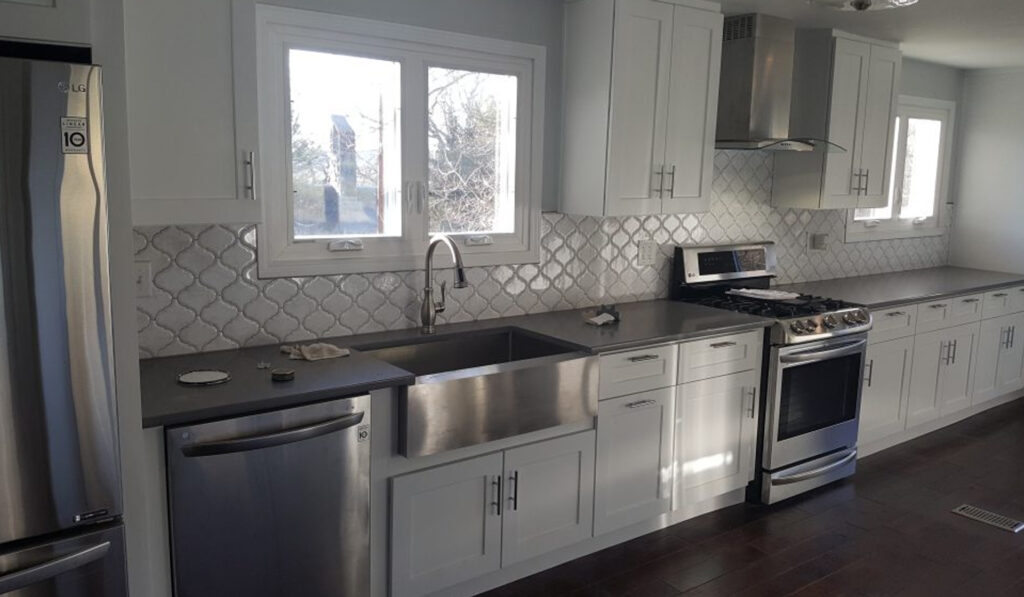
What you spend on a kitchen remodel depends heavily on the scope of the project. A minor refresh that keeps the existing layout and focuses on surface-level updates will cost far less than a full gut renovation. A major overhaul with new cabinetry, premium countertops, and layout changes pushes the budget considerably higher. Your goals and material choices are the biggest drivers.
Your region matters, too. Homeowners in high-cost metro areas regularly pay 30% to 40% more than the national average for the same scope of work. Get multiple contractor quotes, compare them line by line, and make sure every estimate includes labor, materials, and permits. I always recommend budgeting an extra 10% to 15% for surprises, because older kitchens almost always hide something behind the walls.
What Is the 30% Rule in Remodeling?
The 30% rule is a budgeting guideline that says you should not spend more than 30% of your home’s current market value on renovating any single space. So if you know what your home is worth, you can quickly calculate a ceiling for your kitchen project. Think of it as a guardrail that protects you from overcapitalizing, which means sinking more money into a renovation than you could ever recoup when selling.
This rule becomes especially important if you plan to sell within the next five to ten years. An over-improved kitchen in a modest neighborhood will not deliver the return you expect. For most homeowners, spending 10% to 15% of the home’s total value on a kitchen remodeling project hits the sweet spot between meaningful upgrades and financial discipline.
How Much Remodeling Can Be Done with $100,000?
A six-figure budget puts you firmly in premium territory. You can afford fully custom cabinetry in hardwood, quartz or natural stone countertops, a professional-grade appliance suite, and high-end flooring. Structural changes become realistic at this level, too. Want to knock down a wall and create an open-concept layout? You have the room.
You can also address items lower budgets force you to skip: upgraded electrical panels, new plumbing lines, custom lighting, and built-in features like a wine fridge or pot filler. The key is not to spend everything just because you have it. Prioritize elements that improve daily use and hold resale value.
Labor Costs: The Hidden Giant in Kitchen Remodeling
Labor is the second largest expense, and it is the one most people underestimate. Demolition, framing, electrical, plumbing, tile work, and cabinet installation all require skilled tradespeople. On a mid-range project, labor can consume 20% to 35% of the total budget.
A simple cabinet swap with no layout changes is far less expensive than rerouting water supply lines or adding a kitchen island with plumbing. One thing I have learned: hiring experienced professionals upfront saves money in the long run. If you are considering a professional kitchen remodel, invest in contractors with verifiable references and clear, itemized bids.
How Countertops and Appliances Factor Into Your Budget
After cabinets and labor, countertops and appliances compete for third place. Countertop costs vary dramatically based on material. Laminate sits at the budget-friendly end, while engineered quartz commands a mid-range price and natural stone like granite or marble pushes costs even higher. The material you choose here can shift your entire budget significantly.
Appliances are one of the most flexible budget categories. A solid mid-tier package covers the essentials without breaking the bank. Step up to professional-grade brands, and you can double that investment easily. Buy the best appliances you can afford for items you use daily, and save on the extras.
The Most Expensive Part of a Kitchen Remodel and Your Return on Investment
Kitchen remodels consistently rank among the highest-ROI home improvement projects. A minor remodel with midrange finishes can deliver a return of approximately 113%. Major upscale remodels recoup closer to 36% to 50%, because spending outpaces what buyers will pay at closing.
You do not need to gut your kitchen to see a strong return. Strategic upgrades to cabinetry, countertops, and fixtures often deliver better value than a full teardown. If you are also considering renovations elsewhere in your home, read about Adding Value with a Primary Bathroom Suite in Your Pittsburgh Home to see how bathroom improvements complement kitchen investments.
Smart Ways to Save on Your Kitchen Remodel
Saving money does not mean settling for less. It means spending strategically. Start by keeping your existing layout, because the moment you move plumbing or electrical, costs jump. Refacing cabinets instead of replacing them can save 30% to 50% on cabinetry costs while still giving you a fresh look.
Bundle your appliance purchases for package deals, and shop during holiday sales. Handle cosmetic tasks like painting and hardware swaps yourself if you are comfortable with basic DIY. Every dollar you save on finishes is a dollar you can redirect toward the most expensive part of a kitchen remodel: quality cabinetry that will serve you for decades. According to HomeLight’s kitchen remodel guide, focusing your budget on high-impact items while trimming low-impact expenses is the most reliable path to a renovation you will love.
Final Thoughts on Budgeting for a Kitchen Remodel
A kitchen remodel is one of the biggest financial commitments a homeowner can make. Cabinets will take the largest bite. Labor will take the second. Everything else fills in around those two pillars. Once you accept that reality, you can plan a budget that is honest, strategic, and built to deliver real results.
Whether you are working with a modest budget or a generous one, the principles stay the same: invest where it counts, save where you can, and never skip the contingency fund. Spend wisely, and it will pay you back in comfort, function, and value for years to come.