
Table of Contents
Living in Pittsburgh means dealing with unpredictable weather. One afternoon you are grilling in the sunshine, and the next you are dodging a sudden downpour. That is exactly why so many homeowners here are investing in covered outdoor spaces that hold up through every season. We have seen firsthand how the right structure can turn a neglected backyard into the most-used room in the house. JL Home Builders handles exterior remodeling in Pittsburgh, including roofing, siding, decks and concrete.
If you have been exploring covered patio ideas Pittsburgh homeowners are choosing today, the trend is clear: people want more than a slab of concrete with a roof on top. They want a space that feels intentional and built to last through Western PA winters. This guide walks through the best ideas, materials, and features to help you create exactly that.
What Is a Covered Patio Called?
Before diving into design, it helps to understand the terminology. A covered patio goes by several names depending on its structure and connection to your home. You might hear it called a pavilion, pergola, veranda, lanai, or simply a patio cover. A pergola has an open-slatted roof that lets in partial sunlight. A pavilion is freestanding with a solid roof. A patio cover attaches directly to the house and extends the existing roofline.
In Pittsburgh, most homeowners lean toward solid-roof patio covers or enclosed sunroom-style structures because they offer real protection from rain and snow. Knowing these distinctions helps you communicate clearly with your contractor.
Why Year-Round Design Matters
Pittsburgh is not Phoenix. We get freeze-thaw cycles, heavy snowfall, humid summers, and spring rain that lasts for days. A patio design that works in a mild climate will not hold up here. That means your Pittsburgh outdoor living space needs durability as the foundation, not an afterthought.
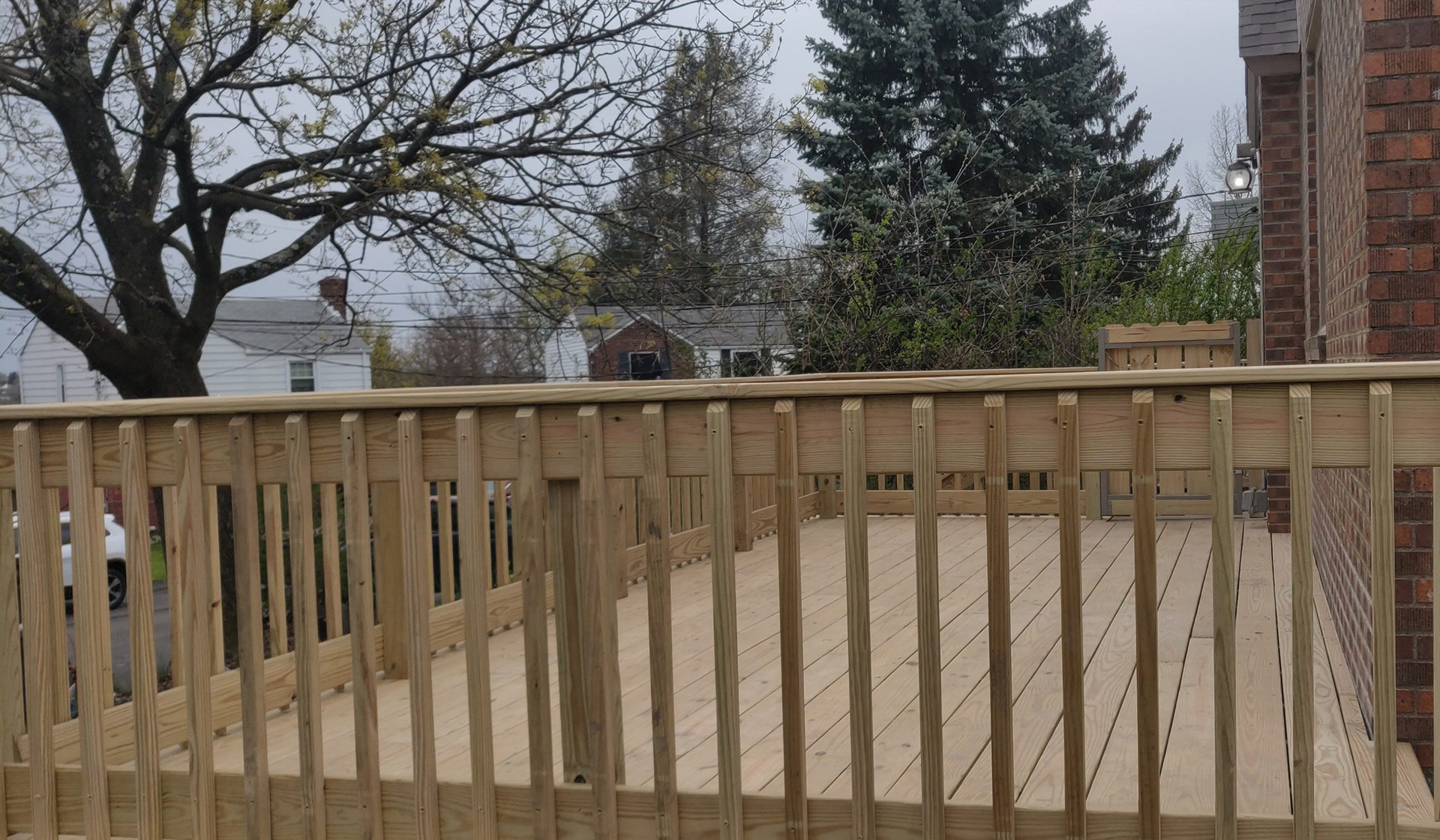
Year-round design means choosing materials that handle temperature swings without cracking or warping. It means planning for drainage, insulation, and wind protection from the start. Homeowners who plan for all four seasons end up using their patio far more often.
A new deck built to carry a cover later. Drainage and structure are planned in from the start, not added after the first storm.
What Is the Best Way to Cover a Patio?
There is no single answer because it depends on your budget, architecture, and how you plan to use the space. That said, a few options consistently rise to the top. Solid roof extensions that match your home’s existing roofline offer the most weather protection. Louvered roof systems give you adjustable control, letting you open up for sunlight or close tight when rain rolls in. Four-season sunroom enclosures provide the most complete protection but come at a higher cost.
For homeowners weighing a covered patio against other outdoor options, it is worth reading Deck vs Patio: What’s Best for Your Pittsburgh Custom Home? to understand the tradeoffs before committing to a direction.
Top Patio Cover Styles for Pittsburgh Homes
Let us break down the most popular styles working well in this region.
Gable Roof Pavilions
The classic peaked gable roof is popular in Pittsburgh for good reason. The steep pitch handles snow loads well and provides generous headroom. Exposed timber beams and decorative brackets add warmth and architectural character. This style pairs naturally with traditional homes throughout Fox Chapel, Mt. Lebanon, and Upper St. Clair.
Louvered Roof Systems
These modern, adjustable metal roofs are gaining traction fast. Heavy-duty aluminum louvers rotate to let sunlight in or seal shut to block rain and snow. They work especially well for homeowners who want flexibility without sacrificing protection. The clean lines suit contemporary and modern farmhouse styles.
Four-Season Sunroom Enclosures
If you want to use your patio space in January, a fully enclosed four-season room is the way to go. Thermally engineered aluminum frames with double-pane insulated glass keep the cold out while letting natural light flood in. It is the most significant investment on this list, but it effectively adds heated square footage to your home.
Choosing the Right Materials for Pittsburgh Weather
Material selection can make or break your patio cover ideas Pittsburgh project. This table compares the most common options for our climate:
| Material | Durability | Maintenance | Best For |
|---|---|---|---|
| Powder-Coated Aluminum | Excellent | Low | Modern designs, louvered roofs |
| Cedar | Very Good | Moderate | Pavilions, traditional styles |
| Natural Stone (Bluestone, Slate) | Excellent | Low | Flooring, fireplaces, accents |
| Stamped Concrete | Good | Low | Budget-friendly flooring |
| Composite Decking | Very Good | Low | Flooring under covered areas |
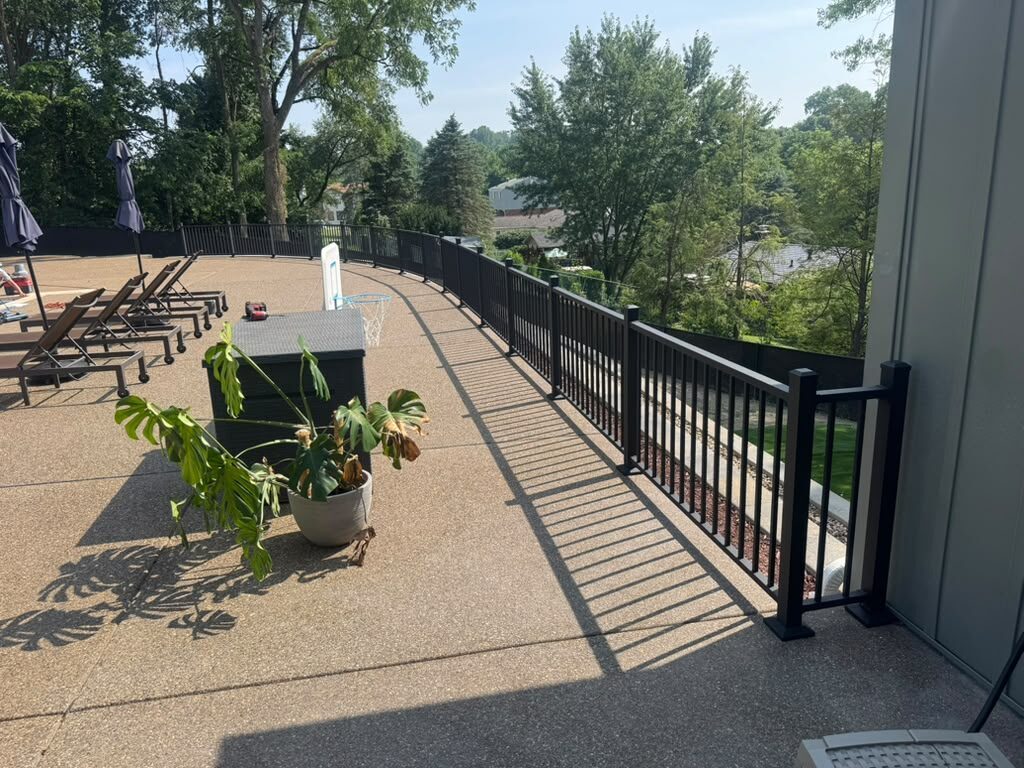
Avoid standard wood decking under a covered patio unless you are ready for regular sealing and maintenance. Pittsburgh’s humidity and freeze-thaw cycles are tough on untreated wood. Powder-coated aluminum and stone tend to perform best over time with minimal upkeep.
Powder-coated aluminum railing on a patio. No painting, no rust, and it shrugs off freeze-thaw cycles.
Features That Make Your Pittsburgh Outdoor Living Space Usable Year-Round
A roof alone does not make a patio usable in February. The features you add underneath are what transform it from a three-season space into a true year-round living area.
An outdoor stone fireplace or gas fire pit table provides real heat and creates a natural gathering point. Built-in infrared heaters offer supplemental warmth without taking up floor space. Clear vinyl curtains or retractable screens block wind while keeping views open. Robust lighting extends usability into the evening. Together, these features make your covered patio ideas Pittsburgh design feel like a genuine extension of your home.
Outdoor Kitchen Integration Under a Covered Patio
One of the most rewarding upgrades we have seen homeowners make is adding a full outdoor kitchen beneath their patio cover. A built-in grill, sink, refrigerator, and counter space turn casual grilling into legitimate outdoor entertaining. Stone or tile countertops hold up to Pittsburgh weather, and having everything under a solid roof means you are not canceling plans because of a forecast.
If you are considering this route, plan your utilities early. Running gas, water, and electrical lines is far easier during initial construction than as a retrofit. For visual inspiration across a range of styles, Houzz’s covered patio gallery is a great resource.
Permits, Budget, and Planning for Your Pittsburgh Patio Project
Nearly every municipality in the Pittsburgh area requires a building permit for a covered patio structure. Setback requirements, height restrictions, and lot coverage rules vary by township, so check with your local building department before finalizing plans.
Budget-wise, the spread is wide: a basic pergola sits at one end and a fully equipped pavilion with a fireplace, kitchen, and premium finishes at the other. We always recommend starting with the structure and essential features, then phasing in additions over time. It is a smart way to build an incredible Pittsburgh outdoor living space without overextending your budget in year one.
Making Your Covered Patio Feel Like Home
The finishing touches matter more than most people realize. Weather-resistant furniture with quality outdoor fabric, an area rug rated for exterior use, and a few well-placed accessories bring warmth and personality to the space. Skip the cheap big-box patio sets and invest in pieces built for humidity and temperature changes.
Think about how the space connects to your interior, too. French doors, sliding glass panels, or folding multi-panel doors create a seamless transition that makes your covered patio feel like an extension of your living room. When that threshold between inside and outside disappears, you end up using the space constantly. That is the real goal of any great outdoor living project.