
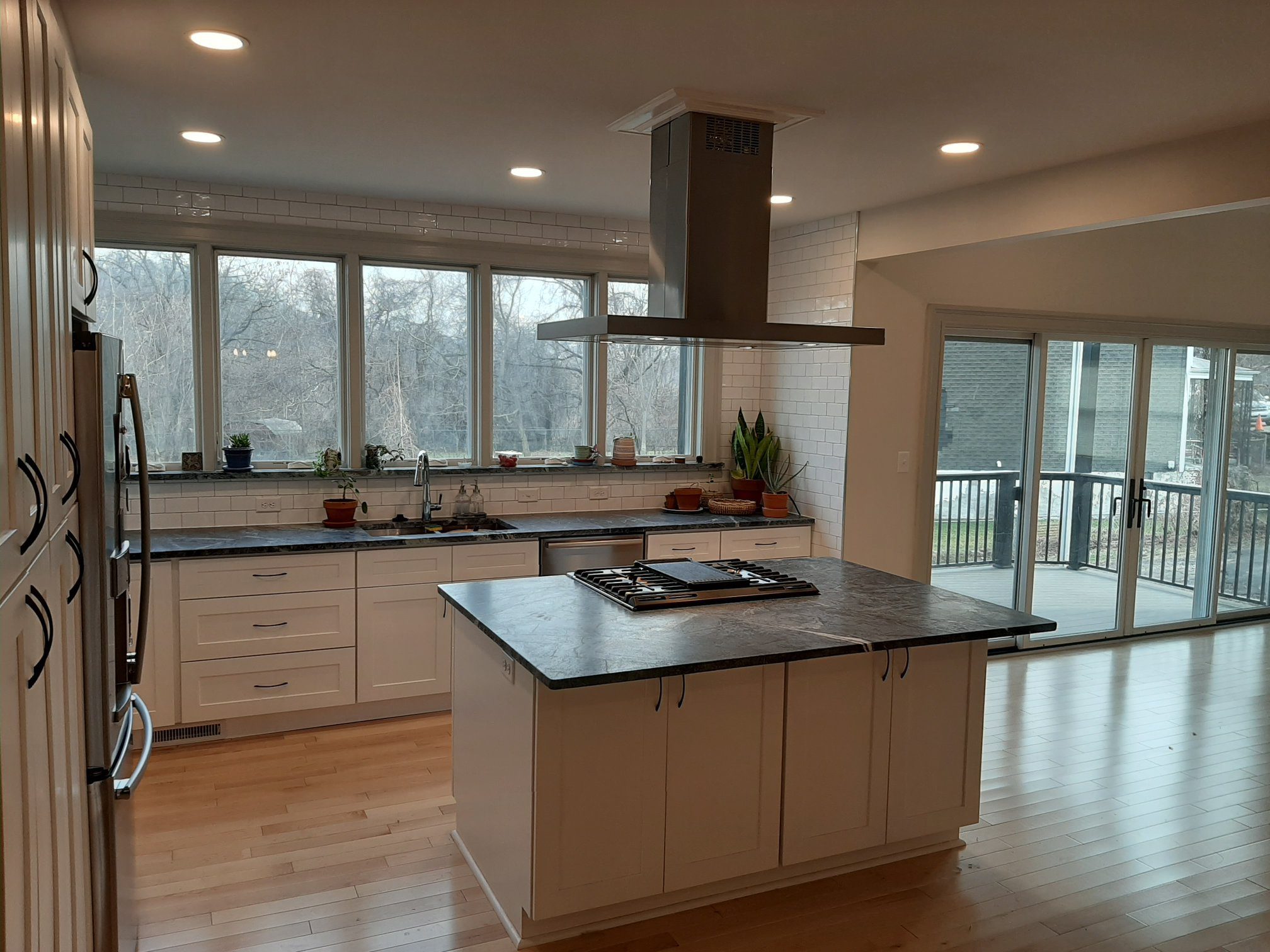
A home renovation contract should include both parties’ names and contact details, a detailed scope of work, the materials and finishes by name, the total price and payment schedule, a start date and how the schedule and delays are handled, a written change order process, who handles permits and inspections, proof of insurance, warranty terms, cleanup, and how disagreements get resolved. If any of those are missing or vague, ask for them in writing before you sign.
The contract you sign matters more than the tile you pick or the paint color you agonize over. A strong agreement is your roadmap, your safety net and your written record of what was promised. Whether it covers one room or whole home remodeling in Pittsburgh, here is what belongs in a solid home renovation contract and why each part protects you.
What to Include in a Home Renovation Contract
Think of the contract as the full story of your project, written down before anyone picks up a tool. Use this as a checklist when you read one.
The parties
Legal names, addresses, phone numbers and the contractor’s business information, plus any registration number your state or municipality requires.
Scope of work
A room by room description of what will be built, removed, repaired and left alone.
Materials and finishes
Brands, models, colors and sizes, or a clear allowance for items you will pick later.
Price and payments
The total price and a payment schedule tied to completed work.
Schedule
A start date, the order of major phases, and how delays are communicated.
Changes
A written change order process with cost and schedule effects signed before work proceeds.
Beyond those six, a complete agreement also covers permits and inspections, insurance, warranty terms, site protection and cleanup, and dispute resolution. We cover each below.
Scope of Work: the Heart of the Agreement
The scope of work is where most disputes are either born or avoided. Vague phrases like install new counters or builder grade flooring leave too much room for interpretation.
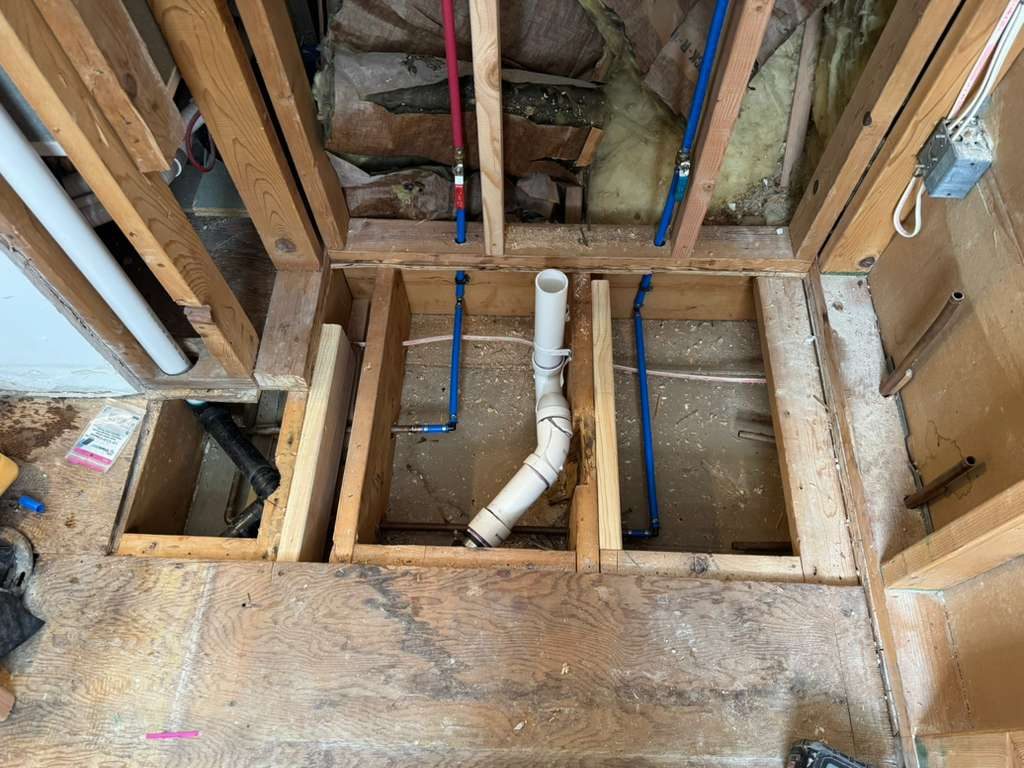
A good scope names what is being replaced, what is staying, and what happens if the crew opens a floor or wall and finds something unexpected, like old plumbing that needs to be rerouted.
An opened floor with joists, a white drain pipe and blue water lines exposed during a remodel.
Good scopes also explain what gets torn out, who hauls debris away, how finished areas of the house are protected, and how the site is left at the end of each workday. These details sound small until you are living with them. Put them in writing so expectations stay clear.
Materials, Selections and Allowances
The contract should say exactly what you are getting. Name the cabinet line and door style, the counter material, the tile, the flooring, the plumbing fixtures and the light fixtures. If you have not chosen an item yet, the contract should show an allowance and explain what happens if your final choice costs more or less.
Selections are also where schedules slip. Ask when each choice needs to be made so materials arrive before the crew needs them. Our post on planning a whole home remodel explains which decisions to make before construction starts.
Schedule and Milestones
Every project deserves a real start date and a clear order of work. For larger jobs, break the work into milestones you can see, such as demolition, framing, rough in, drywall and finishes.
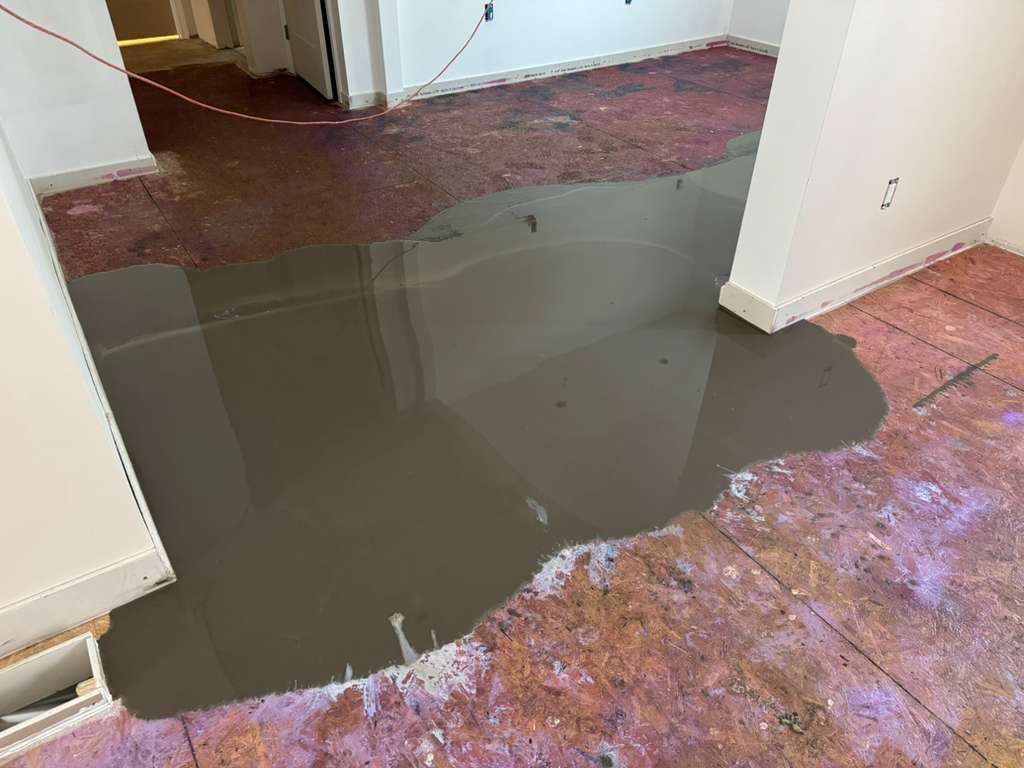
Floor prep is a good example of a milestone that is easy to overlook. It happens after the messy work and before the finished floor, and the contract can show where it falls.
Self leveling compound spread across a subfloor, before the finished flooring is installed.
Every project is different, so be wary of anyone who promises an exact finish date before the walls are open. What the contract should include is how schedule changes get communicated, and what happens if weather, back ordered materials or a hidden problem affects the plan.
Payment Schedules That Protect Both Sides
You should not pay for an entire renovation up front. A balanced agreement ties payments to completed milestones, so the money follows the work. The contract should spell out the deposit, each progress payment, what work must be complete before it is due, and the final payment.
Holding the final payment until the punch list is complete gives everyone a reason to finish strong. Make sure the contract defines what substantial completion means and how the punch list is created and signed off.
Change Orders
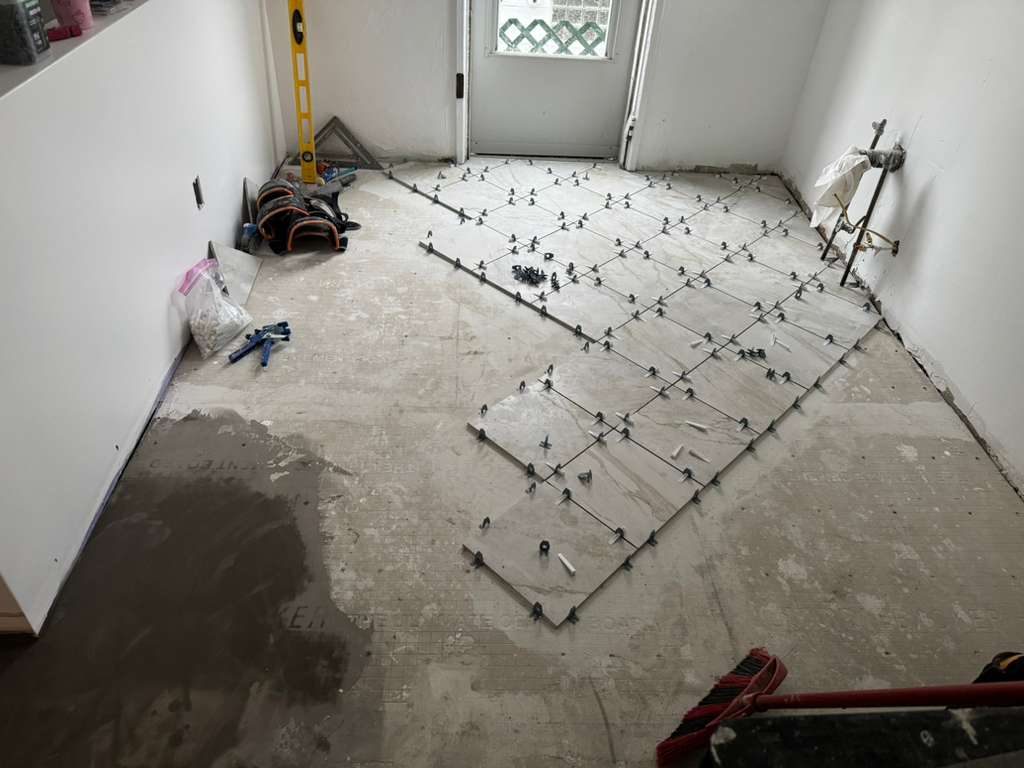
Renovations evolve. You fall for a different tile, or the crew opens a wall and finds wiring that has to be replaced. A change order is a short written agreement that captures any addition, removal or swap, with its cost and its effect on the schedule.
Insist that every change is written and signed before the work is done. A casual hallway conversation should never quietly change the final bill.
Large format floor tile being set with leveling clips across a room, with the rest of the subfloor still bare.
Permits, Inspections and Insurance
The contract should state who is responsible for pulling permits and scheduling inspections. Requirements vary by municipality, so the right answer depends on the job and the local office; we check with the local office for each job. Our post on permits for a home remodel explains the basics.
Ask for proof of liability insurance and workers’ compensation coverage, and keep copies with your contract. If anyone gets hurt or something gets damaged, this is what protects you and your home.
Warranties, Lien Waivers and Dispute Resolution
Your agreement should describe any workmanship warranty the contractor offers, what it covers and how to request service, along with the manufacturer warranties on products installed. Ask for those terms in writing rather than relying on a handshake.
Lien waivers are worth asking about too. They are documents confirming that subcontractors and suppliers have been paid for their part of the work, which helps keep your property clear of claims for debts you did not create. Finally, the contract should explain how disagreements get handled, whether through direct conversation, mediation or another process, so a small issue does not become a standoff.
Red Flags in a Home Renovation Contract
The Federal Trade Commission keeps a plain spoken guide on how to avoid home improvement scams, and it echoes what we tell homeowners. Slow down if you see any of these.
- A one page estimate presented as the contract.
- Pressure to sign the same day or pay the full price up front, especially in cash.
- No written change order process.
- Blank spaces, missing addresses or no proof of insurance.
- Materials described only as standard or builder grade.
- A refusal to explain who pulls permits.
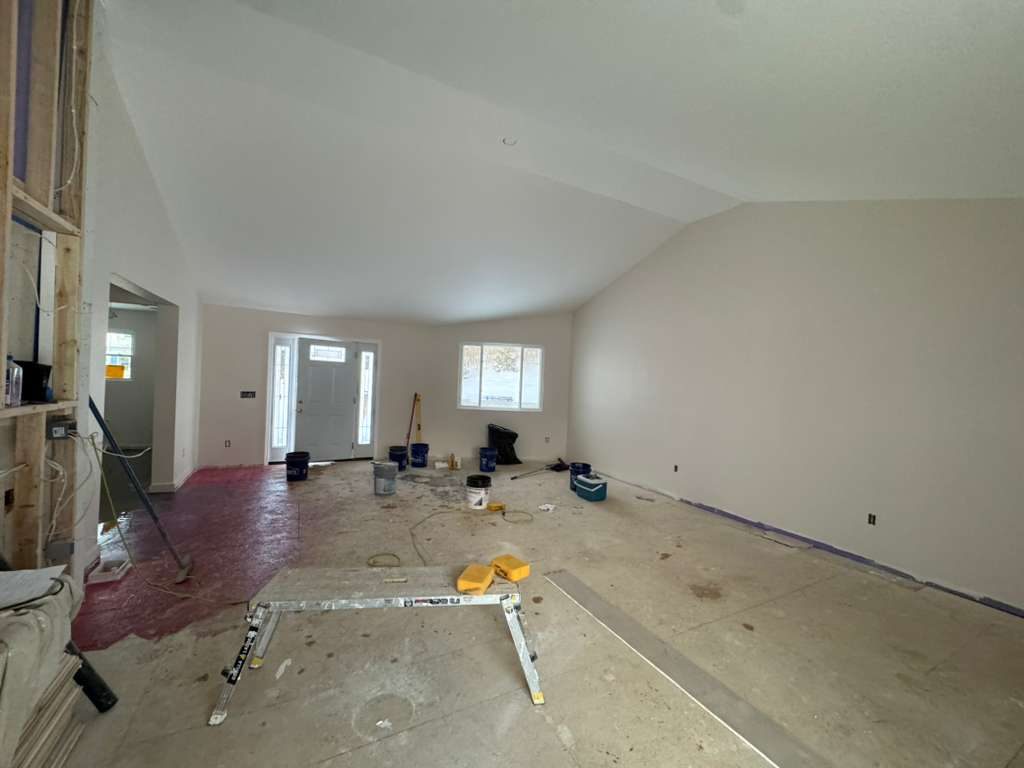
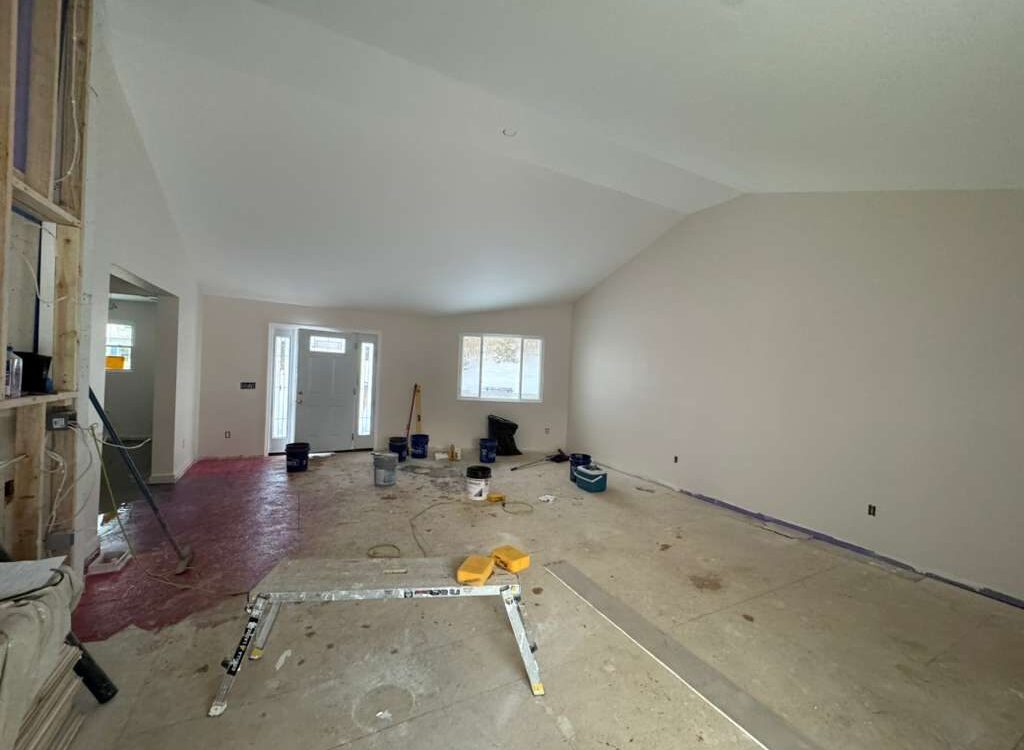
Near the end of a project, the contract becomes the checklist for the final walkthrough. Rooms like this one, painted with trim in place but floors still to come, are exactly where a clear scope tells you what done means.
When you are vetting a contractor, read the contract as closely as you read reviews. Our guide on how to choose the right contractor for your Pittsburgh remodel covers the rest of the process.
A painted room with new trim and windows, with the subfloor still bare before flooring goes in.
Frequently Asked Questions
What should be included in a home renovation contract?
Names and contact details, a detailed scope, materials, price and payment schedule, schedule and delay terms, change orders, permits and inspections, insurance, warranties, cleanup and dispute resolution.
How should payments be structured in a renovation contract?
Tie payments to completed milestones rather than dates, avoid paying the full price up front, and hold the final payment until the punch list is done.
What is a change order?
A written, signed agreement that records any change to the scope, along with its effect on cost and schedule, before the work is done.
Who pulls the permits for a remodel?
The contract should say. Requirements vary by municipality, and the responsible party should be named in writing.
Should a renovation contract include a warranty?
It should state any workmanship warranty the contractor offers and how to use it, plus the manufacturer warranties on installed products.
Related reading
Want to see what a clear, detailed proposal looks like? We are a family owned company that has been remodeling homes since 2010, with projects designed in our showroom and built by our own crew. Book a free in home consultation to get started.