Selecting countertops is one of the most important and visible decisions you’ll make during a kitchen remodel. Your countertops need to be durable enough to withstand daily cooking, beautiful enough to enhance your kitchen’s design, and practical enough to fit your maintenance preferences and budget. The three most popular premium countertop materials are granite, quartz, and marble, and each offers distinct advantages and characteristics. At JL Home Builders, we help Pittsburgh homeowners navigate countertop selections regularly, and we know the decision can feel overwhelming. Understanding the real-world pros and cons of each material will help you choose countertops that you’ll love for decades to come.
“If you’re planning a kitchen remodeling project in the Pittsburgh area and need guidance on selecting the perfect countertops, the design experts at JL Home Builders are happy to answer any questions you may have. Visit our showroom to see granite, quartz, and marble samples in person and let us help you make the right choice for your kitchen.”
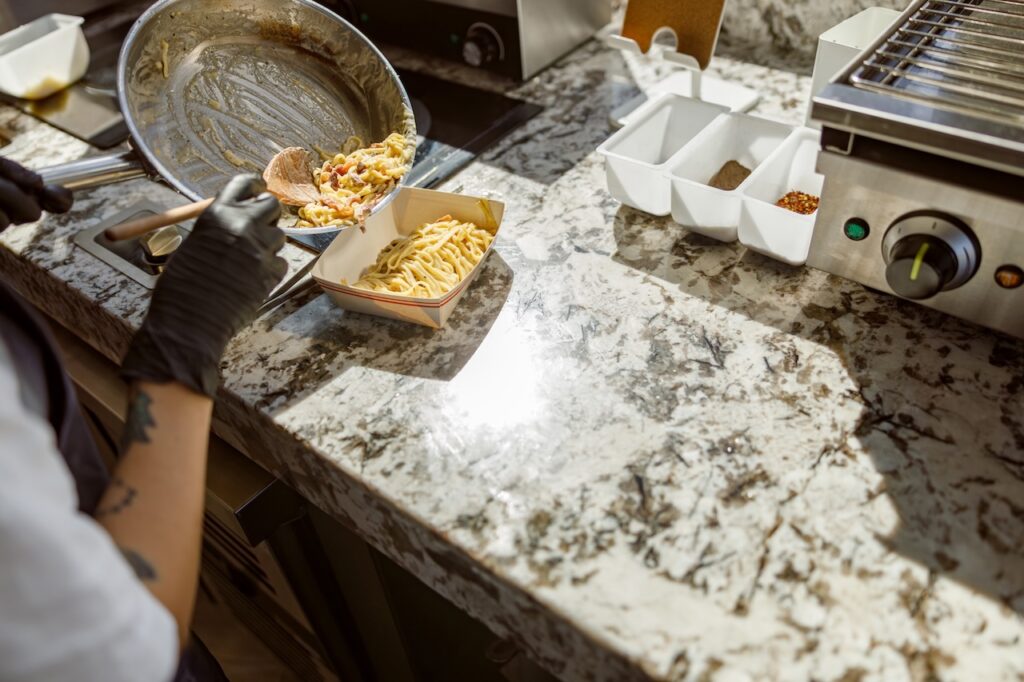
Granite has been the gold standard for kitchen countertops for decades, and it’s easy to understand why. This natural stone is quarried from the earth, cut into slabs, and polished to reveal stunning patterns and colors that are completely unique to each piece. No two granite countertops are exactly alike, giving your kitchen a one-of-a-kind character. Granite is incredibly durable and heat resistant, so you can place hot pots directly on the surface without worry. It resists scratches well and holds up beautifully to daily kitchen use. Granite countertops add significant value to your home and offer a premium, natural aesthetic that many homeowners love. However, granite is porous, which means it must be sealed regularly (typically once a year) to prevent staining from liquids like wine, coffee, or oil. The natural variations in granite mean you need to view the actual slab before purchase to ensure you like the specific pattern and coloring.
Quartz: The Low-Maintenance Champion
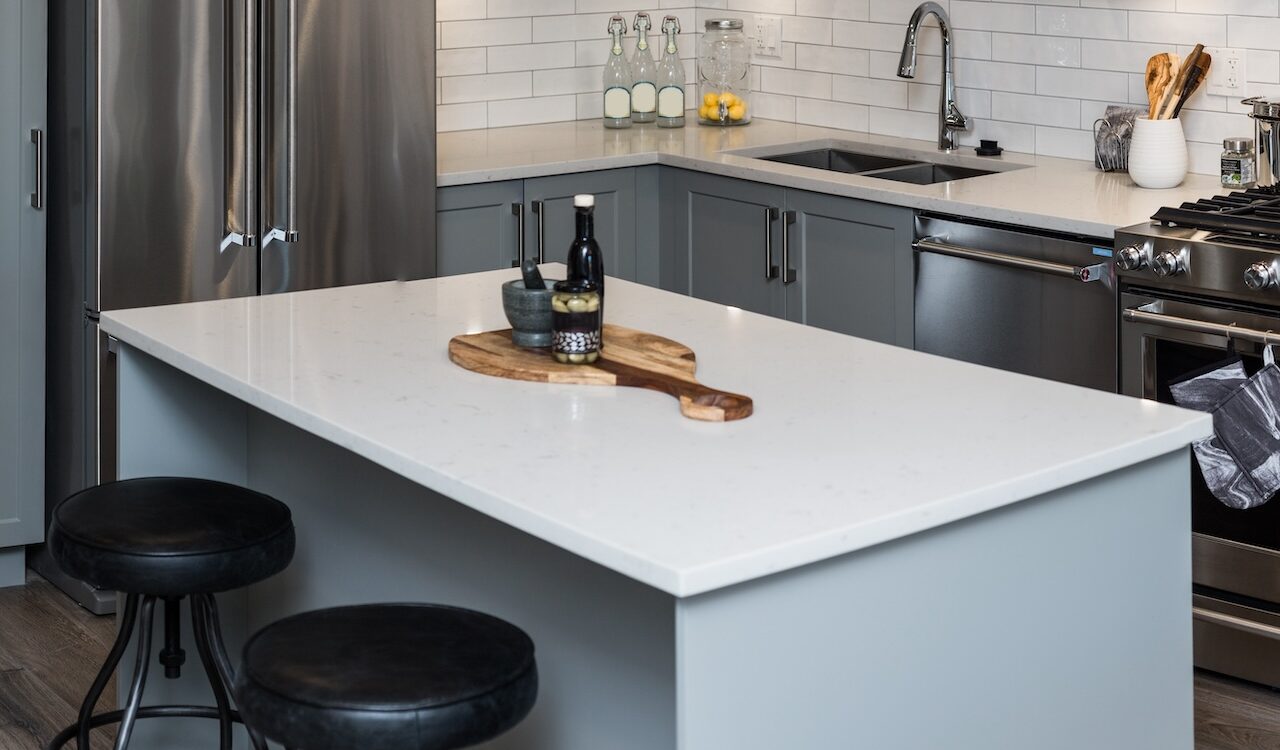
Quartz countertops (also called engineered stone) have surged in popularity over the past decade, and they now outsell granite in many markets. Unlike granite and marble, quartz isn’t a pure natural stone. Instead, it’s manufactured from about 90 to 95 percent ground quartz mixed with resins and pigments. This engineering process creates a non-porous surface that never needs sealing and resists staining far better than natural stone. Quartz is incredibly durable, highly resistant to scratches, and available in consistent colors and patterns since it’s manufactured rather than quarried. You can choose everything from solid colors to patterns that mimic natural marble or granite. The main advantages of quartz are its low maintenance requirements and durability. It’s an excellent choice for busy families who want beautiful countertops without the upkeep of natural stone. However, quartz is not heat resistant like granite, so you must use trivets for hot pots. It also tends to be more expensive than granite, and some people prefer the authentic, natural look of stone over engineered materials.
Marble represents the pinnacle of luxury and elegance in kitchen countertops. This classic natural stone has been prized for centuries for its sophisticated veining, soft coloring, and timeless beauty. White marble with gray veining creates an especially stunning look that works beautifully in both traditional and contemporary kitchens. Walking into a kitchen with marble countertops immediately conveys luxury and refinement. However, marble is also the most high-maintenance and delicate of the three options. It’s a soft, porous stone that scratches more easily than granite or quartz and stains readily from acidic substances like lemon juice, wine, or tomato sauce. Marble requires regular sealing and careful maintenance to keep it looking beautiful. Many marble owners embrace the patina and character that develops over time, viewing the marks and etching as part of the stone’s natural evolution. If you love the look of marble but worry about maintenance, consider using it on a kitchen island while choosing more durable materials for high-use prep areas.